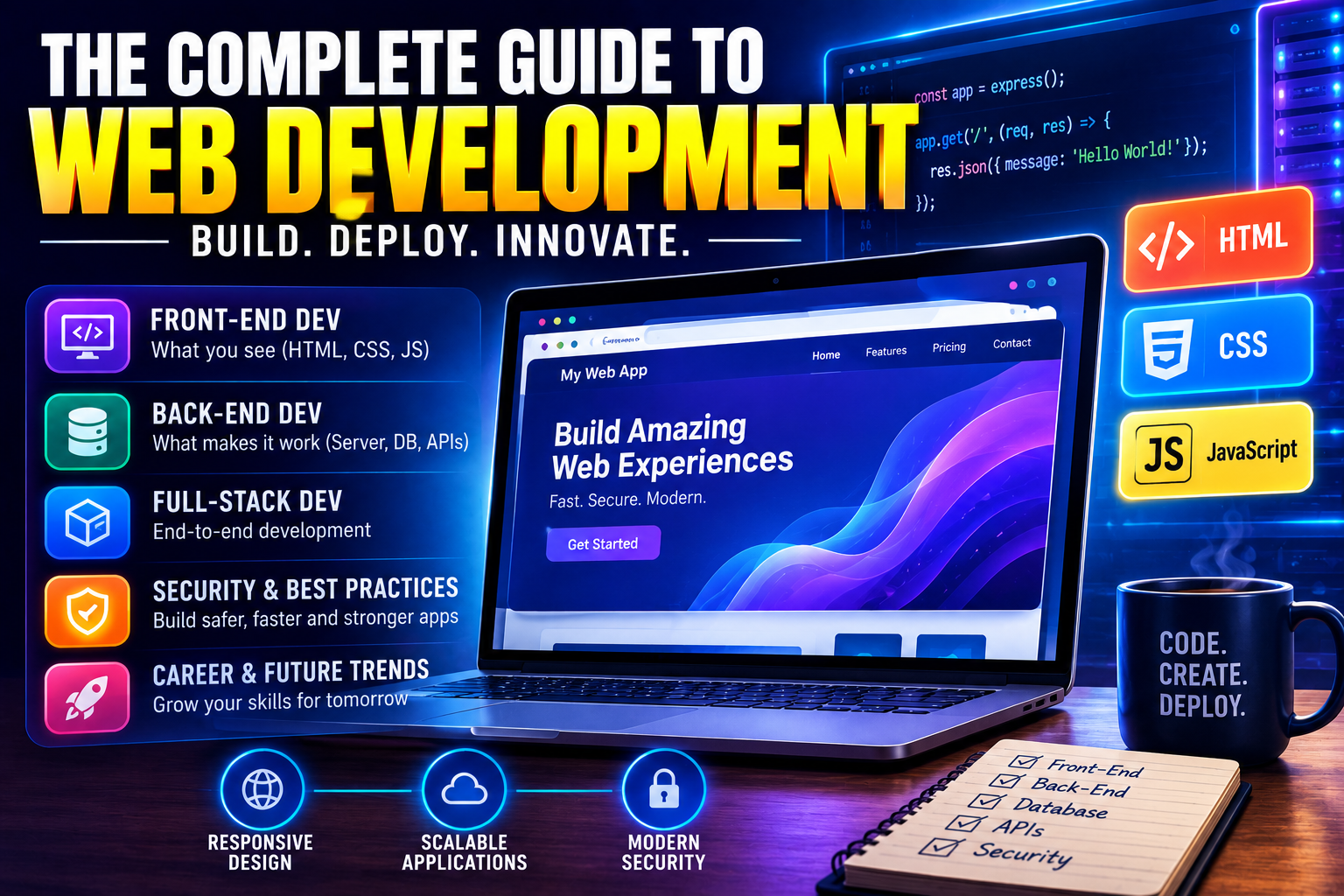
The Complete Guide to Web Development
The internet powers nearly every aspect of modern life, from online shopping and banking to education, entertainment, and business communication. Behind every website and web application is web development—a combination of programming, design, databases, and servers working together to create interactive digital experiences.
As technology continues to evolve, web development remains one of the most in-demand skills in the software industry. Whether you’re interested in building personal websites, enterprise applications, e-commerce platforms, or cloud-based services, understanding the fundamentals of web development provides a strong foundation for creating modern digital solutions.
This guide explores the essential concepts, technologies, and best practices that define today’s web development landscape.
What Is Web Development?
Web development is the process of designing, building, deploying, and maintaining websites and web applications that run in internet browsers.
It involves multiple areas, including:
- User interface development
- Server-side programming
- Database management
- Security
- Performance optimization
- Testing
- Deployment
- Maintenance
Modern web development combines creativity with technical problem-solving to deliver reliable and engaging online experiences.
Why Web Development Matters
Nearly every organization depends on websites or web applications.
Web development enables businesses to:
- Reach global audiences
- Sell products online
- Deliver digital services
- Manage customer relationships
- Share information
- Support remote work
- Automate business processes
For developers, web development offers opportunities across startups, large enterprises, freelance work, and open-source communities.
The Three Main Parts of Web Development
Front-End Development
Front-end development focuses on everything users see and interact with in a browser.
Common responsibilities include:
- Layout design
- Navigation
- Forms
- Buttons
- Animations
- Responsive design
- Accessibility
Core technologies include:
- HTML
- CSS
- JavaScript
The goal is to create fast, intuitive, and visually appealing user experiences.
For a deeper look at how these interfaces are built, see What Frontend Development Is and How Developers Build Interactive Web Interfaces.
Back-End Development
Back-end development powers the functionality behind websites.
Typical responsibilities include:
- Business logic
- User authentication
- Database communication
- API development
- File management
- Security
- Server configuration
Back-end systems process requests and deliver information to users.
The relationship between the interface and the systems operating behind it is an important part of modern web applications. Backend Development explores how servers handle application logic, data, requests, authentication, and other server-side responsibilities.
Full-Stack Development
Full-stack developers work across both front-end and back-end technologies.
They often handle:
- User interfaces
- Server development
- Databases
- APIs
- Deployment
- Testing
Their broad skill set allows them to build complete web applications from start to finish.
Essential Web Technologies
HTML
HTML (HyperText Markup Language) provides the structure of web pages.
It defines elements such as:
- Headings
- Paragraphs
- Images
- Links
- Tables
- Forms
Every website begins with HTML.
CSS
CSS (Cascading Style Sheets) controls the visual appearance of websites.
It manages:
- Colors
- Fonts
- Layouts
- Animations
- Responsive design
- Spacing
CSS transforms structured content into polished user interfaces.
JavaScript
JavaScript adds interactivity to websites.
It powers features such as:
- Dynamic content
- Form validation
- Navigation menus
- Animations
- Interactive maps
- Real-time updates
Today, JavaScript is one of the most widely used programming languages for web development.
Web Frameworks
Frameworks help developers build applications more efficiently.
Front-end frameworks commonly provide:
- Reusable components
- Routing
- State management
- Performance optimization
Back-end frameworks often simplify:
- Database access
- Authentication
- API development
- Security
- Request handling
Using frameworks can improve development speed while promoting maintainable code.
Databases
Most modern websites rely on databases to store and organize information.
Common uses include:
- User accounts
- Product catalogs
- Orders
- Blog posts
- Messages
- Settings
Databases allow applications to retrieve and update information efficiently.
The database is only one part of a larger application system. Web applications also depend on the way their different components are organized and connected, which is why understanding How Software Architecture Organizes Applications is useful when working on larger web projects.
APIs
Application Programming Interfaces (APIs) allow different software systems to communicate.
APIs are commonly used for:
- Payment processing
- Weather information
- Maps
- Authentication
- Social media integration
- Cloud services
They enable developers to extend application functionality without building every feature from scratch.
APIs can connect a browser-based interface to backend services, while also allowing separate backend systems and external services to communicate with one another.
Responsive Web Design
Users access websites from smartphones, tablets, laptops, and desktop computers.
Responsive design ensures websites adapt to different:
- Screen sizes
- Resolutions
- Orientations
- Devices
A responsive website improves usability and accessibility across platforms.
Web Security
Security is one of the most important aspects of web development.
Developers should focus on:
- Secure authentication
- Data encryption
- Access controls
- Input validation
- Regular software updates
- Secure communication
- Backup strategies
Building security into applications from the beginning helps reduce vulnerabilities.
Security also needs to be considered throughout the software development process rather than treated as a final step.
Performance Optimization
Fast websites improve user experience and search engine visibility.
Optimization strategies include:
- Compressing images
- Reducing unnecessary code
- Caching content
- Optimizing databases
- Loading resources efficiently
- Using content delivery networks (CDNs)
Even small improvements in performance can have a significant impact on user satisfaction.
For a more detailed look at the technical side of this work, How Developers Optimize Software Performance and Application Speed explains how developers identify and reduce performance bottlenecks in applications.
Testing and Debugging
Testing helps ensure applications function correctly.
Common testing approaches include:
- Functional testing
- User interface testing
- Performance testing
- Security testing
- Accessibility testing
Debugging tools help developers identify and resolve issues before deployment.
Testing becomes increasingly important as applications grow more complex. Developers can learn more about the broader principles in What Is Software Testing and How Do Developers Ensure Software Quality?.
Deployment
Deployment is the process of making a website available to users.
Typical deployment steps include:
- Building the application
- Configuring servers
- Setting up domains
- Installing security certificates
- Monitoring performance
- Updating software
Many organizations now use automated deployment pipelines to improve reliability.
Deployment is also closely connected with development operations. How DevOps Connects Software Development With IT Operations explains how development and IT operations increasingly work together to build, deploy, monitor, and maintain software.
Version Control
Version control systems help developers manage changes to source code.
Benefits include:
- Change tracking
- Collaboration
- Backup
- Branch management
- Easier troubleshooting
Version control has become a standard practice in professional software development.
Git is particularly important because it allows developers to work collaboratively while maintaining a history of changes. For a deeper explanation, see Git and Version Control Guide for Developers.
How Modern Software Fits Together
A modern website is rarely just a collection of HTML pages.
A typical application may combine:
- Front-end interfaces
- Backend services
- Databases
- APIs
- Authentication systems
- Cloud infrastructure
- Third-party services
- Monitoring tools
- Deployment systems
Understanding how these pieces interact helps developers reason about applications as complete systems rather than isolated files.
How Modern Software Works provides a broader explanation of the components and processes that make contemporary software applications function.
Career Opportunities
Web development offers a wide variety of career paths.
Common roles include:
- Front-End Developer
- Back-End Developer
- Full-Stack Developer
- Web Designer
- Software Engineer
- DevOps Engineer
- UI Developer
- Technical Consultant
Demand for skilled web developers continues across many industries.
Future Trends in Web Development
Web development continues to evolve rapidly.
Emerging trends include:
- Artificial intelligence integration
- Progressive Web Apps (PWAs)
- Serverless computing
- Low-code development
- WebAssembly
- Enhanced cybersecurity
- Cloud-native applications
- Edge computing
Developers who continuously learn new technologies are well positioned for long-term success.
The underlying principles of software engineering remain important even as individual tools and frameworks change. Strong understanding of architecture, testing, performance, version control, and deployment provides a foundation that can survive technology shifts.
Best Practices for Developers
Successful web projects often follow these principles:
- Write clean, readable code.
- Keep software updated.
- Prioritize security.
- Optimize performance.
- Test thoroughly.
- Build accessible interfaces.
- Document important functionality.
- Continue learning new technologies.
Strong development practices improve software quality and maintainability.
Looking Ahead
Web development remains one of the most dynamic and influential areas of technology. As businesses continue expanding their digital presence, developers play an increasingly important role in creating secure, scalable, and engaging online experiences.
Whether building a simple portfolio website or a complex enterprise platform, understanding the foundations of front-end development, back-end systems, databases, security, and deployment provides the skills needed to succeed in the ever-changing world of web development.
Frequently Asked Questions
What is web development?
Web development is the process of building and maintaining websites and web applications that run in internet browsers.
What is the difference between front-end and back-end development?
Front-end development focuses on the user interface, while back-end development manages servers, databases, business logic, and application functionality.
What is a full-stack developer?
A full-stack developer works on both front-end and back-end technologies, allowing them to build complete web applications.
Why are APIs important?
APIs allow applications to communicate with external services and exchange information efficiently.
Is web development a good career?
Yes. Web development continues to offer strong career opportunities across many industries due to ongoing demand for digital products and online services.
Key Takeaways
- Web development combines front-end, back-end, databases, security, and deployment to create modern websites and applications.
- HTML, CSS, and JavaScript form the foundation of front-end development.
- Back-end systems manage data, authentication, APIs, and business logic.
- Security, testing, and performance optimization are essential for reliable web applications.
- Version control and deployment tools support efficient software development.
- Continuous learning helps developers stay current with rapidly evolving technologies.