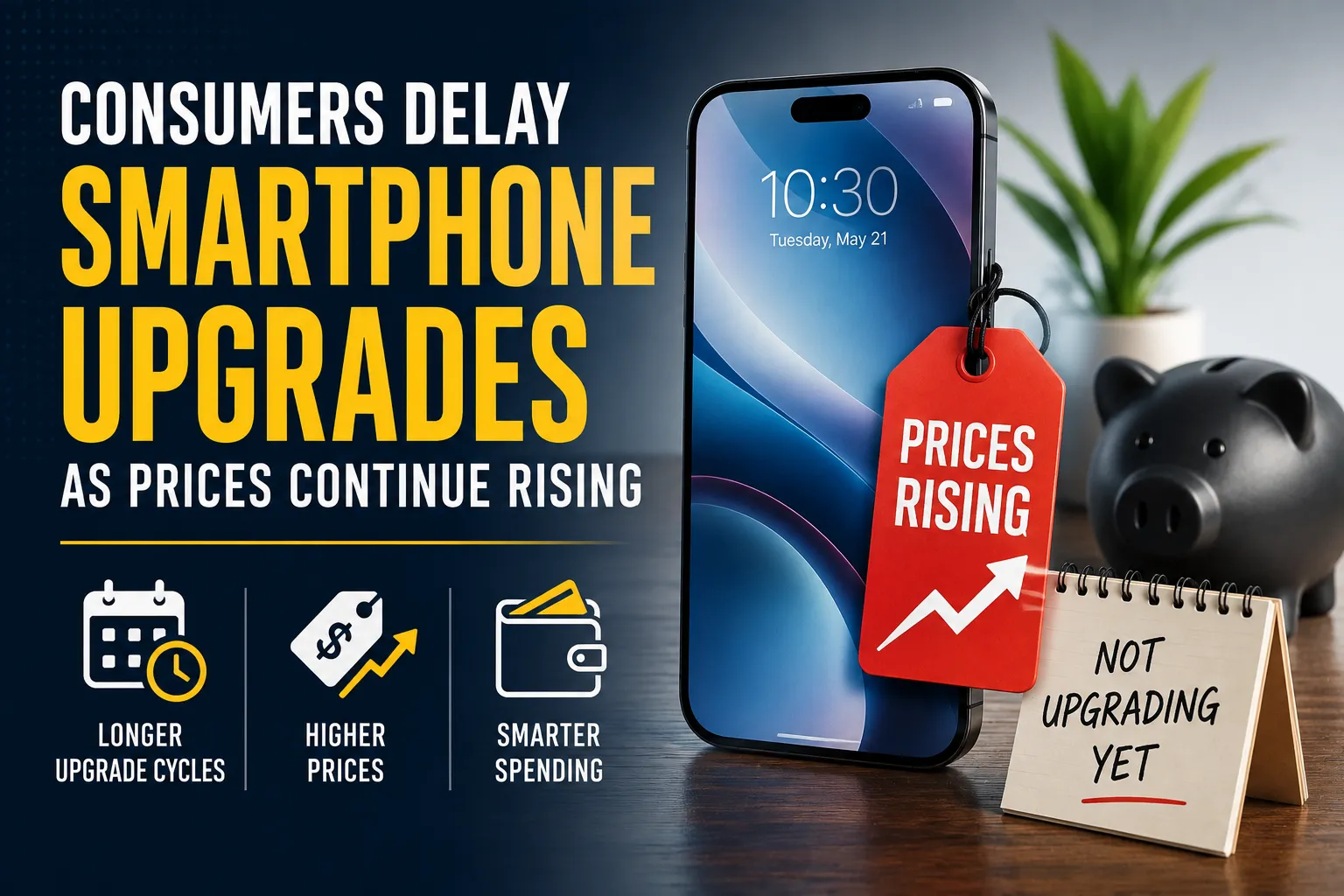
Consumers Delay Smartphone Upgrades as Prices Continue Rising
Smartphones have become essential tools for communication, work, entertainment, photography, banking, and everyday life. But as the cost of newer devices continues to climb, more consumers are taking a harder look at whether upgrading is worth the expense.
Instead of replacing their phones every few years, many buyers are choosing to keep existing devices longer, repair them when possible, or purchase older models at lower prices. The shift is changing how consumers approach one of the technology industry’s most important product categories.
Rising Prices Are Changing Upgrade Decisions
The smartphone market has increasingly expanded beyond the traditional budget, mid-range, and premium categories. Flagship devices can now come with substantial price tags, particularly when buyers choose higher storage capacities or premium configurations.
For consumers already facing higher household expenses, a new smartphone can be difficult to justify when an existing device still performs adequately.
A phone that remains functional, receives software updates, has acceptable battery life, and meets everyday needs may not feel outdated enough to warrant spending hundreds of dollars on a replacement.
That calculation is particularly important when newer models offer improvements that are evolutionary rather than revolutionary.
Longer Upgrade Cycles Become More Attractive
Smartphone manufacturers regularly introduce faster processors, improved cameras, brighter displays, longer battery life, and new software capabilities.
Those improvements can be meaningful, but they do not necessarily make older smartphones unusable.
For many consumers, the difference between a two- or three-year-old phone and a new model may be noticeable without being essential. As a result, users can increasingly stretch the lifespan of their devices.
Longer upgrade cycles can also reduce the total cost of smartphone ownership. Someone who keeps a phone for several additional years may spend considerably less over time than someone who replaces a device frequently.
Software Support Matters More Than Ever
Software support has become an increasingly important factor in determining how long a smartphone remains useful.
Regular operating system updates can introduce new features, improve performance, address security vulnerabilities, and extend the practical lifespan of a device.
As manufacturers provide longer support periods for newer phones, consumers may have greater confidence that a device can remain useful for years rather than becoming obsolete shortly after purchase.
This creates an interesting dynamic for the industry. Better software support is good for consumers, but it can also reduce the urgency to purchase a replacement.
Battery Health Can Decide When a Phone Gets Replaced
Battery performance is one of the most common reasons consumers consider upgrading an older smartphone.
Lithium-ion batteries naturally lose capacity over time. A phone that once lasted an entire day may eventually require more frequent charging.
But a declining battery does not always mean the entire device needs to be replaced.
Battery replacement can sometimes provide a less expensive way to extend a phone’s useful life, particularly when the device still has a capable processor, good display, functional cameras, and ongoing software support.
The availability and cost of repairs therefore play an increasingly important role in consumer upgrade decisions.
Camera Improvements Are Not Always Enough
Smartphone cameras have become dramatically more capable, making photography one of the industry’s most competitive areas.
Newer phones can offer better low-light photography, improved image processing, enhanced zoom capabilities, and more sophisticated video features.
For photography enthusiasts, those improvements can provide a compelling reason to upgrade.
For everyday users, however, the camera on an older premium or mid-range smartphone may already be more than capable enough for social media, family photos, video calls, and ordinary snapshots.
When the existing camera meets a consumer’s needs, a significantly higher purchase price can make a new model harder to justify.
Consumers Are Becoming More Selective
Rather than automatically buying the newest model, shoppers are increasingly evaluating what they actually gain from an upgrade.
Questions such as these can influence the decision:
- Does the new phone provide significantly better battery life?
- Is the camera improvement important for everyday use?
- Will the new device receive software updates for substantially longer?
- Is the performance difference noticeable?
- Can the current phone be repaired instead?
- Would an older flagship provide similar features for less money?
This approach puts greater emphasis on value rather than simply owning the latest device.
Refurbished and Older Phones Gain Appeal
Consumers who want better hardware without paying full flagship prices may increasingly consider refurbished or previous-generation smartphones.
Older premium devices can offer strong processors, capable cameras, high-quality displays, and features that remain competitive even after newer models arrive.
Refurbished devices can also appeal to shoppers who want to reduce the upfront cost of upgrading.
However, buyers need to pay attention to factors such as battery condition, warranty coverage, software support, repair history, and the reputation of the seller.
A lower purchase price does not automatically make a device a better value if important components are nearing the end of their useful life.
Trade-In Programs Can Reduce the Upfront Cost
Trade-in programs have become another important part of the smartphone purchasing equation.
By exchanging an older phone, consumers may receive credit toward a newer device. This can reduce the immediate cost of an upgrade and make premium phones appear more affordable.
However, consumers should evaluate the total transaction rather than focusing solely on the advertised trade-in value.
The effective cost of the new phone, financing terms, required service plans, and the independent resale value of the old device can all affect whether a trade-in represents a good deal.
The Environmental Factor
Longer smartphone lifespans can also have environmental implications.
Manufacturing new electronic devices requires raw materials, energy, transportation, and industrial processes. Keeping a device in use for longer can potentially reduce the frequency with which consumers purchase newly manufactured hardware.
Repairability is therefore becoming an important part of the broader conversation surrounding consumer electronics.
A smartphone designed to be repaired or maintained can remain useful for longer, reducing the pressure to replace the entire device when a single component fails.
Manufacturers Face a New Challenge
For smartphone companies, longer replacement cycles create a difficult business environment.
Manufacturers need to persuade consumers that upgrading provides enough additional value to justify the expense. Simply introducing another slightly faster processor or incremental camera improvement may not always be sufficient.
Companies can instead compete through areas such as battery technology, software longevity, repairability, artificial intelligence features, camera capabilities, durability, and meaningful improvements in everyday usability.
The more expensive smartphones become, the more important that value proposition becomes.
What Could Bring Consumers Back to Upgrade Cycles?
A major technological breakthrough could change consumer behavior.
Significant improvements in battery life, dramatically better cameras, new display technologies, substantially more capable on-device artificial intelligence, or entirely new ways of interacting with smartphones could provide stronger incentives to upgrade.
Price reductions could also encourage more frequent purchases.
For now, however, consumers appear to have another powerful option: simply keeping the phone they already own.
The Smartphone Upgrade Is Becoming a Value Decision
The smartphone industry has traditionally relied on a steady cycle of new models encouraging consumers to replace older devices. But rising prices and increasingly capable older phones are challenging that pattern.
For shoppers, the decision is becoming less about whether a newer smartphone exists and more about whether its improvements justify the cost.
That shift could make durability, software support, repairability, battery longevity, and long-term value just as important as headline specifications. As consumers become more selective, the companies that deliver meaningful improvements rather than incremental upgrades may have the strongest opportunity to convince buyers that it is finally time to replace their phones.