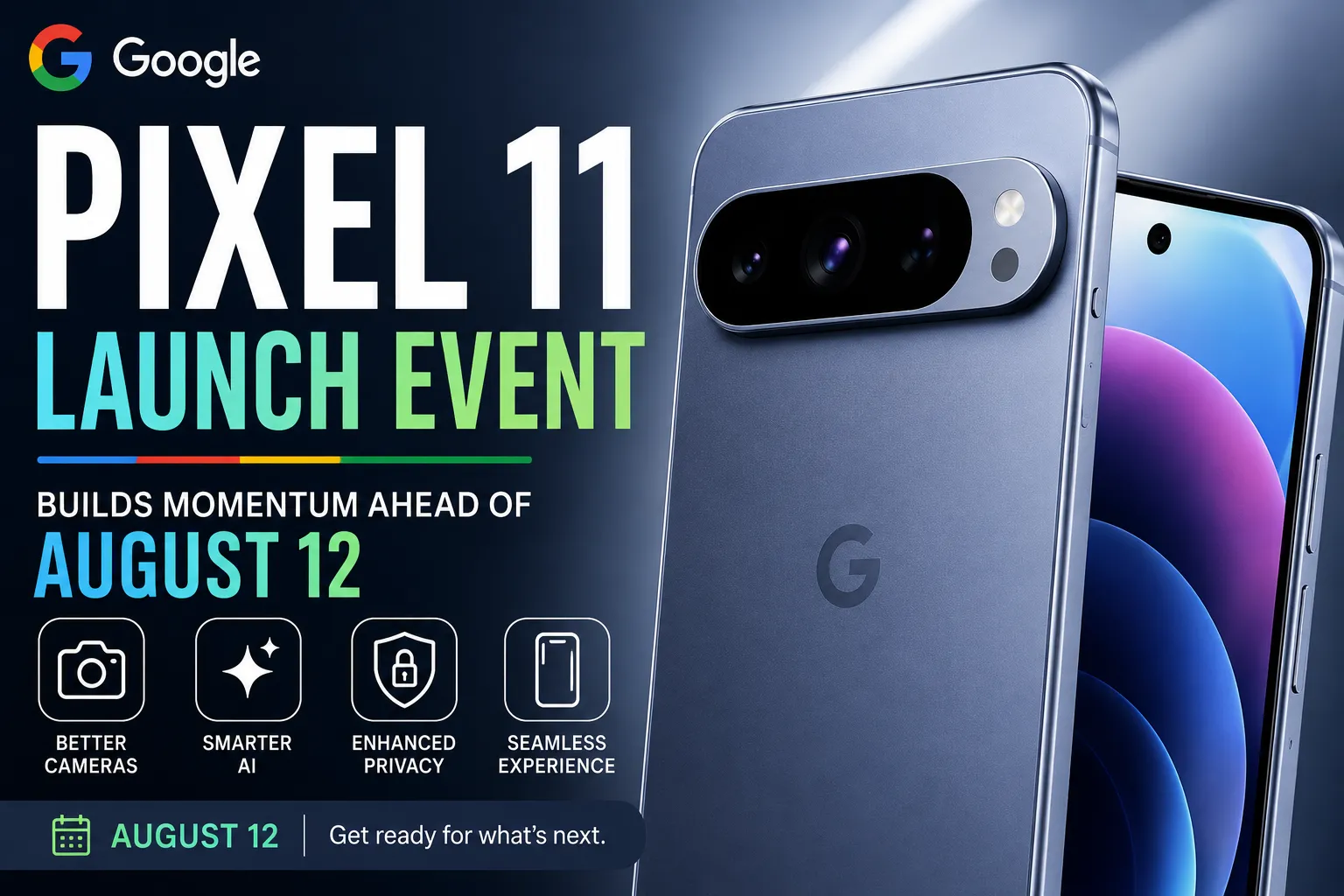
Google Pixel 11 Launch Event Builds Momentum Ahead of August 12
Google is generating significant excitement ahead of its August 12 Pixel launch event, where the company is widely expected to unveil the Pixel 11 smartphone lineup alongside new artificial intelligence features, software enhancements, and additions to its expanding hardware ecosystem. With anticipation building among Android users and technology enthusiasts, the event is shaping up to be one of Google’s most important product showcases of the year.
As competition in the premium smartphone market continues to intensify, the Pixel 11 launch represents more than a routine hardware refresh. Industry observers expect Google to place artificial intelligence at the center of its strategy, highlighting how on-device AI and cloud-powered services can deliver more personalized, efficient, and secure mobile experiences.
A Highly Anticipated Product Event
Google’s annual Pixel launch has become one of the technology industry’s most closely watched events. Beyond introducing new smartphones, the company typically uses the occasion to showcase advancements across Android, AI-powered services, wearable technology, and connected devices.
This year’s event arrives as consumers increasingly look for devices that integrate intelligent software into everyday tasks such as photography, productivity, communication, and personal assistance.
The Pixel lineup has long served as Google’s flagship demonstration of what Android can offer when paired closely with the company’s own hardware and AI technologies.
Artificial Intelligence Takes Center Stage
Artificial intelligence is expected to dominate much of Google’s presentation.
Rather than focusing solely on faster processors or improved displays, industry attention is centered on how AI will enhance the overall smartphone experience.
Potential areas of emphasis include:
- Smarter voice assistants
- AI-powered photo editing
- Intelligent writing tools
- Real-time language translation
- Enhanced search capabilities
- Productivity features
- Personalized recommendations
- Improved accessibility tools
Google has consistently positioned AI as a defining feature of its Pixel devices, and expectations are that the Pixel 11 family will continue this trend.
Camera Innovation Remains a Key Focus
Photography has long been one of the Pixel brand’s strongest selling points.
Google’s approach has traditionally relied on computational photography—using advanced software and machine learning to improve image quality rather than depending solely on larger camera sensors.
Technology enthusiasts expect continued improvements in areas such as:
- Low-light photography
- Portrait photography
- Video stabilization
- Zoom capabilities
- AI image enhancement
- Object removal tools
- Color accuracy
- Faster image processing
Software-driven photography continues to distinguish Pixel smartphones within the competitive flagship market.
Android Integration
The Pixel series typically showcases the latest version of Android alongside Google’s newest software innovations.
The Pixel 11 is expected to demonstrate deeper integration between hardware and software, offering features designed to improve:
- Security
- Privacy
- Battery management
- Performance
- Device intelligence
- User customization
- Cross-device connectivity
This close integration allows Google to introduce new Android capabilities before they become widely available across other manufacturers’ devices.
Competition in the Premium Smartphone Market
The upcoming launch comes as smartphone manufacturers continue competing through artificial intelligence, premium cameras, improved battery life, and ecosystem integration.
Consumers increasingly compare flagship devices based on:
- AI capabilities
- Camera quality
- Display performance
- Software support
- Security updates
- Battery efficiency
- Charging technology
- Long-term value
Rather than competing only on technical specifications, companies are increasingly emphasizing intelligent software experiences.
Expanding the Pixel Ecosystem
Google has steadily expanded the Pixel brand beyond smartphones.
The company’s growing ecosystem includes devices such as:
- Smartwatches
- Wireless earbuds
- Tablets
- Smart home products
- AI-powered services
Industry observers will be watching to see whether Google introduces additional hardware or software announcements designed to strengthen connectivity between these products.
A more unified ecosystem could improve convenience for users invested in Google’s hardware and services.
AI Features Could Drive Upgrades
Artificial intelligence has become one of the primary reasons consumers consider upgrading smartphones.
Instead of focusing exclusively on hardware improvements, many buyers now evaluate devices based on features such as:
- AI-assisted productivity
- Intelligent photo editing
- Automated organization
- Live transcription
- Context-aware assistance
- Natural language interactions
If Google delivers meaningful improvements in these areas, the Pixel 11 could appeal to both existing Pixel owners and users considering switching from other Android devices.
Privacy and Security Remain Priorities
As AI becomes increasingly integrated into smartphones, privacy and security remain major considerations.
Google has consistently emphasized protecting user data through features such as:
- On-device processing
- Security updates
- Identity protection
- Spam detection
- Secure authentication
- App permissions
- Malware protection
Consumers are expected to pay close attention to how new AI capabilities balance convenience with data privacy.
Developer Opportunities
The launch is also important for software developers.
New AI capabilities may enable developers to create applications that better integrate with Google’s platform, improving experiences across productivity, education, healthcare, navigation, and entertainment.
Developers will likely be watching for announcements involving:
- AI development tools
- Android APIs
- Machine learning frameworks
- Device optimization
- Cloud integration
- Performance enhancements
These updates can influence how future Android applications are designed.
Consumer Expectations
Leading up to the event, consumers are looking for improvements that provide practical everyday benefits rather than incremental hardware upgrades alone.
Many prospective buyers are particularly interested in:
- Longer battery life
- Better cameras
- Faster performance
- Improved AI tools
- Enhanced security
- Durable hardware
- Longer software support
- Smarter voice interactions
The success of the launch may depend on how effectively Google demonstrates real-world value rather than simply introducing new features.
Looking Ahead
The August 12 launch event represents another milestone in Google’s broader artificial intelligence strategy. As AI becomes more deeply integrated into smartphones, the distinction between hardware and software continues to narrow, with intelligent features increasingly defining the user experience.
The Pixel 11 lineup is expected to reflect this evolution by combining Google’s advances in artificial intelligence, computational photography, and Android software into a more capable and connected mobile platform.
Final Thoughts
Momentum continues to build ahead of Google’s August 12 Pixel launch event, with artificial intelligence expected to play a central role in the company’s latest generation of consumer technology. While the full details will only become clear during the official announcement, expectations are high that the Pixel 11 family will showcase how AI can enhance photography, productivity, communication, and everyday smartphone experiences.
As competition among flagship smartphones intensifies, Google’s focus on intelligent software, seamless Android integration, and AI-powered innovation positions the Pixel 11 launch as one of the most anticipated consumer technology events of the year.