Pixel 11 vs Galaxy Z Fold 8: Which New Android Phone Should You Buy?
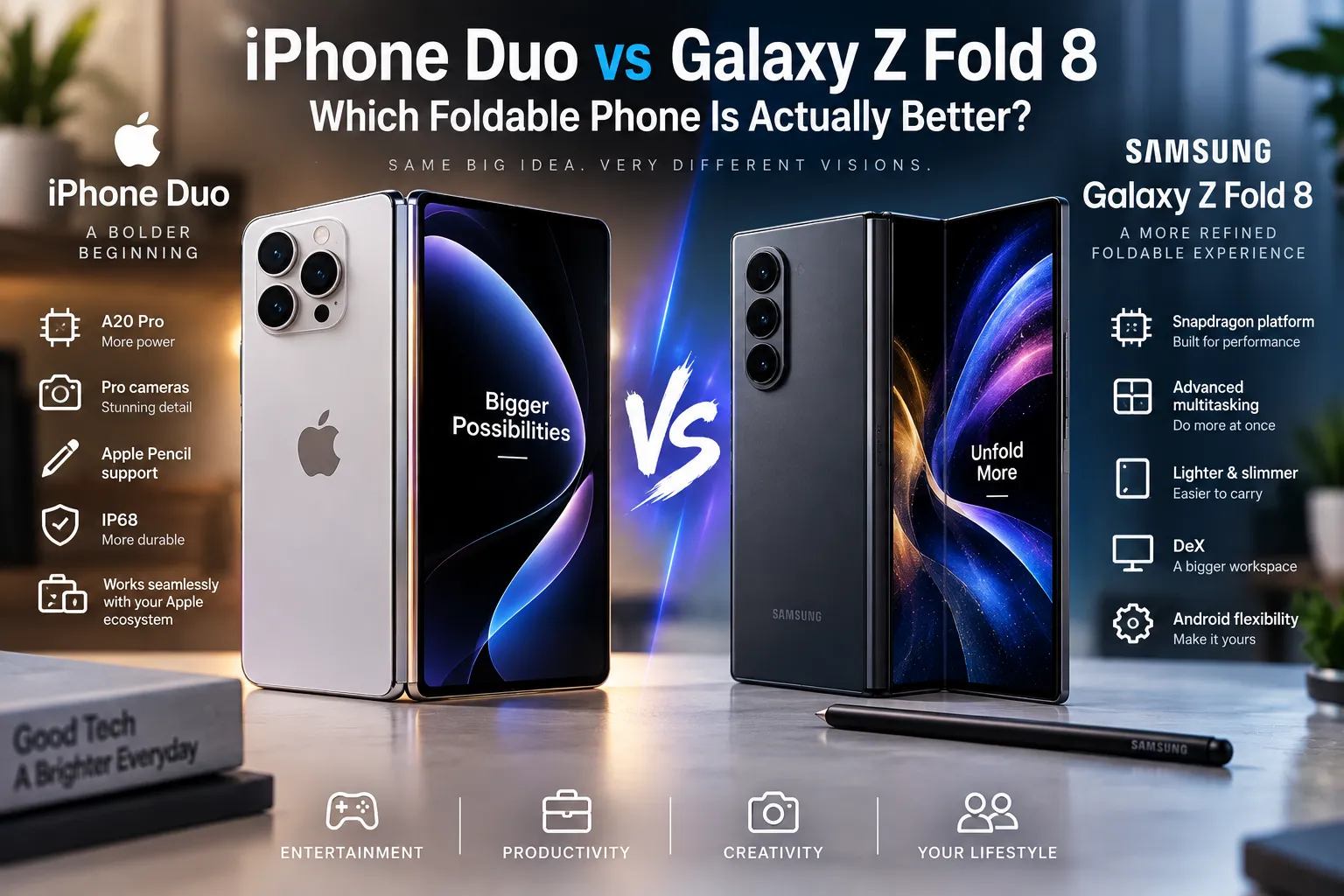
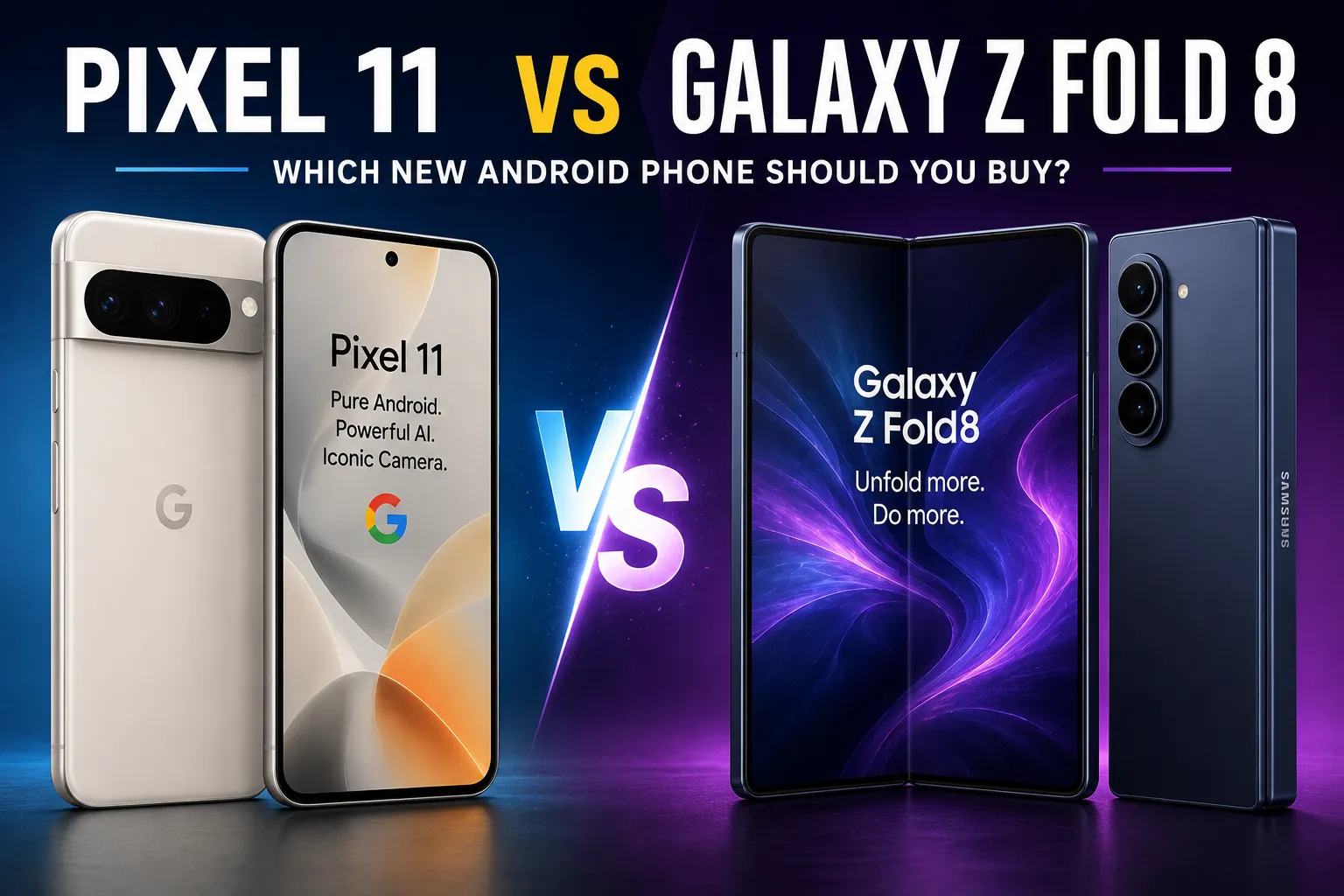
The Android phone market is heading into an interesting matchup: Google’s upcoming Pixel 11 and Samsung’s Galaxy Z Fold8 represent two very different ideas of what a premium smartphone should be.
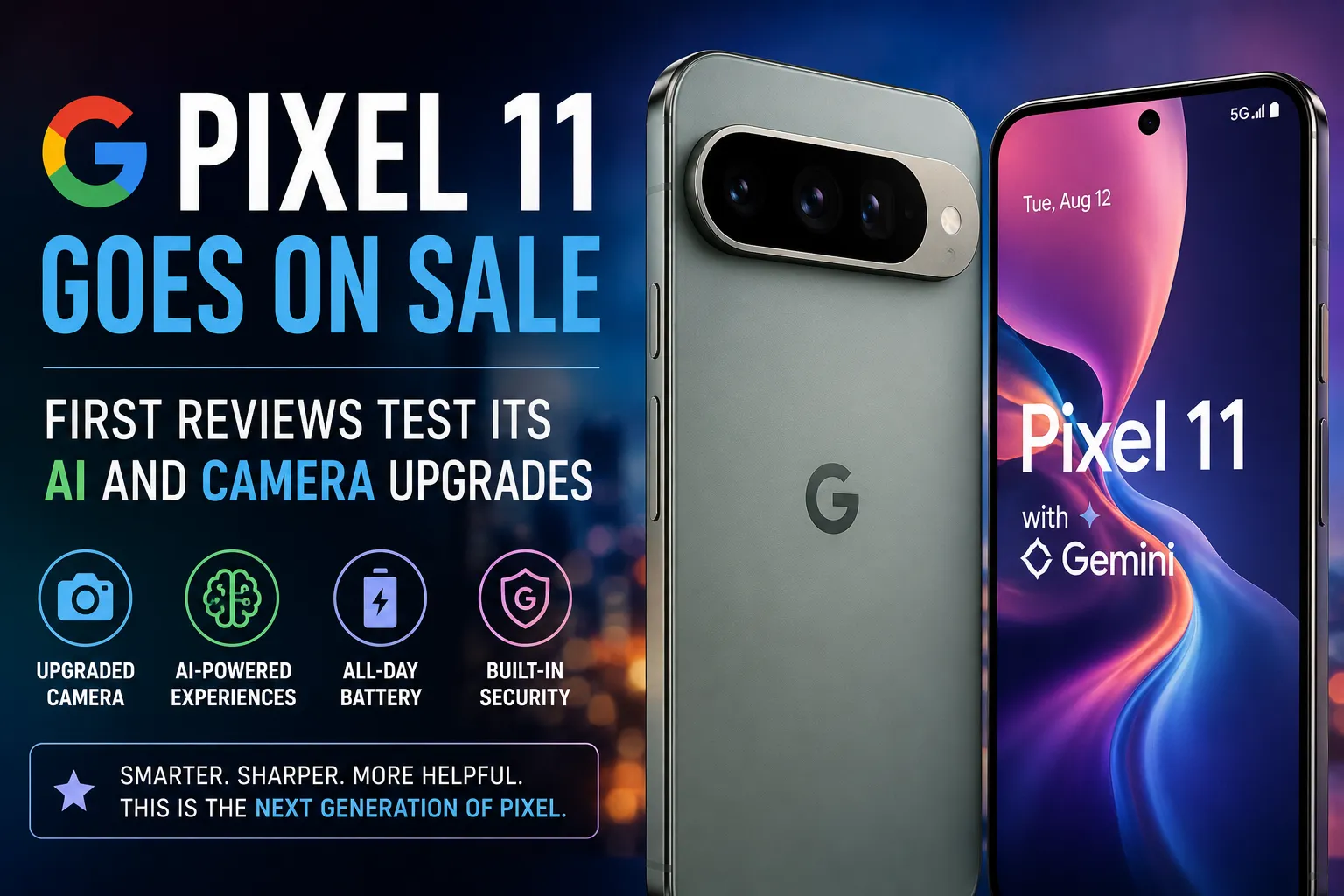
Google is preparing to unveil the Pixel 11 at its Made by Google event on August 12, 2026, with pre-orders scheduled to begin the same day. Samsung, meanwhile, has already launched the Galaxy Z Fold8, a redesigned foldable with a wider cover display, a 7.6-inch inner screen and a stronger focus on portability and entertainment.
That makes this less of a traditional flagship-versus-flagship comparison and more of a question about what you actually want from an Android phone.
Do you want a conventional smartphone built around Google’s software, photography and AI features? Or would you rather have a phone that unfolds into something much closer to a small tablet?
Here’s what buyers should consider.
Pixel 11 vs Galaxy Z Fold8 at a Glance
| Feature | Google Pixel 11 | Samsung Galaxy Z Fold8 |
|---|---|---|
| Form factor | Traditional smartphone | Foldable smartphone |
| Status | Officially announced for August 12 event | Already launched |
| Pre-orders | August 12 | Available |
| Main display | Details to be confirmed | 7.6-inch |
| Cover display | Not applicable | 5.5-inch |
| Processor | Expected next-generation Tensor | Snapdragon 8 Elite for Galaxy |
| Software | Android with Google’s Pixel experience | Android with One UI |
| AI | Gemini and Google AI ecosystem | Galaxy AI and Gemini |
| Best for | Camera, Google software and everyday simplicity | Multitasking, large-screen use and productivity |
| Biggest advantage | Software and AI integration | Foldable versatility |
| Biggest drawback | Final specifications and price not yet confirmed | Higher cost and foldable complexity |
The Pixel 11 specifications in the table should be treated cautiously until Google officially announces them. By contrast, Samsung has published confirmed specifications and availability information for the Fold8.
Pixel 11: The Conventional Flagship Approach
The Pixel 11 is expected to continue Google’s strategy of building a premium smartphone around its own hardware, Android software and artificial intelligence.
Google’s official Pixel 11 page confirms that the next-generation phone will be introduced at the August 12 Made by Google event and that pre-orders will open on the same day.
That timing is important because some specifications circulating online are still based on leaks and reports. Buyers should therefore wait for Google’s presentation before treating rumored camera hardware, battery capacity, processor configuration or pricing as final.
Still, Google’s broader Pixel strategy provides some clues about what the Pixel 11 is likely to emphasize.
The Pixel line has increasingly positioned AI as a core part of the phone rather than simply another software feature. Google’s 2025 Pixel generation, for example, used the Tensor G5 platform and introduced AI-focused features involving Gemini, photography and the phone’s everyday assistance capabilities.
For users who prefer a normal smartphone, that approach has an obvious advantage: there is no learning curve associated with a folding display.
You pick up the phone, use it like a conventional Android device and rely on Google’s software ecosystem to handle much of the experience.
Galaxy Z Fold8: A Phone That Becomes a Tablet
The Galaxy Z Fold8 takes a completely different approach.
Samsung’s latest foldable has a 5.5-inch cover display for everyday phone use and a 7.6-inch main display when the device is opened.
That difference changes how the phone can be used.
You can check messages, make calls and perform quick tasks while the phone is closed. Open it, however, and you have considerably more screen real estate for reading, watching videos, browsing websites and working with multiple applications.
Samsung has also redesigned the Fold8’s proportions, making it wider and shorter than previous generations and positioning the phone as a more practical everyday device.
This is where the Fold8 has an advantage that a conventional smartphone cannot easily reproduce.
A Pixel 11 can have a large, excellent display, but it cannot physically transform into a larger workspace.
Which Phone Has the Better Display Experience?
For straightforward smartphone use, the Pixel 11 may be the simpler choice.
But if display size is one of your biggest priorities, the Fold8 has a major advantage.
Its 7.6-inch internal display creates a dramatically different experience for:
- Reading documents
- Watching movies
- Browsing websites
- Editing content
- Running multiple apps
- Taking notes
- Viewing large spreadsheets
- Using productivity applications
Samsung specifically positions the wider internal display around content consumption, productivity and creativity.
The trade-off is that you are carrying a more complicated piece of hardware.
A conventional Pixel has one screen. The Fold8 has a hinge, two display experiences and a foldable construction that is inherently more complex.
For some buyers, that flexibility will be worth the compromise.
For others, it may simply be unnecessary.
Performance: Tensor vs Snapdragon
Performance could become one of the most interesting parts of this comparison once the Pixel 11 is officially unveiled.
Google is expected to introduce its next-generation Tensor platform with the Pixel 11, but the final specifications and real-world performance need to be confirmed by Google.
Samsung, on the other hand, has already confirmed the Fold8’s flagship Snapdragon platform. Samsung’s Fold8 materials emphasize performance alongside its redesigned form factor and AI capabilities.
But benchmark numbers shouldn’t be the only consideration.
For everyday users, both phones should be capable of handling normal tasks such as social media, photography, streaming, web browsing, messaging and productivity.
The more important distinction may be how the processing power is used.
Google’s advantage is its ability to tightly integrate its own AI services, Android software and Pixel hardware.
Samsung’s advantage is the ability to combine flagship hardware with a large foldable display and multitasking-oriented software.
Camera Experience Could Decide the Pixel’s Case
Photography has traditionally been one of the biggest reasons to consider a Pixel.
Google has built the Pixel brand around computational photography, using software and machine learning to enhance photographs beyond what the camera hardware alone can capture.
That makes the Pixel 11 particularly interesting for people who prioritize:
- Point-and-shoot photography
- Portrait photography
- Low-light images
- Computational image processing
- AI-assisted photo editing
- Google’s photography software
However, the Pixel 11’s final camera specifications and performance should be evaluated after Google’s official announcement rather than relying on pre-launch leaks.
The Fold8 takes a somewhat different approach.
Samsung’s official specifications list a dual 50-megapixel rear-camera system for the Fold8, while the more expensive Fold8 Ultra adds a more advanced camera setup.
That distinction is important.
If photography is your primary reason for upgrading, you should compare the Pixel 11 with Samsung’s camera-focused alternatives as well as the standard Fold8.
AI Is Becoming a Bigger Part of Both Phones
Artificial intelligence is no longer simply a feature added to smartphone cameras.
Both Google and Samsung are building AI deeper into their respective software ecosystems.
Google’s Pixel strategy revolves heavily around Gemini and Google’s broader AI infrastructure. The company’s recent Pixel generations have incorporated Gemini-powered assistance, AI photo editing and other features designed to make the phone more proactive.
Samsung is pursuing a similar direction through Galaxy AI and Gemini integration.
Samsung says the Fold8 includes AI experiences designed to make tasks easier, while its broader Galaxy Z8 platform introduces features such as AI Now Nudges that can provide contextual suggestions based on what is happening on the screen.
The real question for buyers isn’t simply which phone has “more AI.”
It is which AI ecosystem fits the way you already use your phone.
A person heavily invested in Google services may naturally prefer Pixel.
Someone already using Samsung devices, Galaxy Buds, tablets or other Galaxy products may find the Fold8 more attractive.
Which Phone Is Better for Multitasking?
This is probably the easiest category to decide.
Galaxy Z Fold8 wins.
The reason is simple: it has a 7.6-inch internal screen.
The larger canvas gives Samsung considerably more room to run multiple applications and interact with content.
You can work with an email beside a browser, reference a document while taking notes or watch content while handling another task.
A conventional Pixel 11 can still multitask using Android’s standard software features, but the physical display limits how comfortable that experience can be.
For people who regularly use their phones as miniature workstations, the Fold8 makes considerably more sense.
Which Phone Is Easier to Carry?
This category is more complicated.
The Pixel 11’s traditional smartphone design should make it easier to use one-handed and less mechanically complex.
Samsung has nevertheless made portability a major focus of the Fold8.
Samsung describes it as its lightest Z Fold yet and says the new shape is designed to provide a more comfortable everyday experience.
That means the Fold8 is no longer simply a huge phone that happens to fold.
Samsung is trying to make the foldable format more practical for people who carry and use their phones throughout the day.
Still, buyers should physically handle both designs if possible.
The best phone on paper is not necessarily the most comfortable phone in your hand.
Software Support Matters More Than Ever
Software longevity is an increasingly important part of the smartphone buying decision.
A premium phone is an investment, so buyers should consider how long the manufacturer intends to provide operating-system updates, security updates and feature improvements.
Google has historically positioned Pixel around long-term software support and frequent feature updates. Google’s support documentation also shows the company continuing to provide updates across several generations of Pixel hardware.
Samsung similarly has a mature software ecosystem and a strong update strategy for its premium Galaxy devices.
For either phone, however, buyers should look beyond the number of years advertised.
The quality of those updates matters too.
Features that remain useful, security patches that arrive promptly and AI capabilities that continue improving can have a bigger practical impact than simply knowing a phone is supported for a certain period.
What About Price?
Price could ultimately change the recommendation.
Samsung has positioned the Fold8 as a premium foldable, and that means buyers are paying for considerably more hardware than they would with a conventional smartphone.
The Pixel 11’s final pricing should be confirmed by Google at the August 12 launch event. Google has already confirmed that pre-orders begin that day, but the company has not yet published the complete final product specification and pricing information on its pre-launch page.
This creates an important buying rule:
Don’t compare leaked Pixel 11 prices with confirmed Fold8 prices as though both are official.
Wait for Google’s announcement.
Once the Pixel 11’s price is known, the comparison becomes much more meaningful.
Pixel 11 vs Galaxy Z Fold8: Which One Should You Buy?
The answer depends heavily on what you want your phone to do.
Choose the Pixel 11 if:
- You prefer a traditional smartphone design.
- Camera quality is a major priority.
- You rely heavily on Google’s services.
- You want Google’s Android experience.
- Gemini and Google AI features matter to you.
- You don’t need a tablet-sized display.
- You prefer a simpler phone design.
Choose the Galaxy Z Fold8 if:
- You want a phone and tablet in one device.
- Multitasking is important.
- You read documents or websites frequently.
- You watch a lot of video on your phone.
- You want a large screen without carrying a separate tablet.
- You like experimenting with new smartphone designs.
- You already use Samsung’s Galaxy ecosystem.
The Bigger Question Is Phone or Pocketable Tablet?
The Pixel 11 and Galaxy Z Fold8 aren’t really competing for exactly the same buyer.
The Pixel represents the evolution of the traditional smartphone.
The Fold8 represents an attempt to replace both a smartphone and some tablet use with a single device.
That’s the most important distinction to keep in mind.
If you simply want an excellent Android phone, the Pixel 11 could be the more straightforward choice—especially if Google’s camera and AI experience remain its strongest selling points.
If you want your phone to become a larger workspace whenever you open it, the Galaxy Z Fold8 is in a different category altogether.
For most conventional smartphone users, the Pixel 11 is likely to be the safer choice once its final specifications and pricing are confirmed.
For productivity-focused users, frequent readers and people who genuinely benefit from a larger screen, the Galaxy Z Fold8 offers capabilities a conventional phone cannot replicate.
The smartest move for buyers who aren’t in a hurry may be to wait until Google’s August 12 event. Once the Pixel 11’s complete specifications, camera system, battery, pricing and availability are official, the decision between Google’s newest Pixel and Samsung’s latest foldable will be much clearer.