Understanding Cybersecurity Risk Management
Cybersecurity is no longer simply an IT concern. For businesses, government organizations, nonprofits, and even small teams, a security incident can disrupt operations, expose sensitive information, damage customer trust, and create significant financial costs.
That is why organizations need more than individual security tools. They need a structured way to identify threats, understand vulnerabilities, prioritize risks, and reduce the likelihood and impact of security incidents.
This is where cybersecurity risk management comes in.
For a broader look at how these different security disciplines fit together, The Ultimate Guide to Business Cybersecurity provides a comprehensive overview of the technologies, policies, processes, and practices businesses can use to protect their digital environments.
What Is Cybersecurity Risk Management?
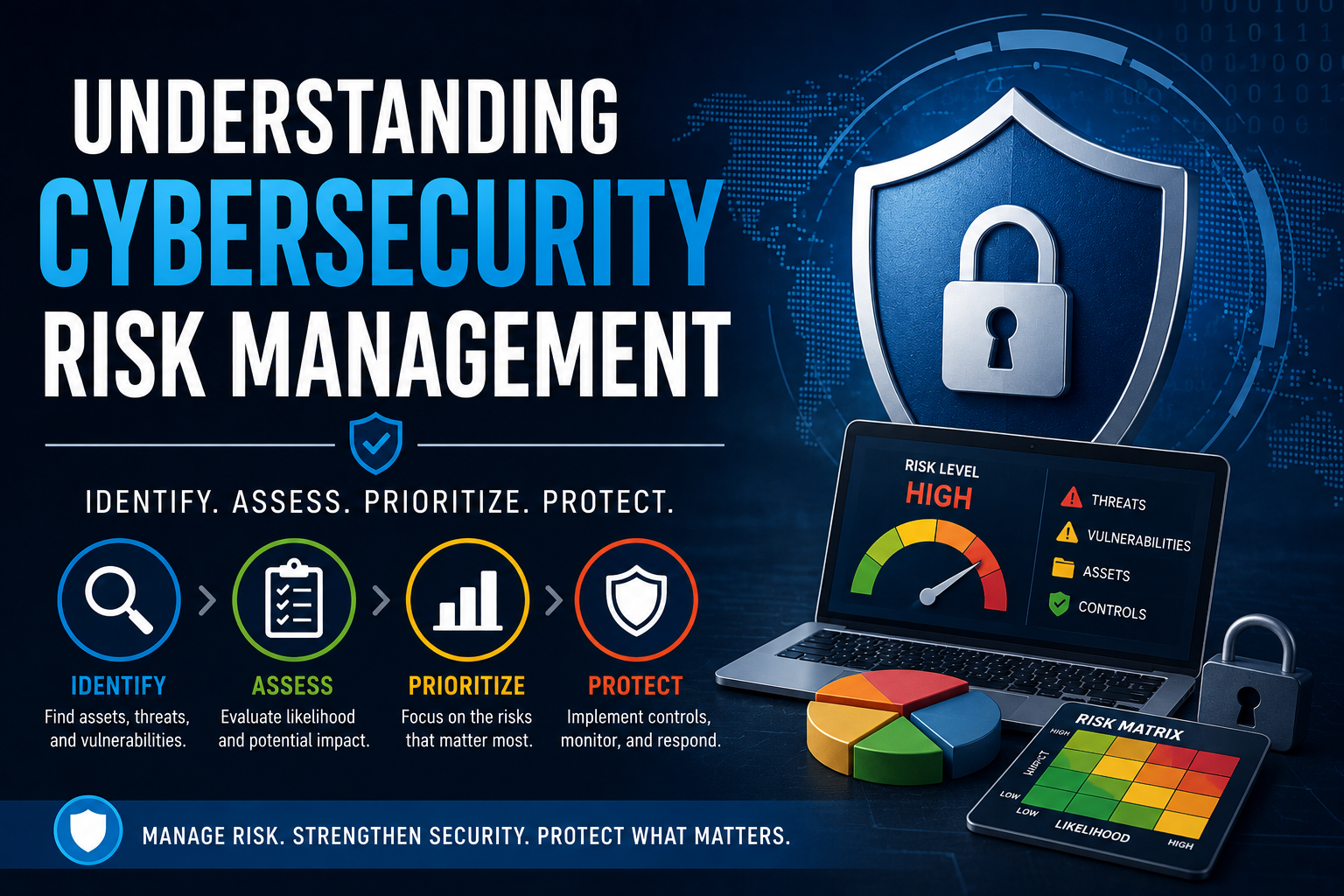
Cybersecurity risk management is the process of identifying, assessing, prioritizing, and addressing risks that could affect an organization’s information systems, data, applications, networks, and digital operations.
Instead of attempting to eliminate every possible security threat, organizations use risk management to determine which risks matter most and where security resources should be focused.
A typical cybersecurity risk management program considers three important factors:
- Threats: Potential events or actors that could cause harm.
- Vulnerabilities: Weaknesses that could be exploited.
- Impact: The potential consequences if an incident occurs.
The goal is to make informed decisions about how much risk an organization is willing to accept and what measures should be used to reduce unacceptable risks.
Why Cybersecurity Risk Management Matters
Modern organizations depend heavily on digital systems. Customer records, financial information, intellectual property, employee data, communications, and business operations may all depend on technology.
A cybersecurity incident can therefore have consequences far beyond a compromised computer.
Effective risk management can help organizations:
- Identify important security weaknesses.
- Protect sensitive information.
- Prioritize cybersecurity investments.
- Reduce the likelihood of successful attacks.
- Limit the potential damage of incidents.
- Improve preparedness and response.
- Support regulatory and contractual requirements.
- Build customer and stakeholder confidence.
Perhaps most importantly, risk management helps organizations avoid treating cybersecurity as a collection of disconnected technical problems.
Cybersecurity risk management works best when it is connected to the wider security program, including endpoint protection, security monitoring, vulnerability management, access controls, and incident response.
The Core Elements of Cybersecurity Risk Management
Although specific approaches differ between organizations, effective cybersecurity risk management generally involves several interconnected activities.
1. Identify Critical Assets
Organizations first need to understand what they are protecting.
Assets can include:
- Customer databases
- Employee information
- Financial records
- Intellectual property
- Cloud services
- Websites and applications
- Network infrastructure
- End-user devices
- Business-critical software
- Authentication systems
Not every asset has the same importance. A system containing sensitive customer information may require stronger controls than a low-risk internal application.
Understanding the organization’s assets creates the foundation for prioritizing cybersecurity efforts.
For a broader explanation of how businesses can identify and protect their technology environment, The Ultimate Guide to Business Cybersecurity provides additional context on building a comprehensive security strategy.
2. Identify Potential Threats
The next step is understanding what could go wrong.
Cybersecurity threats can include:
- Phishing
- Malware
- Ransomware
- Credential theft
- Insider threats
- Social engineering
- Unauthorized access
- Software vulnerabilities
- Data breaches
- Denial-of-service attacks
- Supply-chain compromises
Threat identification should not focus exclusively on external attackers. Human error, misconfiguration, system failures, and third-party dependencies can also create significant risks.
3. Identify Vulnerabilities
A threat becomes more concerning when an organization has a weakness that could be exploited.
Vulnerabilities may involve outdated software, weak authentication, excessive user permissions, insecure configurations, poorly protected devices, or weaknesses in applications and infrastructure.
Regular vulnerability assessments can help organizations discover these weaknesses before attackers take advantage of them.
However, simply finding vulnerabilities is not enough. Organizations must determine which weaknesses create the greatest practical risk.
A dedicated vulnerability management process can help organizations discover, prioritize, remediate, and verify security weaknesses across their environments.
4. Assess the Potential Impact
Risk assessment should consider what would happen if a security incident occurred.
Potential consequences include:
- Financial losses
- Operational disruption
- Data exposure
- Legal or regulatory consequences
- Loss of customer trust
- Reputational damage
- Intellectual property loss
- Recovery expenses
The same vulnerability can have very different consequences depending on where it exists.
For example, a vulnerability affecting a non-critical internal system may be less urgent than a similar weakness affecting a system responsible for processing sensitive customer information.
5. Prioritize Risks
Organizations rarely have unlimited cybersecurity budgets or personnel.
Consequently, risk management requires prioritization.
A useful risk assessment considers both the likelihood of an incident and its potential impact.
A simple conceptual model is:
Risk = Likelihood × Impact
This does not need to be treated as a precise mathematical calculation. It is primarily a way of thinking about which risks deserve the greatest attention.
A high-impact risk with a realistic likelihood of occurring should generally receive more attention than a highly unlikely scenario with minimal consequences.
Common Cybersecurity Risk Treatment Strategies
Once risks have been identified and prioritized, organizations generally have several ways to respond.
Risk Mitigation
Risk mitigation involves implementing controls that reduce the likelihood or potential impact of a security incident.
Examples include:
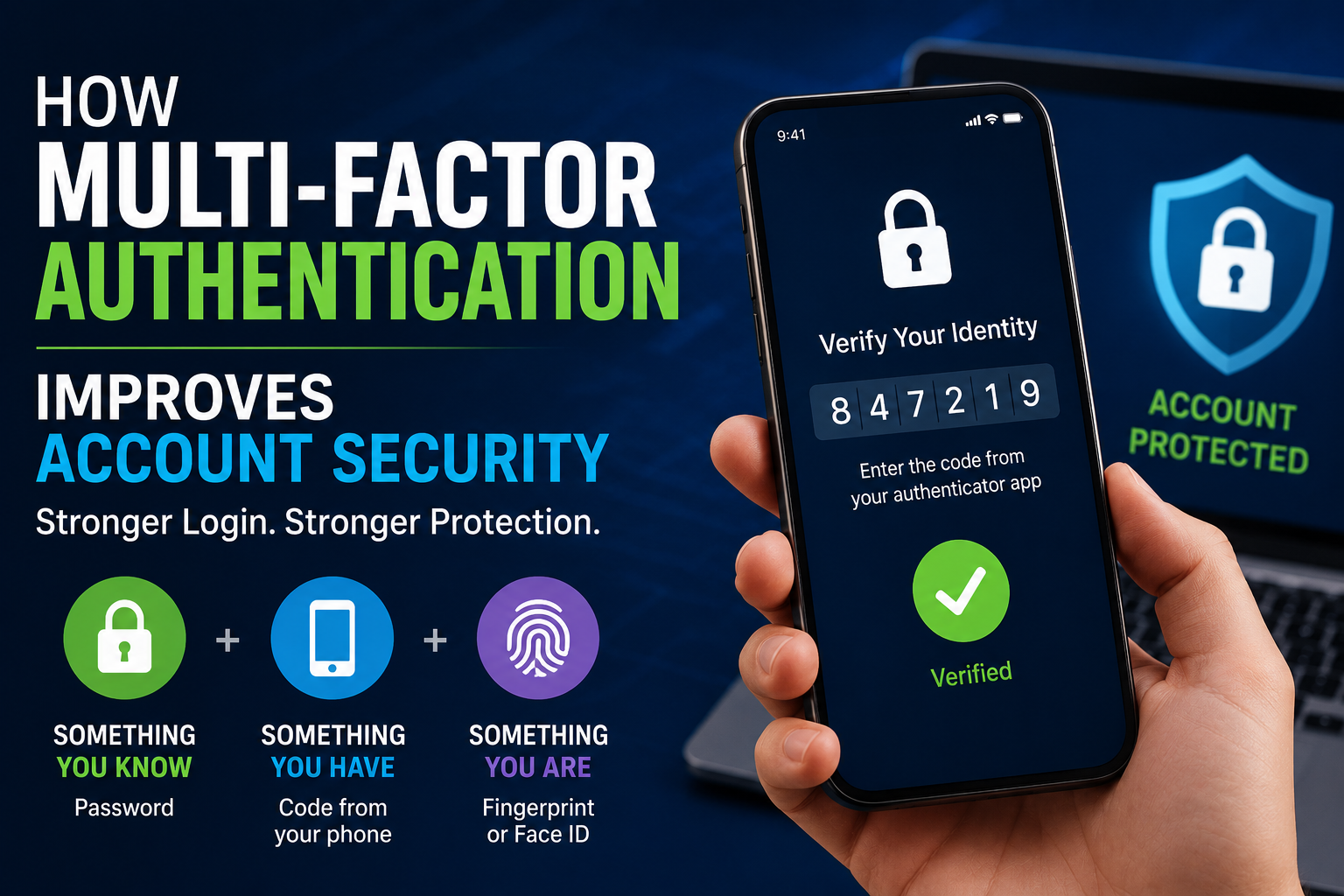
- Multi-factor authentication
- Encryption
- Network segmentation
- Security monitoring
- Access controls
- Vulnerability management
- Employee security training
- Regular backups
Mitigation is one of the most common approaches because it allows organizations to continue using systems while reducing their exposure.
Risk Avoidance
Sometimes an organization can eliminate a risk by avoiding the activity that creates it.
For example, a company might decide not to deploy a particular technology because the security risks associated with its use outweigh its expected benefits.
Risk avoidance can be effective, but it may not always be practical.
Risk Transfer
Risk can sometimes be transferred to another party through contractual arrangements, outsourcing, or insurance.
However, transferring financial responsibility does not necessarily eliminate the underlying cybersecurity risk.
An organization may still be responsible for protecting its systems, customers, and data even when certain security functions are handled by another company.
Risk Acceptance
Some risks may be considered acceptable.
Every organization has a certain level of risk tolerance. Attempting to eliminate every possible risk can be prohibitively expensive and may interfere with normal operations.
The important point is that risk acceptance should be an informed decision rather than the result of ignoring a known problem.
The Importance of Security Controls
Cybersecurity controls are safeguards designed to reduce security risks.
They can generally be grouped into several categories.
Technical Controls
Technical controls use technology to protect systems and information.
Examples include:
- Firewalls
- Endpoint protection
- Encryption
- Identity and access management
- Intrusion detection
- Security monitoring
- Authentication technologies
Endpoint protection is particularly important because computers and mobile devices can provide attackers with a pathway into accounts, applications, and organizational systems. A deeper look at this layer is available in How Computer and Mobile Device Security Protects Endpoints.
Administrative Controls
Administrative controls involve policies, procedures, governance, and organizational processes.
Examples include:
- Security policies
- Risk assessments
- Incident response plans
- Security awareness programs
- Vendor management procedures
- Access management policies
Physical Controls
Physical controls protect facilities, equipment, and physical infrastructure.
Examples include:
- Building access systems
- Security cameras
- Locked server rooms
- Visitor controls
- Physical equipment protection
Strong cybersecurity programs typically combine all three categories rather than relying on technology alone.
Human Behavior Is Part of the Risk
Technology can reduce many security risks, but people remain an important part of cybersecurity.
Employees may accidentally:
- Click malicious links.
- Share sensitive information with the wrong person.
- Reuse passwords.
- Misconfigure systems.
- Download unsafe files.
- Approve fraudulent requests.
This does not mean employees should simply be blamed for security incidents.
Instead, organizations should design systems and processes that make secure behavior easier.
Security awareness training, strong authentication, clear procedures, and well-designed access controls can all reduce the likelihood of human error becoming a serious security incident.
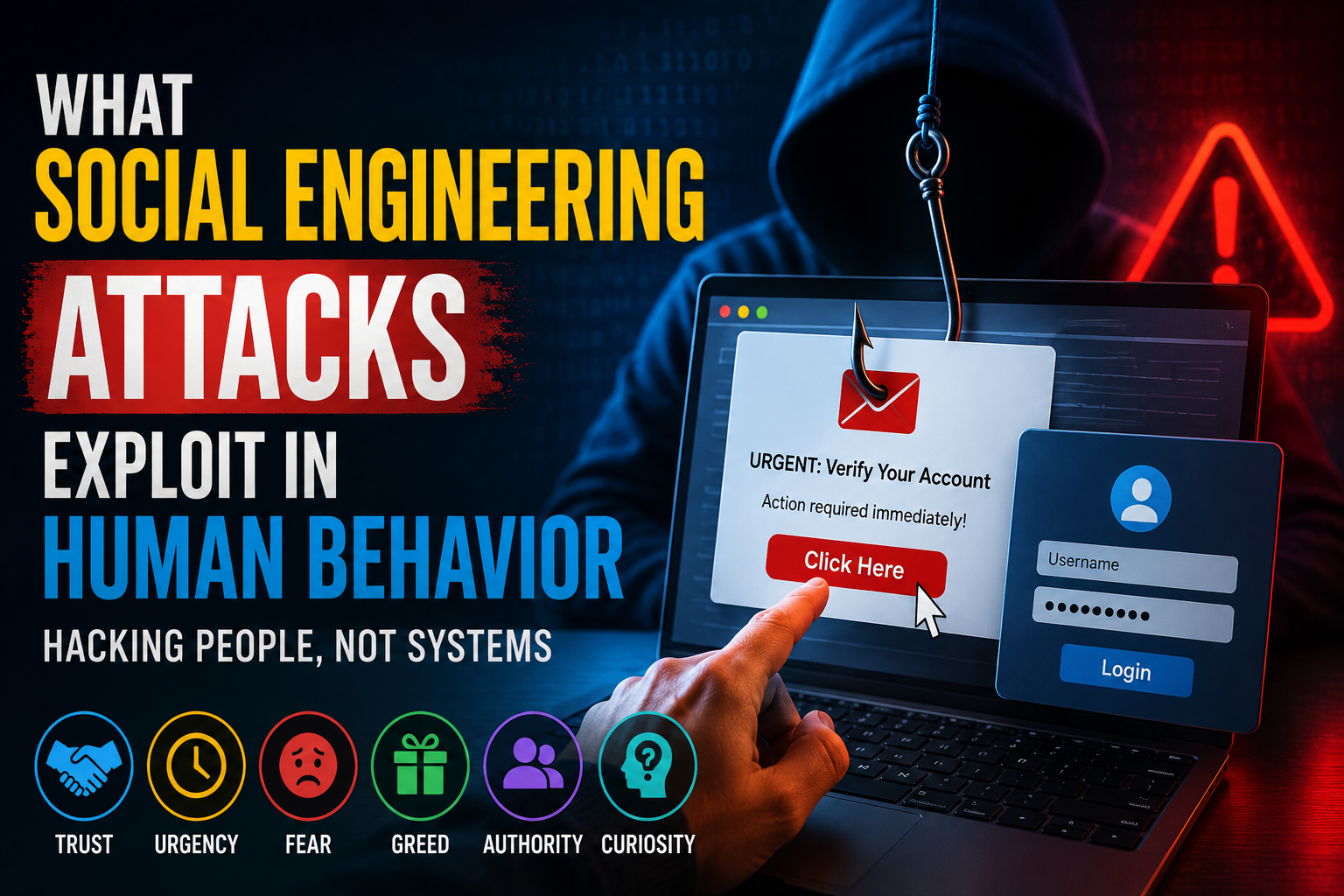
Phishing is particularly important because attackers can use social engineering to bypass otherwise strong technical defenses.
Third-Party and Supply-Chain Risk
Organizations often depend on external vendors for software, cloud infrastructure, payment processing, communications, analytics, and other services.
This creates another layer of cybersecurity risk.
A company may have strong internal security controls while still being exposed through a supplier with weaker protections.
Third-party risk management can involve:
- Evaluating vendors before onboarding.
- Reviewing security requirements.
- Understanding what information vendors can access.
- Monitoring important suppliers.
- Establishing contractual security obligations.
- Reviewing vendor access regularly.
- Maintaining contingency plans for critical providers.
The objective is not to eliminate every third-party risk but to understand and manage it.
Continuous Monitoring Matters
Cybersecurity risk is not static.
New vulnerabilities appear. Employees change roles. Organizations adopt new technologies. Attack techniques evolve. Business processes change.
As a result, a risk assessment that was accurate several months ago may no longer reflect the organization’s current environment.
Continuous monitoring can help identify meaningful changes and ensure that security controls remain appropriate.
This can include monitoring:
- Vulnerabilities
- Security events
- User access
- Network activity
- Cloud environments
- Third-party services
- Configuration changes
- Emerging threats
Security operations teams provide an important part of this visibility. How Security Operations Teams Monitor Systems and Detect Cybersecurity Threats explains how security teams use logs, SIEM platforms, endpoint monitoring, threat intelligence, behavioral detection, and other capabilities to identify suspicious activity.
Regular reassessment allows organizations to adapt instead of relying on outdated assumptions.
Cybersecurity Risk Management and Incident Response
Risk management and incident response are closely connected.
Risk management focuses heavily on reducing the probability and impact of security incidents before they happen. Incident response focuses on what an organization does when an incident actually occurs.
A strong program should prepare for both.
An incident response plan can define:
- Who is responsible for responding.
- How incidents are identified and reported.
- How affected systems are contained.
- How evidence is preserved.
- How systems are recovered.
- How stakeholders are informed.
- How lessons from the incident are incorporated into future security improvements.
Preparation can significantly reduce confusion during a serious cybersecurity event.
Organizations can learn more about this process in How Incident Response Handles Cybersecurity Events, which examines detection, investigation, containment, eradication, recovery, communication, evidence preservation, and post-incident improvement.
Common Cybersecurity Risk Management Mistakes
Even organizations with dedicated security teams can make mistakes when managing cyber risk.
Treating Every Risk Equally
Not every vulnerability deserves the same urgency.
Prioritization allows limited resources to be directed toward the risks that could cause the greatest harm.
Focusing Only on Technology
Buying another security product does not automatically solve an organization’s security problems.
Policies, processes, employee behavior, governance, and vendor relationships also matter.
Ignoring Low-Visibility Systems
Attackers do not necessarily target the systems that receive the most attention.
Old applications, forgotten accounts, unmanaged devices, and poorly maintained infrastructure can create unexpected entry points.
Failing to Test Security Measures
An organization may believe that its backups, incident response plans, or access controls work correctly without actually testing them.
Regular testing can reveal weaknesses before a real incident exposes them.
Treating Risk Assessments as One-Time Exercises
Cybersecurity environments change constantly.
Risk management should therefore be an ongoing business process rather than an annual checklist.
Building a Practical Cybersecurity Risk Management Program
Organizations starting or improving a risk management program can take a structured approach.
Step One: Understand the Environment
Create an inventory of important systems, data, applications, devices, users, and third parties.
Step Two: Identify Major Risks
Determine which threats and vulnerabilities could realistically affect those assets.
Step Three: Evaluate Likelihood and Impact
Assess which risks could have the greatest consequences for the organization.
Step Four: Prioritize
Rank risks according to business importance rather than simply counting vulnerabilities.
Step Five: Apply Appropriate Controls
Use technical, administrative, and physical safeguards to reduce significant risks.
Step Six: Document Decisions
Record important risk decisions, including accepted risks and the reasons behind them.
Step Seven: Monitor and Reassess
Review the environment regularly and update risk assessments as circumstances change.
These activities should not operate in isolation. They should connect with the broader controls and processes described in The Ultimate Guide to Business Cybersecurity, which serves as the broader framework for understanding how the different parts of a business security program work together.
A Business-Minded Approach to Cybersecurity
One of the most important principles of cybersecurity risk management is that security should support the organization’s broader goals.
Security controls have costs. They can require money, employees, time, and operational changes.
The goal is therefore not to create an environment where nothing can ever go wrong. The goal is to make informed decisions about cybersecurity risk and establish protections that are proportionate to the organization’s needs.
When security teams communicate risks in business terms, leadership can make better decisions about investments, priorities, and acceptable levels of exposure.
This business-oriented approach is one reason cybersecurity risk management belongs at the center of an organization’s broader cybersecurity strategy rather than being treated as a purely technical exercise.
Why Cybersecurity Risk Management Will Remain Essential
As organizations become increasingly dependent on connected systems, cybersecurity risk management will remain a fundamental part of responsible technology management.
The technologies may change, but the underlying questions remain remarkably consistent:
- What are we protecting?
- What could go wrong?
- How likely is it?
- What would happen if it did?
- Which risks matter most?
- What can we do about them?
- Which risks are we prepared to accept?
- How will we know when circumstances change?
Organizations that consistently ask these questions are better positioned to respond to an evolving digital threat environment.
Building a More Resilient Digital Organization
Cybersecurity risk management is ultimately about making better decisions under uncertainty. No organization can predict every attack or eliminate every vulnerability, but organizations can build systems that identify important risks, prioritize them intelligently, and respond when conditions change.
The strongest programs combine technology with governance, employee awareness, continuous assessment, and clear business priorities. That approach turns cybersecurity from a reactive technical function into an ongoing part of organizational resilience.
Risk management also provides the connective tissue between the different cybersecurity disciplines. Vulnerability management helps identify and reduce weaknesses. Endpoint security protects the devices through which users interact with digital systems. Security operations provides continuous visibility into suspicious activity. Incident response provides the structured process for handling events when preventive measures are bypassed.
Together, these capabilities form a more complete defense.
For businesses looking to understand how these individual components fit into a unified cybersecurity strategy, The Ultimate Guide to Business Cybersecurity serves as the central resource connecting the major areas of business cybersecurity.