What Digital Privacy Means and Why It Matters
Every click, search, purchase, and social media interaction leaves behind a digital footprint. While the internet has transformed how we communicate, work, shop, and access information, it has also created new challenges for protecting personal information. From targeted advertising and data collection to identity theft and cybercrime, online privacy has become an increasingly important concern for individuals and businesses alike.
Protecting your online privacy isn’t about hiding from technology—it’s about understanding how your information is collected, used, and shared, and taking practical steps to maintain control over your personal data.
This guide explains the fundamentals of online privacy, common privacy risks, and effective strategies for safeguarding your digital identity.
What Is Digital Privacy?
Digital privacy refers to the protection and appropriate handling of information generated or shared through digital technologies.
This can include information that people deliberately provide, such as their name or email address, as well as information that is collected automatically.
Examples include:
- Names and contact information
- Location data
- Online search activity
- Browsing history
- Purchase records
- Photos and videos
- Messages and communications
- Device information
- IP addresses
- Account credentials
- Financial information
- Health-related information
- Biometric information
- Online identifiers
Some of this information may appear harmless when considered individually.
The larger concern is that seemingly unrelated pieces of information can sometimes be combined to create detailed profiles of individuals.
For a broader overview of how personal information can be protected across accounts, devices, networks, and online services, see the Online Privacy Guide.
Privacy Is Different From Security
Digital privacy and cybersecurity are closely related, but they are not the same thing.
Cybersecurity focuses primarily on protecting systems, networks, accounts and information from unauthorized access, disruption or destruction.
Privacy focuses on how information about people is collected, used, shared and controlled.
Consider a company that stores customer information in a secure database.
If hackers cannot access that database, the company may have strong security protections. But privacy questions still remain.
Why was the information collected? How long will it be retained? Who inside the company can access it? Is it shared with other organizations? Is it used for advertising or profiling?
A system can therefore be secure while still raising privacy concerns.
Strong digital protection requires attention to both areas. For a broader overview of the subject, see The Ultimate Guide to Business Cybersecurity.
How Much Data Do People Generate?
Modern digital activities generate enormous amounts of information.
Every time someone uses an online service, there may be data associated with that interaction.
A shopping platform might record what products someone views and purchases. A navigation application may process location information. A social media platform may collect information about interactions with posts and accounts.
Even when users are not actively entering information, devices and websites can generate technical data.
This may include information about the device being used, approximate location, browser characteristics and interactions with digital services.
The result is that an individual’s digital footprint can become much larger than they realize.
Why Personal Data Has Value
Personal information has value because it can help organizations understand people and make predictions about their behavior.
Businesses can use data to personalize services, measure advertising performance, identify potential customers and improve products.
For consumers, some data collection can provide genuine benefits.
A navigation application needs location information to provide directions. A streaming service can use viewing history to recommend content. A banking application needs certain information to process transactions and detect suspicious activity.
The privacy question is not necessarily whether data should ever be collected.
The more important questions are what is collected, why it is collected, how much is collected and what happens to it afterward.
The Problem of Excessive Data Collection
Data collection can become problematic when organizations gather substantially more information than is necessary for a particular purpose.
Consumers may agree to a privacy policy without fully understanding how much information is being collected or how it may be used.
Long and complicated privacy notices can make it difficult for ordinary users to understand the practical consequences of accepting a service.
Once information has been collected, it may also be difficult to determine where it goes.
Data can sometimes be processed by third-party providers, stored in different systems or used for purposes that are not immediately obvious to the person who originally provided it.
This is why data minimization—the principle of collecting only information that is reasonably necessary—can be an important part of responsible privacy practices.
Online Tracking Can Create Detailed Profiles
Many websites and digital services use technologies that help them understand how users interact with their platforms.
Tracking technologies can serve legitimate purposes, such as remembering preferences, maintaining sessions or measuring website performance.
They can also be used for advertising and analytics.
When information from multiple interactions is combined, organizations may be able to develop increasingly detailed profiles of users.
For consumers, this can create a feeling that the internet is following them from one website or service to another.
Privacy controls can reduce some forms of tracking, but the digital advertising and analytics ecosystem is complex, and the effectiveness of particular privacy settings varies between services.
Social Media Makes Privacy More Complicated
Social media has changed the way people share personal information.
A post might reveal a person’s location, relationships, interests, workplace, daily routines or travel plans.
Even content that is later deleted may have already been copied, downloaded or captured by another person.
Social media privacy is therefore not simply about adjusting account settings.
It also involves thinking carefully about what information should be shared publicly in the first place.
A useful rule is to consider whether a post could cause problems if it were seen by someone outside the intended audience.
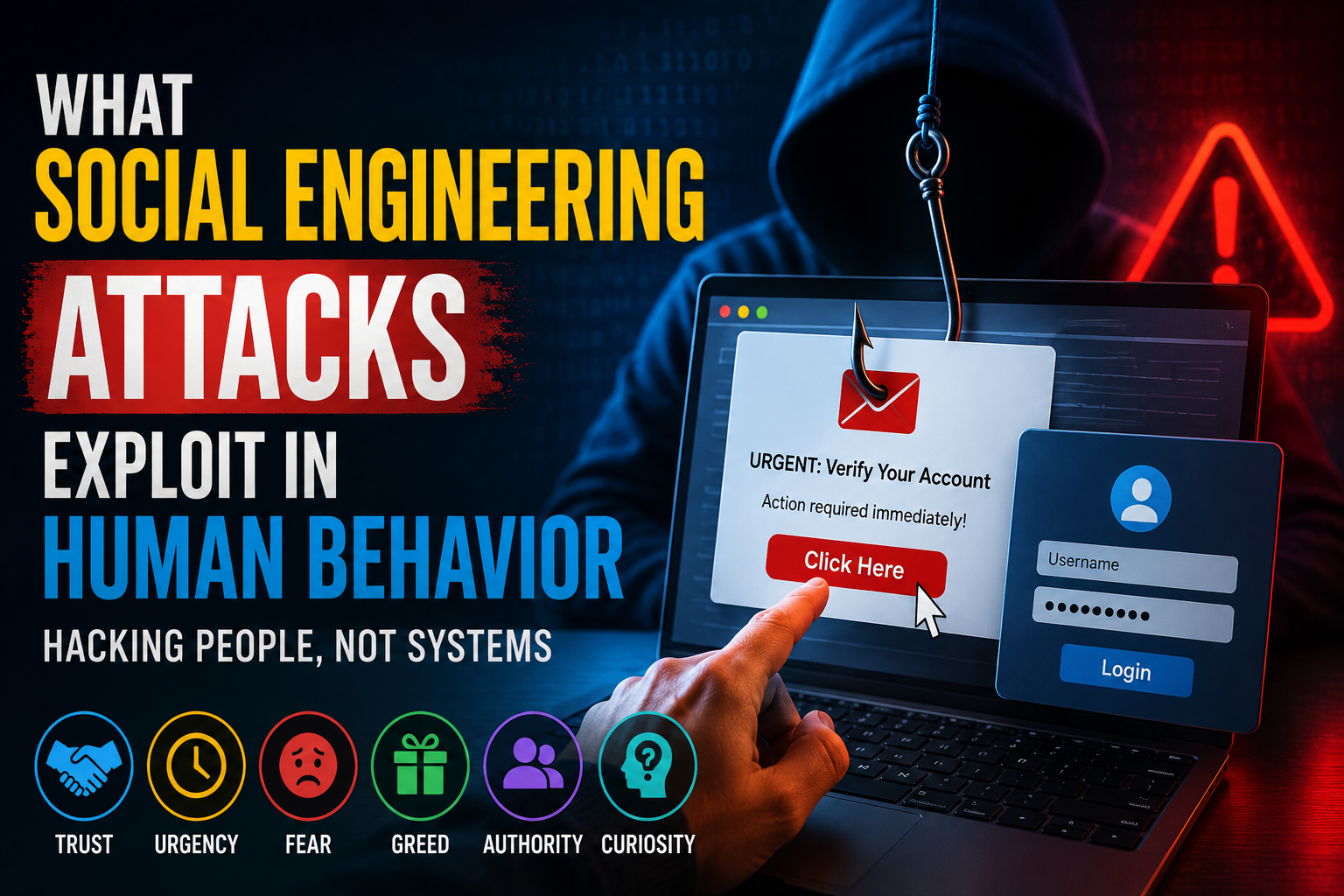
Publicly available information can also make manipulation attempts more convincing. Understanding What Social Engineering Attacks Exploit in Human Behavior can help explain why information shared online can sometimes be used against the person who posted it.
Location Data Can Be Particularly Sensitive
Location information can reveal patterns about people’s lives.
Repeated location data may indicate where someone lives, works, studies or regularly spends time.
It can also reveal travel patterns and visits to particular places.
Many applications request location permissions because location is central to their functionality. Maps and transportation services are obvious examples.
Other applications may request location access for features that are less dependent on it.
Reviewing which apps have location permission—and whether they genuinely need it—can be an important privacy habit.
Smartphones Contain an Extraordinary Amount of Personal Information
For many people, the smartphone is one of the most information-rich devices they own.
It may contain photographs, messages, contacts, financial applications, authentication tools, documents, location history and access to numerous online accounts.
Losing control of a smartphone can therefore have consequences beyond replacing the physical device.
A strong screen lock, biometric authentication, automatic updates and device encryption can help protect information if a phone is lost or stolen.
Users should also review which applications have access to sensitive features such as the camera, microphone, contacts, files and location.
These protections form part of broader endpoint security. For more information, see How Computer and Mobile Device Security Protects Endpoints.
Passwords Are Still a Privacy Issue
Passwords are usually discussed as a cybersecurity concern, but they are also fundamental to digital privacy.
If an attacker gains access to an online account, they may be able to view personal communications, photographs, financial information or other sensitive data.
Using strong and unique passwords reduces the risk that a compromised password from one service can be used to access another.
Password managers can make this easier by generating and storing unique credentials.
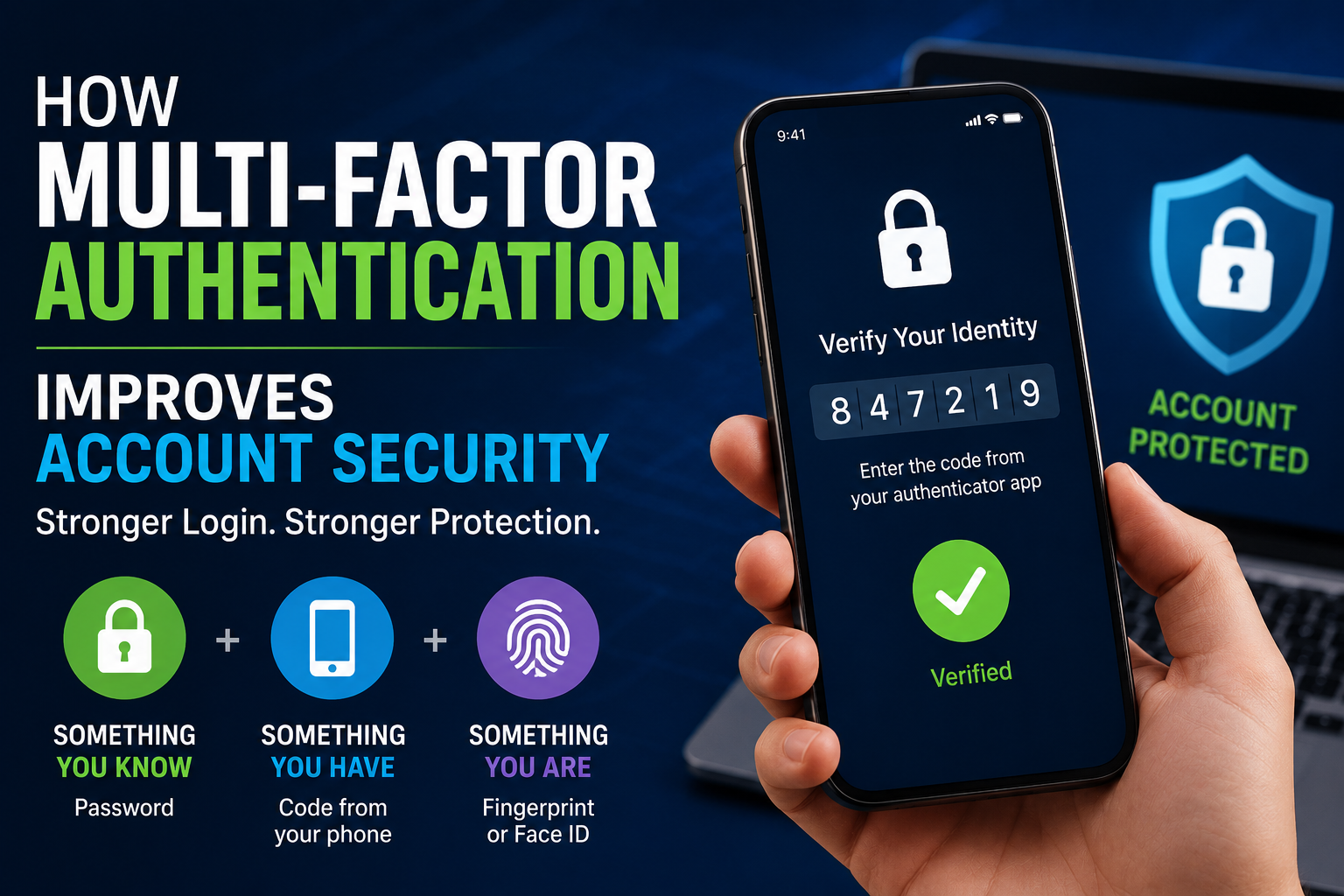
Multi-factor authentication adds another layer of protection by requiring an additional verification method beyond the password.
For a deeper look at authentication, password managers, MFA and passkeys, see the Password Security Guide.
These measures do not guarantee perfect security, but they can significantly improve account protection.
For a closer explanation of how additional authentication factors strengthen account protection, see How Multi-Factor Authentication Improves Account Security.
Public Wi-Fi Requires Caution
Public wireless networks can be convenient in airports, hotels, restaurants and other shared spaces.
However, users should avoid assuming that every public network is trustworthy.
Attackers can sometimes create networks designed to resemble legitimate Wi-Fi services or exploit poorly secured connections.
Using encrypted websites, keeping devices updated and avoiding sensitive transactions on questionable networks can reduce risk.
A reputable virtual private network may also provide additional protection in certain circumstances, although a VPN does not make someone completely anonymous online.
For a broader explanation of protecting wireless connections, see Wi-Fi Security Explained.
Digital Privacy Matters to Businesses Too
Privacy is not only an individual concern.
Businesses collect customer, employee and supplier information and therefore have responsibilities regarding how that data is handled.
A privacy failure can expose customers to identity theft, fraud, harassment or other harms. It can also damage a company’s reputation and create legal or regulatory consequences.
Organizations need policies and technical controls governing data collection, access, retention and deletion.
Employees should also understand how to handle sensitive information safely.
Privacy is ultimately an organizational responsibility rather than something that can be solved by a single piece of software.
Businesses should consider privacy alongside broader cybersecurity risk management and data security.
Data Breaches Show Why Privacy and Security Matter
Even organizations with sophisticated security systems can experience data breaches.
When sensitive information is exposed, the consequences can extend beyond the organization that experienced the incident.
Stolen credentials may be used in later attacks. Personal information may be combined with data from other breaches. Financial details can potentially facilitate fraud.
This is why consumers should be cautious about reusing passwords and should pay attention to security notifications from companies they use.
Businesses, meanwhile, need to treat personal data as an asset requiring strong protection throughout its entire lifecycle.
If personal information is compromised, understanding how incident response handles cybersecurity events becomes particularly important.
Privacy Settings Are Worth Reviewing
Many digital services provide privacy and security controls, but users often configure them once and never revisit them.
That can be a mistake.
Applications change. Services introduce new features. Permissions can evolve, and users may install new software without considering what information it can access.
A periodic privacy review can include:
- Checking application permissions
- Reviewing account privacy settings
- Removing unused applications
- Deleting old accounts
- Reviewing connected devices
- Checking location access
- Examining advertising preferences
- Updating passwords
- Enabling multi-factor authentication
These steps do not require advanced technical knowledge.
They simply give users more awareness and control.
Children Need Special Privacy Protection
Children can face particular privacy risks because they may not fully understand the long-term consequences of sharing information online.
Parents and guardians can help by discussing privacy in age-appropriate ways rather than relying solely on technical restrictions.
Children should understand why they should be careful about sharing information such as their full name, address, school, passwords or live location.
It is also important to recognize that photographs and videos can reveal information unintentionally.
Privacy education can help children develop habits that remain useful as they become more independent internet users.
Privacy Does Not Mean Complete Anonymity
Digital privacy is sometimes misunderstood as the ability to disappear completely from the internet.
For most people, that is neither realistic nor necessary.
Using online banking, shopping platforms, government services, healthcare systems and communication tools often requires some personal information.
The goal is not necessarily to eliminate all data sharing.
Instead, meaningful privacy means understanding what information is being shared and having reasonable choices over how it is used.
That distinction makes privacy a practical issue rather than an impossible pursuit of total anonymity.
The Role of Privacy Laws and Regulations
Governments around the world have introduced laws and regulations intended to establish rules for handling personal information.
Although requirements differ between jurisdictions, privacy frameworks commonly address issues such as transparency, consent, data access, security, retention and individual rights.
Regulation can establish minimum standards, but laws alone cannot eliminate every privacy risk.
Technology changes quickly, and organizations continually develop new ways of collecting and analyzing information.
Consumers therefore still benefit from understanding how their information is used and making informed choices about the services they use.
Artificial Intelligence Raises New Privacy Questions
The growth of artificial intelligence has added another dimension to digital privacy.
AI systems can process large amounts of information and identify patterns across datasets. That creates opportunities for better products and services but also raises questions about how personal information is collected and used to develop or operate AI systems.
People may also enter sensitive information into AI tools without fully considering where that information goes or how it may be handled.
As AI becomes more deeply integrated into everyday technology, transparency around data practices will become increasingly important.
Users should understand what information a digital tool requests before providing sensitive personal details.
For the broader security implications of AI, see Cybersecurity in the AI Era.
Small Habits Can Make a Meaningful Difference
Digital privacy can seem overwhelming because modern technology involves so many interconnected services.
Fortunately, improving privacy does not require abandoning the internet.
Simple habits can make a meaningful difference:
-
Use unique passwords for important accounts.
-
Enable multi-factor authentication whenever available.
-
Keep operating systems and applications updated.
-
Review application permissions regularly.
-
Think carefully before sharing sensitive information.
-
Limit location access to applications that genuinely need it.
-
Delete accounts and applications that are no longer used.
-
Be cautious about unexpected messages and links.
-
Review privacy settings on major online accounts.
-
Consider what information a service actually needs before providing it.
None of these steps guarantees complete privacy, but together they can reduce unnecessary exposure.
For additional protection against scams and manipulation, it is also useful to understand what social engineering attacks exploit in human behavior and how phishing differs from social engineering.
Privacy Is About Control, Not Secrecy
Digital privacy matters because personal information can reveal far more about people than they may realize.
The issue is not simply whether someone has something to hide. It is whether individuals have meaningful control over information about their lives and whether organizations handle that information responsibly.
As technology becomes increasingly embedded in communication, finance, entertainment, healthcare, transportation and everyday life, the amount of data generated by ordinary activities will continue to grow.
That makes digital privacy less of a niche technology concern and more of a basic part of modern life.
The most practical approach is to stay informed, question unnecessary data collection and use the privacy and security tools available. A few thoughtful decisions today can make it considerably harder for personal information to become something people lose control over tomorrow.