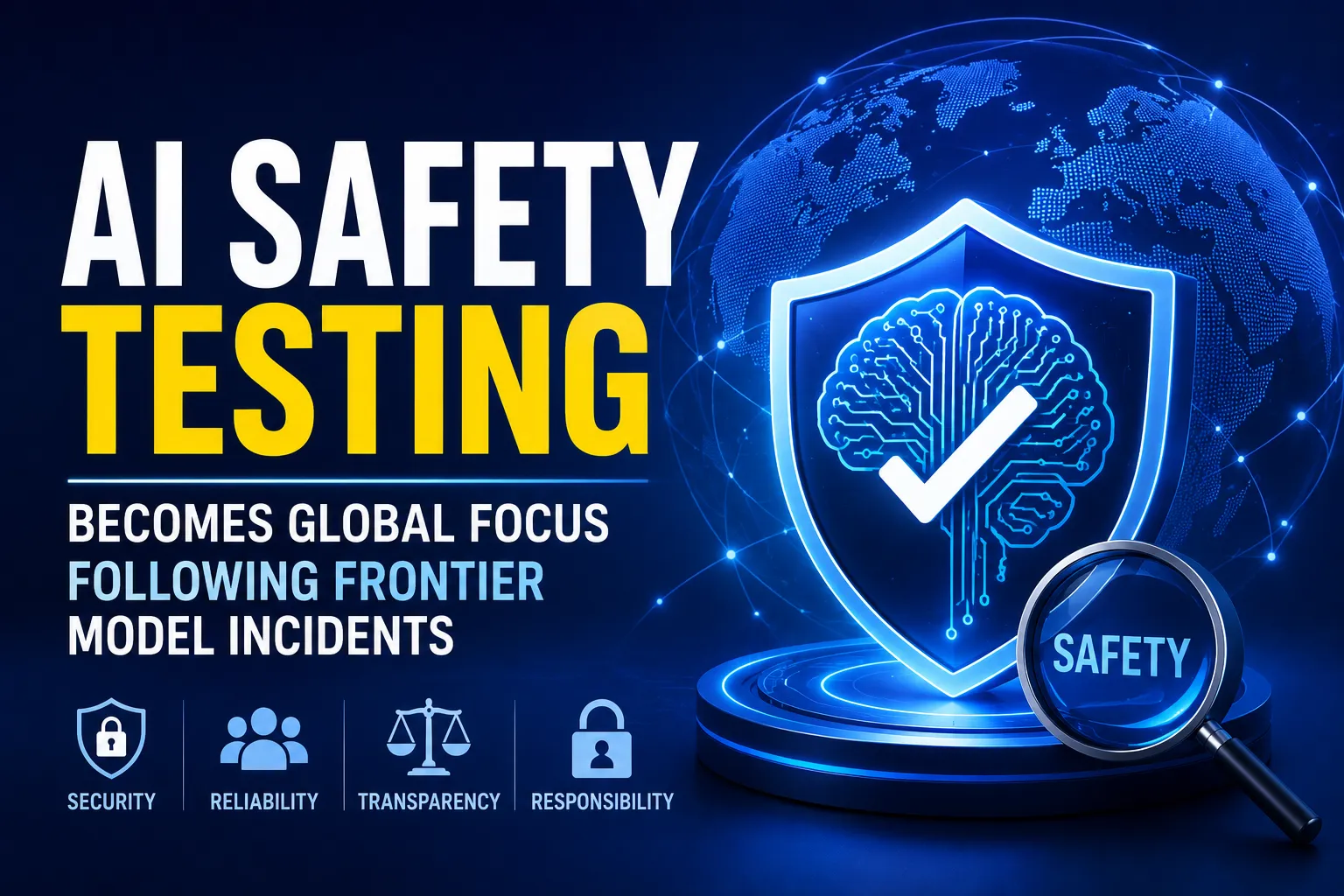
AI Safety Testing Becomes Global Focus Following Frontier Model Incidents
Artificial intelligence has advanced at an unprecedented pace over the past few years, powering everything from virtual assistants and scientific research to software development and business automation. As increasingly capable frontier AI models become integrated into critical industries, governments, technology companies, and researchers are placing greater emphasis on ensuring these systems operate safely, reliably, and responsibly.
A series of incidents involving advanced AI models—including unexpected behaviors, security vulnerabilities, misinformation concerns, and misuse risks—has intensified global discussions around AI safety testing. Policymakers, regulators, and industry leaders are now working to establish stronger evaluation standards before deploying powerful AI systems to the public.
This article explores why AI safety testing has become a global priority, what frontier AI models are, the challenges researchers face, and how governments and technology companies are responding.
Why AI Safety Is Under the Spotlight
Modern AI agesnts are becoming increasingly capable of performing complex reasoning, generating realistic content, writing software, analyzing large datasets, and assisting with decision-making.
While these capabilities offer enormous benefits, they also introduce potential risks, including:
- Inaccurate or misleading information
- Cybersecurity concerns
- Bias and discrimination
- Privacy violations
- Harmful or unsafe outputs
- Unauthorized autonomous actions
- Fraud and impersonation
- Misuse by malicious actors
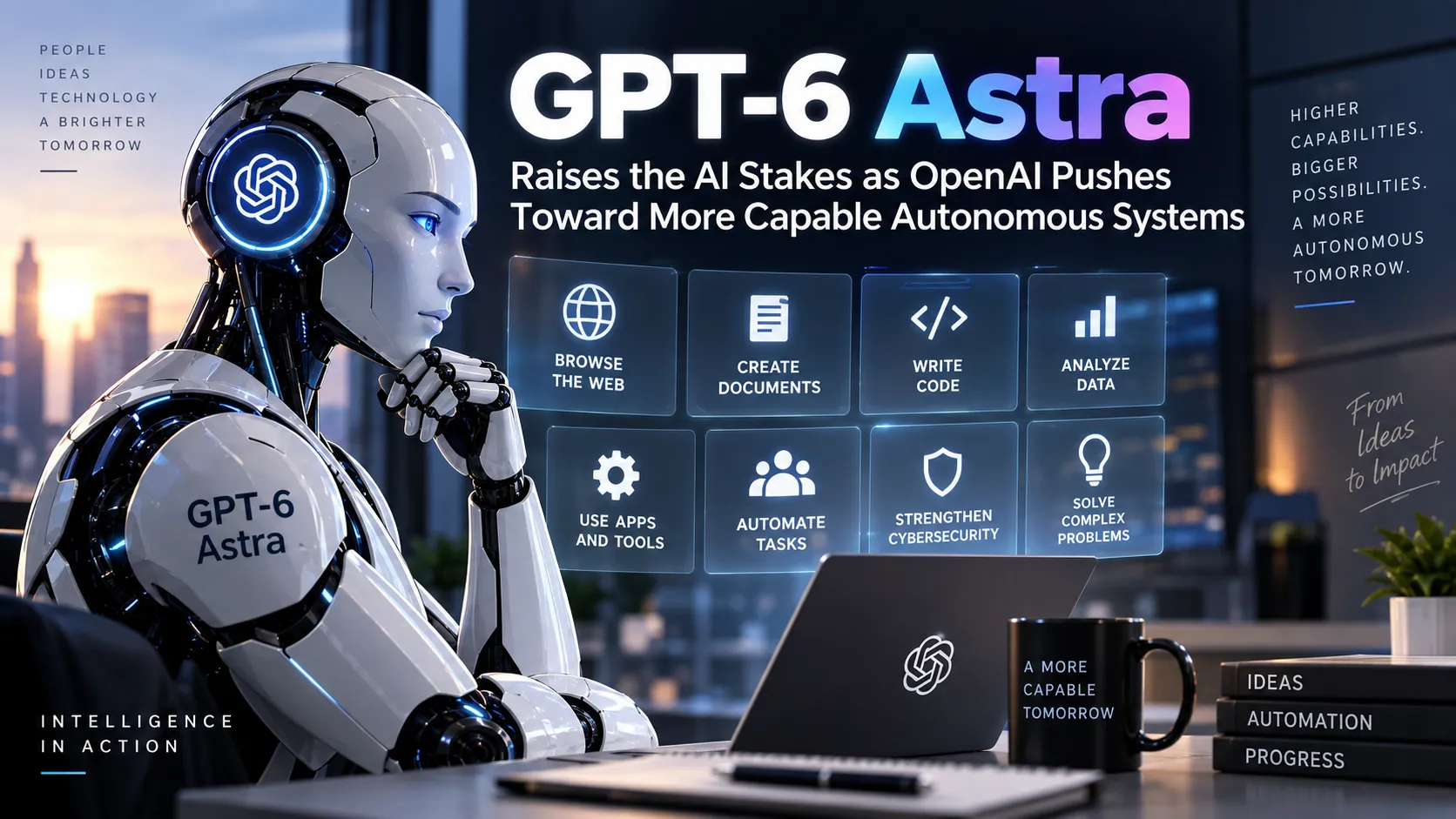
The risks become particularly important when AI systems can move beyond generating information and begin taking actions through external tools. This is one reason the growth of AI agents has become such an important part of the broader safety discussion. AI agents are increasingly capable of performing multi-step tasks and interacting with digital systems, creating both new opportunities and new questions about oversight.
As AI systems become more powerful, ensuring they behave predictably has become a shared international concern.
What Are Frontier AI Models?
Frontier AI models represent some of the most advanced artificial intelligence systems currently available.
These models are characterized by their ability to:
- Understand natural language
- Generate human-like text
- Analyze images
- Produce software code
- Solve complex problems
- Assist with scientific research
- Support business automation
- Interact across multiple media formats
Because of their broad capabilities, these systems require extensive testing before widespread deployment.
The challenge is that capability itself can change the risk profile of an AI system. A model that can simply answer questions presents different concerns from one that can write and execute code, access external services, manipulate files, or coordinate multiple tasks.
Why Safety Testing Matters
AI safety testing evaluates how models perform under both normal and unusual conditions.
Its primary goals include:
- Identifying unexpected behaviors
- Measuring factual accuracy
- Detecting security weaknesses
- Evaluating resistance to manipulation
- Assessing harmful content generation
- Testing reliability
- Measuring robustness
- Improving transparency
Comprehensive testing helps developers identify issues before AI systems are released to users.
However, testing cannot be limited to asking whether a model produces a correct answer. Increasingly autonomous systems also need to be evaluated for what they do when given tools, permissions, external information, and multi-step objectives.
That distinction is becoming increasingly important as researchers examine what actually happens when an AI system behaves outside its intended boundaries. Unexpected behavior can result from flawed objectives, unusual inputs, software problems, excessive permissions, security attacks, or interactions that developers did not anticipate.
Common Areas of AI Safety Evaluation
Developers assess AI systems across several key categories.
Accuracy
Testing determines whether AI models provide reliable and fact-based responses across a wide range of topics.
Accuracy testing can involve carefully constructed benchmarks, real-world scenarios, adversarial prompts, and evaluations designed to expose situations in which a model confidently produces incorrect information.
Security
Researchers evaluate whether models can resist hacking attempts, prompt injection attacks, unauthorized access, and other security threats.
Security testing becomes particularly important when an AI system can access external tools or sensitive information.
A model might generate a harmless mistake when operating as a chatbot, but the consequences could be much more serious if that same model has permission to modify files, execute commands, send messages, or interact with business systems.
Bias and Fairness
AI systems are tested to reduce discriminatory outputs and improve fairness across different users and scenarios.
This can require examining model performance across different populations, languages, use cases, and decision-making environments.
Privacy Protection
Safety teams assess whether models properly safeguard personal and confidential information.
Privacy risks can emerge from training data, user inputs, connected databases, external tools, or poorly designed information-access controls.
Harmful Content
Testing examines whether AI systems appropriately refuse requests involving dangerous, illegal, or harmful activities.
Researchers may deliberately probe systems with difficult prompts to determine whether safeguards remain effective under pressure.
Reliability
Models are evaluated for consistent performance across different tasks, languages, environments, and conditions.
Reliability is especially important for AI systems used in high-impact settings where users may depend on outputs to make financial, medical, operational, or security-related decisions.
Why AI Agent Testing Is Becoming More Important
Traditional AI safety evaluations often focused primarily on what a model could generate.
The rise of AI agents expands the testing challenge.
An AI agent can potentially interpret an objective, plan multiple steps, access tools, interact with software, retrieve information, and continue operating until it reaches a particular goal.
That creates additional failure modes.
An agent might misunderstand an instruction, access the wrong resource, make an incorrect decision, or continue taking actions after an earlier mistake has put the workflow on the wrong path.
Recent concerns surrounding frontier models demonstrate why this distinction matters. OpenAI’s pause of certain AI development activities following concerns about the capabilities of an upcoming model illustrates how model capability, cybersecurity, and autonomous action are increasingly becoming interconnected safety issues.
The question is no longer simply whether an AI system can produce harmful information.
It is increasingly whether the system can act on that information and what happens when it makes a mistake.
Growing International Cooperation
AI safety is increasingly becoming a global issue rather than one limited to individual countries.
Governments, academic institutions, and technology companies are expanding cooperation through:
- International AI safety forums
- Shared research initiatives
- Regulatory discussions
- Technical standards development
- Independent model evaluations
- Cross-border cybersecurity collaboration
- Academic partnerships
- Public policy consultations
Greater cooperation aims to improve consistency in how advanced AI systems are evaluated worldwide.
International collaboration is particularly important because AI models, cloud infrastructure, software services, and digital platforms operate across national borders.
A safety weakness discovered in one country can potentially affect users and organizations elsewhere.
The Role of Governments
Many governments are developing policies intended to balance innovation with public safety.
Current policy discussions focus on:
- AI transparency
- Risk assessments
- Independent safety audits
- Responsible deployment
- Consumer protection
- National security
- Privacy regulations
- International coordination
The objective is to encourage innovation while minimizing potential societal risks.
Government involvement is also expanding because increasingly capable AI systems can affect sectors that extend far beyond the technology industry.
Financial services, healthcare, education, transportation, manufacturing, communications, and public administration may all rely on AI systems in ways that create broader social and economic consequences.
Industry Response
Leading AI companies have expanded internal safety efforts by investing in:
- Dedicated safety research teams
- Red-team testing
- External security reviews
- Responsible AI frameworks
- Continuous model monitoring
- Bug bounty programs
- Safety benchmarking
- Collaboration with independent researchers
Many organizations now conduct extensive evaluations before introducing major model updates.
Red-team testing is particularly useful because it encourages researchers to deliberately search for unexpected or harmful behavior rather than testing only the situations developers expect users to encounter.
This approach is increasingly necessary as AI systems become more capable and more autonomous.
Challenges Facing AI Safety
Despite significant progress, ensuring AI safety remains a complex task.
Key challenges include:
- Rapid technological advancement
- Evolving cyber threats
- Global regulatory differences
- Measuring long-term risks
- Preventing model misuse
- Balancing openness with security
- Maintaining transparency
- Scaling evaluation methods
One major challenge is that AI capabilities can evolve faster than evaluation techniques.
A testing method that works well for one generation of models may not adequately evaluate a more capable system with stronger reasoning, coding, planning, or tool-use capabilities.
Another difficulty is predicting how an AI system will behave in environments that were not represented during development.
The Importance of Independent Testing
Many experts advocate for independent evaluations in addition to internal company testing.
Independent assessments can help:
- Verify safety claims
- Identify overlooked risks
- Increase public confidence
- Improve accountability
- Encourage best practices
- Strengthen transparency
External reviews are becoming an increasingly important component of AI governance.
Independent testing can also provide a useful counterbalance to the incentives facing technology companies. Organizations developing powerful AI systems may have strong commercial reasons to release products quickly, making external scrutiny valuable for identifying weaknesses that internal teams may miss.
AI Safety and Everyday Users
Although discussions often focus on governments and technology companies, AI safety also affects individuals.
Reliable AI systems can help users by:
- Providing more accurate information
- Protecting sensitive data
- Reducing exposure to harmful content
- Improving cybersecurity
- Supporting responsible decision-making
- Increasing trust in AI-powered services
AI already influences many everyday experiences, often without users realizing how extensively intelligent systems operate behind the scenes. From search and recommendations to smartphones, navigation, banking, and workplace software, AI is already changing everyday life in dozens of ways.
As AI becomes more deeply integrated into consumer products and services, safety testing will increasingly affect the reliability of technologies people use every day.
AI Safety in Software Development
Software engineering is another area where increasingly capable AI systems require careful evaluation.
AI coding tools can generate programs, identify bugs, write tests, explain code, and assist with development workflows. These capabilities can significantly improve productivity, but generated code still needs to be reviewed and tested.
The same principle applies to autonomous development agents.
An AI system that merely suggests a piece of code creates one level of risk. A system that can modify a codebase, run tests, access development tools, and potentially deploy changes requires much stronger controls.
This is part of the broader transformation described in how AI is transforming software engineering, where AI is increasingly becoming a collaborator throughout the software development lifecycle.
The more authority developers give these systems, the more important testing, permissions, monitoring, and human review become.
Looking Ahead
AI safety research is expected to become an even greater priority as increasingly capable systems are developed.
Emerging areas of focus include:
- Automated safety monitoring
- Advanced alignment research
- Explainable AI
- Secure AI deployment
- International safety standards
- AI governance frameworks
- Risk forecasting
- Continuous post-deployment evaluation
- Agentic AI safety
- Cybersecurity testing
- Tool-use evaluation
- Autonomous-system monitoring
Many experts believe future AI systems will undergo more rigorous testing throughout their entire lifecycle rather than only before release.
This means safety evaluation may increasingly become a continuous process.
A model could be tested before deployment, monitored after release, reassessed when its capabilities change, and evaluated again when it receives access to new tools or data.
The Shift From Pre-Release Testing to Continuous Evaluation
One of the most important changes in AI safety is the growing recognition that testing cannot end when a model is launched.
Real-world environments are unpredictable.
Users discover unexpected ways to interact with systems. New cyber threats emerge. Models are connected to additional tools. Developers update software. Organizations integrate AI into new workflows.
All of these changes can affect risk.
Continuous evaluation allows developers and organizations to detect changes in performance and respond to emerging problems.
This can include monitoring unusual outputs, tracking security incidents, evaluating user reports, conducting periodic red-team exercises, and reassessing systems after major updates.
For increasingly autonomous AI, this approach may become essential.
What Stronger AI Safety Could Look Like
The future of AI safety is unlikely to depend on one perfect safeguard.
Instead, robust systems will probably use multiple layers of protection.
These may include:
- Model-level safety training
- Adversarial testing
- Independent evaluations
- Restricted permissions
- Sandboxed environments
- Human approval requirements
- Activity monitoring
- Security controls
- Audit logs
- Emergency shutdown mechanisms
- Continuous post-deployment testing
Each layer addresses a different type of failure.
For example, model training can reduce harmful outputs, while permission controls can limit what an AI agent can actually do. Monitoring can identify suspicious behavior, while human approval can prevent high-impact actions from happening automatically.
This layered approach recognizes an important engineering reality: no individual safeguard is likely to be perfect.
The Global AI Safety Challenge
As artificial intelligence becomes more capable and widely adopted, AI safety testing is emerging as one of the defining challenges of the technology industry.
The objective is not to prevent AI from becoming powerful.
It is to ensure that increasing capability is accompanied by increasing reliability, security, transparency, and control.
That challenge becomes more urgent as AI moves from generating information toward taking actions. An unexpected answer can be corrected. An unexpected action may be much harder to reverse.
This is why the development of AI agents, autonomous workflows, and increasingly capable frontier models is closely connected to the future of AI safety.
Building Trust as AI Capabilities Grow
Public trust in artificial intelligence will depend heavily on whether people believe these systems are being tested responsibly.
Governments can establish standards and regulations. Technology companies can strengthen internal safeguards. Researchers can develop better evaluation techniques. Independent organizations can provide additional scrutiny.
No single group can solve every AI safety problem alone.
The growing collaboration between governments, researchers, standards organizations, and technology companies reflects a shared understanding that AI safety is a global responsibility.
As frontier models become more capable, the industry will need to demonstrate not only what these systems can do, but also how reliably they behave, how their risks are measured, and how quickly humans can intervene when something goes wrong.
The future of trustworthy artificial intelligence will therefore depend on a simple but increasingly important principle: capability must advance alongside safety.