Apple and Android Makers Push New AI Features as Consumer Expectations Rise
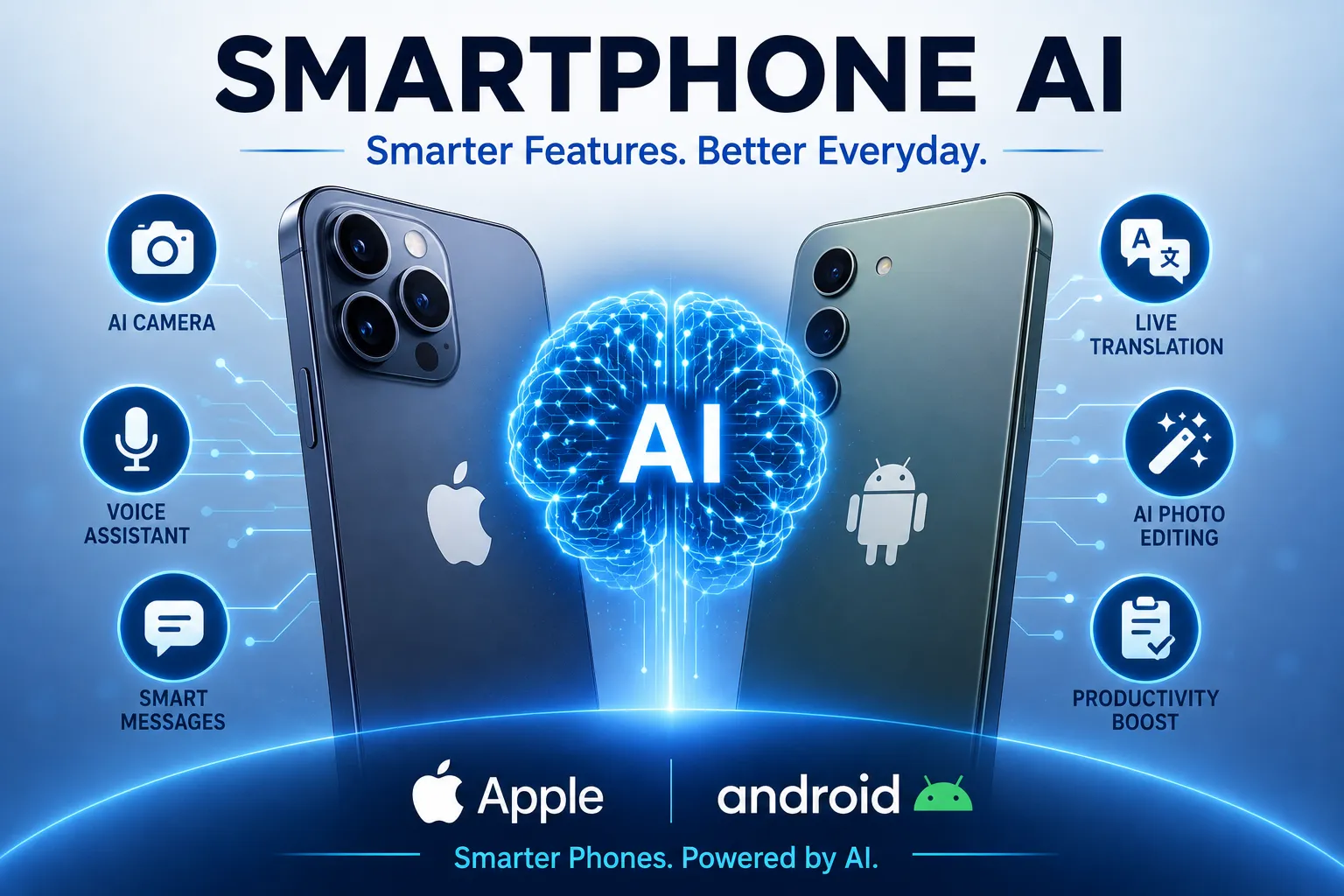
Artificial intelligence has become the latest battleground in the global smartphone industry. As consumers increasingly expect their devices to do more than make calls, browse the internet, and take photos, smartphone manufacturers are racing to integrate powerful AI features directly into their operating systems. From smarter virtual assistants and real-time language translation to advanced photo editing and productivity tools, AI is quickly becoming a defining feature of modern smartphones.
The competition is no longer centered solely on faster processors or better cameras. Instead, Apple, Google, Samsung, and other Android manufacturers are investing heavily in on-device AI agents, cloud-powered intelligence, and personalized user experiences that promise to make smartphones smarter, faster, and more intuitive than ever before.
AI Becomes the Smartphone Industry’s Biggest Selling Point
For years, smartphone innovation focused on hardware improvements such as camera quality, battery life, display technology, and processing power. While these remain important, recent product launches have shifted attention toward artificial intelligence.
Consumers increasingly expect their smartphones to:
- Understand natural language
- Organize information automatically
- Edit photos intelligently
- Translate conversations in real time
- Summarize emails and documents
- Improve productivity
- Personalize everyday experiences
As a result, AI capabilities are becoming a key factor influencing purchasing decisions.
Apple Expands Apple Intelligence
Apple continues expanding its Apple Intelligence platform across supported devices, introducing AI-powered features designed to improve productivity while emphasizing user privacy.
Recent capabilities include:
- Writing assistance
- Smart notification summaries
- Image generation
- Intelligent photo editing
- Email and message summarization
- Context-aware Siri improvements
- AI-assisted document creation
Unlike many cloud-only AI systems, Apple places significant emphasis on on-device processing, allowing many requests to be handled locally while reducing the amount of personal information sent to external servers.
The company says its approach combines performance with privacy by using specialized AI hardware integrated into its latest chips.
Android Manufacturers Accelerate AI Innovation
Google and other Android manufacturers are also expanding AI functionality across their ecosystems.
New AI-powered features appearing on flagship Android devices include:
- Circle-to-Search
- Live translation
- AI-generated wallpapers
- Intelligent voice assistants
- Call summaries
- Advanced photo editing
- Real-time transcription
- Productivity assistants
Many of these tools combine on-device processing with cloud-based AI models, giving users access to increasingly sophisticated capabilities.
Smarter Cameras Through AI
One of the most noticeable improvements for consumers is AI-enhanced photography.
Modern smartphones use artificial intelligence to automatically:
- Improve lighting
- Reduce image noise
- Remove unwanted objects
- Sharpen details
- Enhance portraits
- Stabilize videos
- Recognize scenes
- Optimize colors
Rather than replacing the camera hardware, AI helps maximize image quality in challenging conditions.
AI Is Making Voice Assistants More Useful
Voice assistants have evolved significantly thanks to generative AI.
New capabilities include:
- More natural conversations
- Better contextual understanding
- Multi-step task completion
- Personalized recommendations
- Calendar management
- Email drafting
- Navigation assistance
Instead of responding only to simple commands, next-generation assistants can understand more complex requests and maintain context throughout conversations.
Productivity Takes Center Stage
AI is increasingly helping users save time throughout the day.
Popular productivity features include:
- Automatic meeting summaries
- Smart email replies
- Note organization
- Text rewriting
- Language translation
- Document summarization
- Intelligent reminders
- Task prioritization
These tools are designed to reduce repetitive work while helping users stay organized.
Privacy Remains a Key Selling Point
As AI capabilities expand, privacy has become one of the industry’s biggest priorities.
Manufacturers are investing in:
- On-device AI processing
- Secure hardware chips
- Encrypted cloud computing
- Private data storage
- Permission controls
- Transparent AI settings
Consumers increasingly want powerful AI features without sacrificing control over their personal information.
Hardware Designed for AI
Modern smartphones now include specialized processors built specifically for artificial intelligence.
These chips accelerate tasks such as:
- Image recognition
- Speech processing
- Language translation
- Face recognition
- Machine learning inference
- Battery optimization
Dedicated AI hardware allows devices to process complex tasks more efficiently while reducing battery consumption.
Why Consumers Are Upgrading
Although smartphone hardware improvements have become more incremental, AI features are giving consumers new reasons to upgrade.
Many buyers are attracted by:
- Smarter assistants
- Better cameras
- Faster search
- Improved productivity
- Enhanced accessibility
- Personalized recommendations
- AI-powered creativity tools
Industry analysts believe AI could become one of the strongest drivers of smartphone upgrades over the next several years.
Challenges Facing Mobile AI
Despite rapid progress, manufacturers still face several obstacles.
These include:
- Battery consumption
- Privacy concerns
- Cloud processing costs
- AI hallucinations
- Device compatibility
- Regulatory compliance
- Consumer trust
Balancing innovation with reliability will remain an important challenge as AI becomes more deeply integrated into smartphones.
Competition Is Intensifying
Apple, Google, Samsung, and other smartphone manufacturers are competing aggressively to differentiate their AI ecosystems.
Competition increasingly focuses on:
- Speed
- Privacy
- Personalization
- Productivity
- Creativity
- Cross-device integration
- Developer ecosystems
Rather than competing solely on hardware specifications, companies are positioning AI as the primary reason consumers should choose one platform over another.
What Comes Next?
Industry experts expect smartphone AI to become even more capable over the coming years.
Future developments may include:
- Fully conversational digital assistants
- Real-time multilingual conversations
- AI-powered health insights
- Autonomous task management
- Personalized learning assistants
- Advanced augmented reality experiences
- Smarter wearable integration
- Predictive automation
As processing power increases, more AI features are expected to run directly on devices, improving speed, privacy, and reliability.
Why This Matters
Artificial intelligence is fundamentally changing how consumers interact with their smartphones.
Instead of simply serving as communication devices, modern smartphones are becoming intelligent personal assistants capable of understanding context, automating routine tasks, and helping users work more efficiently.
As competition intensifies, consumers are likely to benefit from faster innovation, improved user experiences, and a growing range of AI-powered tools designed to simplify everyday life.
Conclusion
The race to deliver the smartest smartphone is accelerating as Apple and Android manufacturers invest heavily in artificial intelligence. AI has rapidly evolved from a niche feature into one of the industry’s primary competitive advantages, influencing everything from photography and productivity to security and personalization.
While challenges surrounding privacy, regulation, and reliability remain, the momentum behind mobile AI shows no signs of slowing. As consumer expectations continue to rise, future smartphones are likely to become even more intelligent, context-aware, and capable of assisting users throughout nearly every aspect of their digital lives.