Complete Guide to Digital Transformation for Businesses
Digital transformation has moved from being a technology buzzword to becoming a practical business strategy. Companies of all sizes are using digital tools to improve operations, understand customers, reduce costs, and create new ways of delivering products and services.
But digital transformation is about much more than buying new software or moving files to the cloud. It involves rethinking how a business operates and using technology to make those operations more efficient, connected, and responsive.
For businesses preparing for long-term growth, understanding what digital transformation involves—and how to approach it effectively—can make the difference between simply adopting technology and actually gaining value from it.
For a broader look at the software systems businesses use to support these initiatives, see the Complete Guide to Business Software.
What Is Digital Transformation?
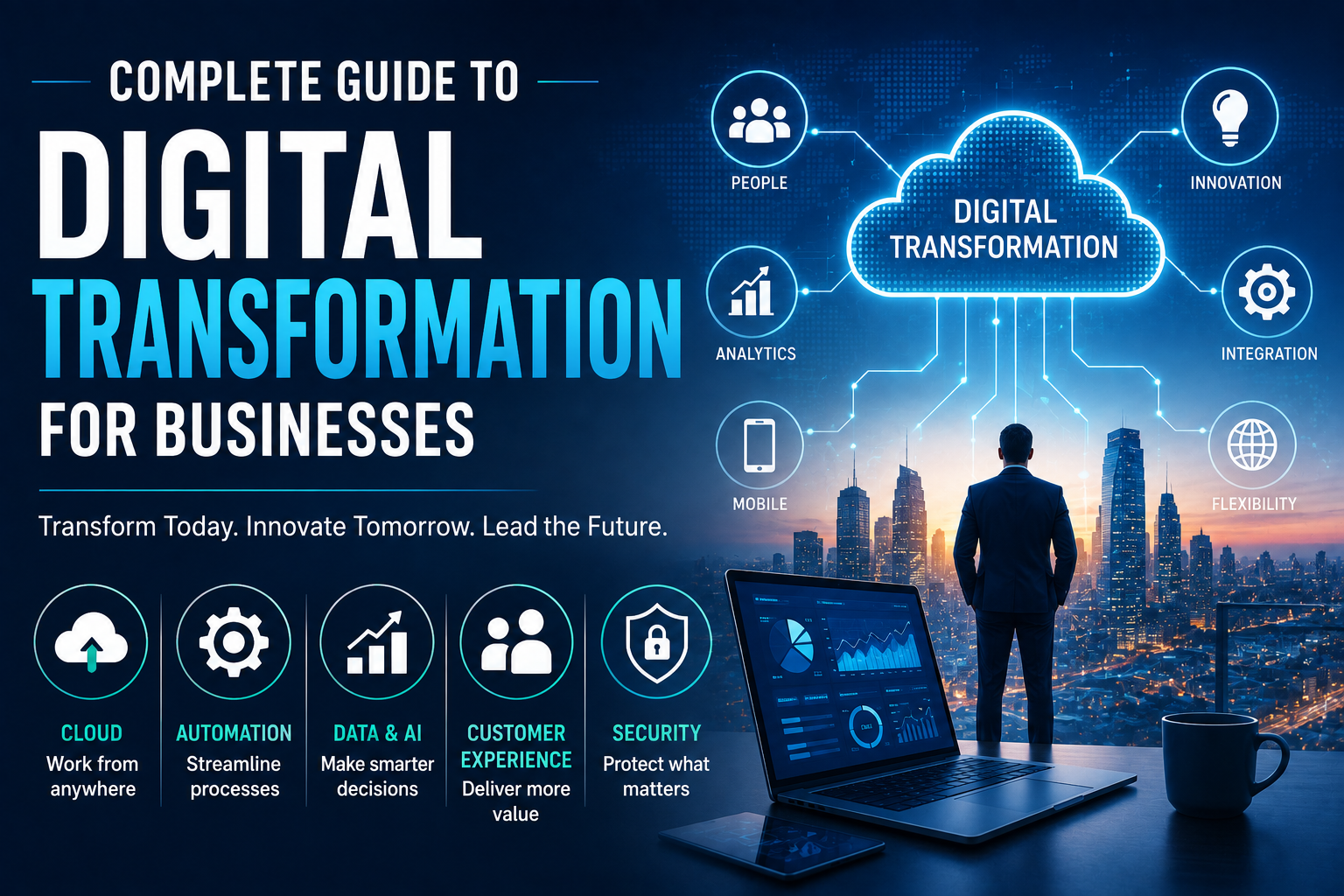
Digital transformation is the process of using digital technologies to fundamentally improve how a business operates, serves customers, and creates value.
It can involve relatively simple changes, such as replacing paper-based processes with digital workflows, as well as more advanced initiatives involving cloud computing, artificial intelligence, data analytics, automation, and connected systems.
A useful way to understand the concept is to separate digitization, digitalization, and digital transformation.
- Digitization converts information from a physical format into a digital one.
- Digitalization uses digital tools to improve an existing process.
- Digital transformation changes processes, business models, customer experiences, or organizational structures through technology.
For example, scanning paper invoices is digitization. Automatically processing those invoices through accounting software is digitalization. Redesigning the entire purchasing and payment process around an integrated digital system is closer to digital transformation.
Why Digital Transformation Matters for Businesses
Modern businesses operate in an environment where customers expect speed, convenience, personalization, and reliable digital experiences.
Technology can help businesses meet these expectations while improving internal operations.
Some of the biggest potential benefits include:
Greater Operational Efficiency
Automation and integrated software can reduce repetitive manual work. Employees can spend less time entering information, searching for documents, or moving data between disconnected systems.
This can improve productivity while reducing the risk of human error.
Businesses looking specifically at ways to automate repetitive processes can also explore the Business Automation Guide.
Better Customer Experiences
Digital platforms can make it easier for customers to communicate with businesses, purchase products, access services, and receive support.
A well-designed digital customer journey can remove unnecessary steps and make interactions more convenient.
Customer relationship management systems, customer-service platforms, analytics tools, and automated communication systems can all contribute to this process.
Improved Decision-Making
Businesses generate enormous amounts of information through sales, customer interactions, websites, financial systems, and other channels.
Analytics tools can turn that information into useful insights, allowing managers to make decisions based on evidence rather than assumptions.
Lower Operating Costs
Technology does not automatically reduce expenses, but well-designed digital processes can eliminate unnecessary work, reduce duplication, and make better use of existing resources.
Cloud services and software-as-a-service platforms can also allow smaller businesses to access capabilities that once required significant infrastructure investment.
Greater Business Agility
Digital businesses can often adapt processes more quickly when customer expectations, market conditions, or internal priorities change.
Flexible systems can make it easier to introduce new services, modify workflows, or expand into new markets.
The Main Technologies Behind Digital Transformation
Digital transformation can involve many different technologies. Businesses do not need to adopt all of them at once.
The right technology depends on the organization’s objectives, existing infrastructure, budget, workforce, and customers.
Cloud Computing
Cloud computing allows businesses to access computing resources, applications, storage, and infrastructure through internet-connected services.
Cloud platforms can reduce the need for organizations to maintain extensive physical infrastructure while making systems easier to scale.
Common cloud applications include:
- Business productivity software
- Customer relationship management systems
- Accounting platforms
- File storage
- Data analytics
- Enterprise applications
- Backup and disaster recovery services
Cloud technology can also make it easier for employees to work across different locations and access business systems without relying entirely on physical office infrastructure.
Artificial Intelligence
Artificial intelligence can help businesses analyze information, automate certain tasks, generate content, identify patterns, and support customer service.
Potential applications include:
- Customer service assistants
- Document processing
- Fraud detection
- Data analysis
- Demand forecasting
- Personalized recommendations
- Workflow automation
The most effective AI projects typically begin with a clearly defined business problem rather than adopting AI simply because the technology is popular.
Businesses should also establish appropriate controls around data privacy, security, accuracy, and human oversight.
Automation
Business process automation uses software to perform repetitive or rule-based tasks with limited human intervention.
Examples include automatically sending invoices, routing customer inquiries, updating records, generating reports, or notifying employees about important events.
Automation can be particularly valuable when employees repeatedly perform the same predictable task.
Rather than viewing automation as a replacement for every human activity, businesses can use it to remove repetitive work and allow employees to concentrate on activities requiring judgment, creativity, communication, and problem-solving.
Data Analytics
Analytics platforms help organizations collect, organize, and interpret business information.
Businesses can use analytics to examine areas such as:
- Revenue
- Customer behavior
- Marketing performance
- Inventory
- Employee productivity
- Operating costs
- Website performance
The goal is not simply to collect more data but to make useful information available to the people responsible for decisions.
Internet of Things
The Internet of Things, or IoT, connects physical devices and sensors to digital systems.
Depending on the industry, IoT can be used to monitor equipment, track assets, measure environmental conditions, manage energy consumption, or gather operational data.
This can provide businesses with real-time information that would otherwise be difficult or expensive to collect manually.
Cybersecurity Technologies
As businesses become more dependent on digital systems, cybersecurity becomes a central part of transformation.
Organizations may need technologies and practices covering:
- Identity and access management
- Multi-factor authentication
- Endpoint security
- Network protection
- Encryption
- Security monitoring
- Backup systems
- Employee security training
Digital transformation without adequate security can introduce significant new risks.
Digital Transformation Is Not Just About Technology
One of the most common mistakes businesses make is treating digital transformation as an IT project.
Technology is important, but successful transformation also involves people, processes, leadership, and organizational culture.
A company can purchase sophisticated software and still fail to improve if employees do not understand how to use it or if the underlying processes remain inefficient.
For example, replacing a paper form with an online form does not necessarily transform a process. If employees still have to manually copy information into three separate systems, much of the original inefficiency remains.
Transformation requires businesses to ask a deeper question:
Can this process be redesigned to work better from the beginning?
This is why businesses should evaluate their entire software environment rather than treating individual applications as isolated purchases.
Common Areas for Digital Transformation
Different departments may have different transformation opportunities.
Sales
Sales teams can use CRM platforms, automated follow-ups, analytics, and digital communication tools to manage customer relationships more effectively.
Marketing
Digital marketing platforms allow companies to measure campaigns, segment audiences, automate communications, and analyze customer behavior.
Finance
Accounting software, digital payments, automated reconciliation, and financial dashboards can streamline financial operations.
Human Resources
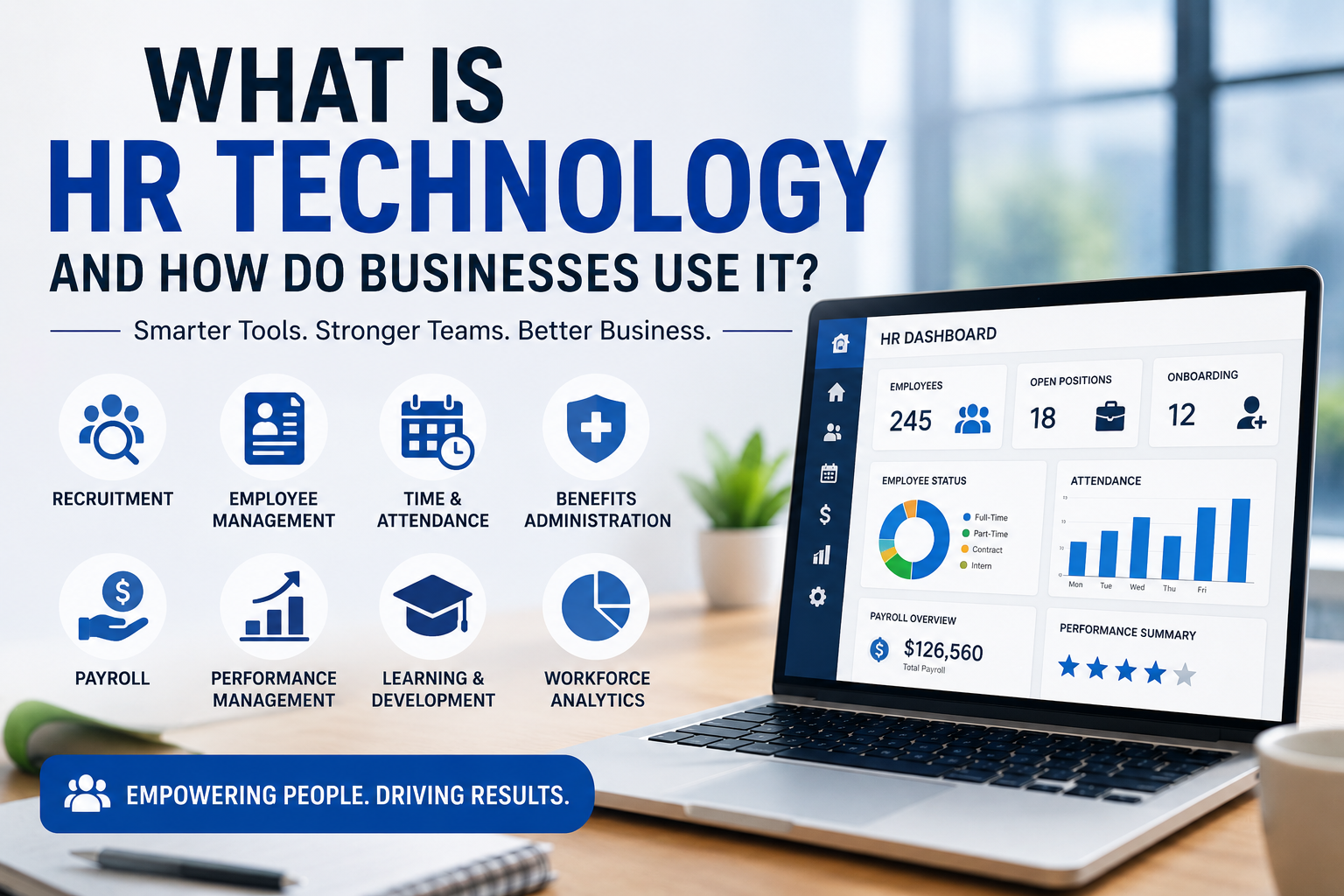
HR teams can use digital systems for recruitment, onboarding, payroll administration, employee records, training, and performance management.
Customer Service
Help desks, knowledge bases, chat systems, and automated workflows can improve response times while helping service teams manage larger volumes of inquiries.
Operations
Businesses can use automation, analytics, inventory systems, and integrated platforms to improve operational visibility and efficiency.
Supply Chain
Digital supply chain systems can provide better visibility into purchasing, inventory, logistics, suppliers, and demand.
How Collaboration Software Supports Digital Transformation
Digital transformation frequently requires employees and departments to work together across different systems and locations.
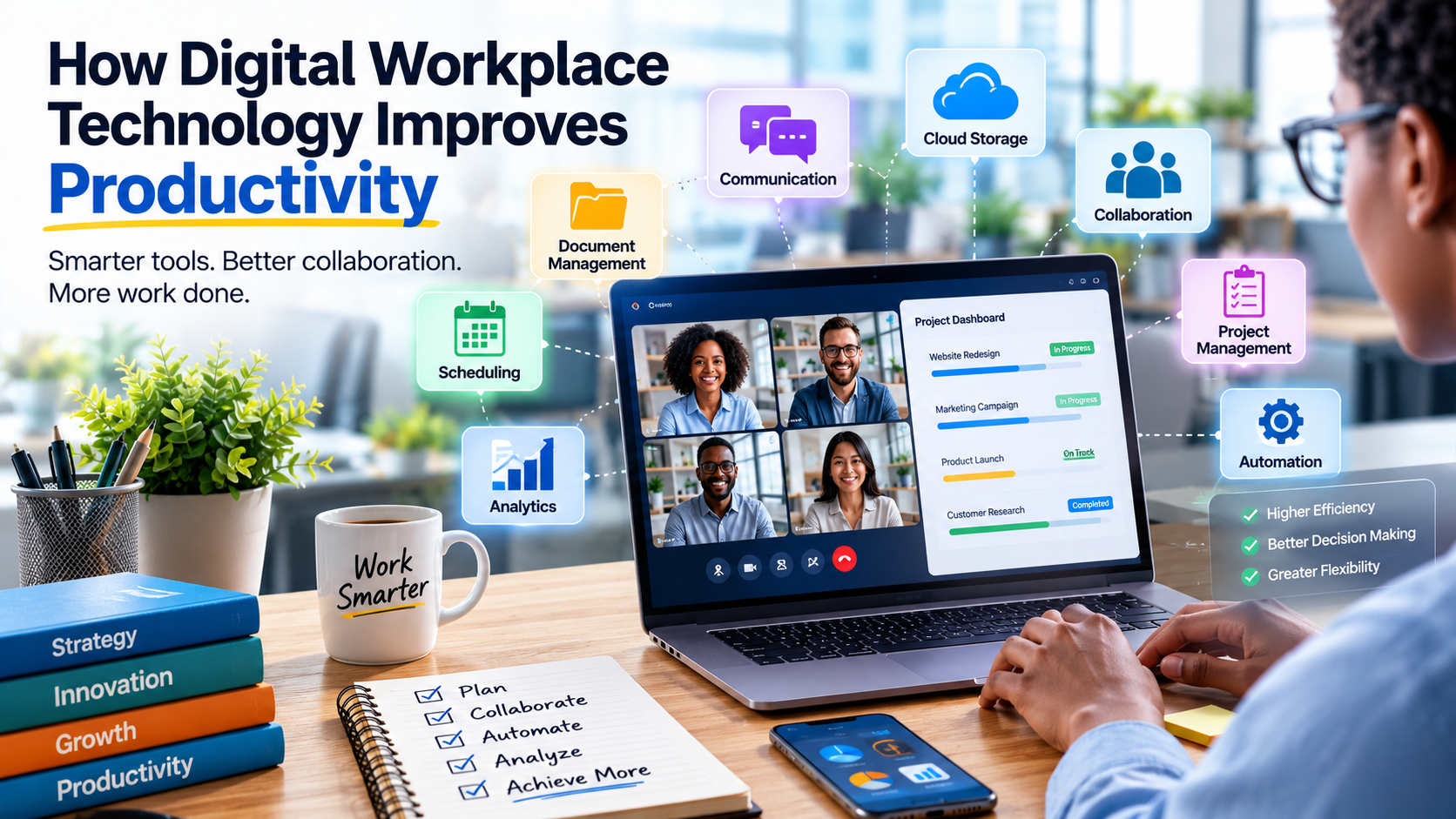
Collaboration software can provide shared spaces for communication, file sharing, project discussions, meetings, and team coordination.
Businesses implementing broader digital transformation initiatives can therefore benefit from understanding how collaboration software works and where it fits into digital workflows.
The technology itself is only part of the solution. Organizations also need clear communication practices so employees know where information should be shared, how decisions should be documented, and which channels should be used for different types of work.
How to Build a Digital Transformation Strategy
A successful transformation should begin with business objectives rather than technology purchases.
1. Identify Business Problems
Start by identifying processes that are expensive, slow, error-prone, difficult to scale, or frustrating for customers and employees.
Ask questions such as:
- Where are employees spending too much time?
- Which processes involve repeated manual data entry?
- Where do customers experience unnecessary delays?
- Which systems do not communicate with one another?
- Where are important decisions being made without reliable data?
These questions can reveal opportunities with measurable business value.
2. Establish Clear Goals
Transformation initiatives should have specific objectives.
For example:
- Reduce customer response times.
- Decrease administrative workload.
- Improve inventory visibility.
- Reduce processing errors.
- Increase online sales.
- Improve data accessibility.
Clear goals make it easier to determine whether a project has actually succeeded.
3. Assess Existing Technology
Before buying new systems, businesses should understand what they already have.
An assessment should consider:
- Existing software
- Hardware
- Data
- Integrations
- Security controls
- Employee skills
- Technology costs
- Legacy systems
Sometimes the best solution is improving an existing platform rather than introducing another one.
4. Prioritize Projects
Not every digital initiative needs to happen immediately.
Businesses can rank projects according to factors such as:
- Business impact
- Implementation difficulty
- Cost
- Risk
- Customer value
- Strategic importance
Starting with high-impact, manageable projects can create momentum for larger initiatives.
5. Prepare Employees
Employees are central to digital transformation.
Training should explain not only how to use a new system but also why the change is happening.
People are more likely to adopt new technology when they understand how it improves their work and when they have opportunities to ask questions.
6. Implement in Manageable Stages
Large transformation projects can become difficult to manage when everything changes simultaneously.
A phased approach allows organizations to test systems, identify problems, gather feedback, and make improvements before expanding the project.
7. Measure Results
Every major transformation initiative should have measurable outcomes.
Depending on the project, businesses might track:
- Processing time
- Operating costs
- Customer satisfaction
- Conversion rates
- Employee productivity
- Error rates
- Revenue
- System adoption
- Customer retention
Technology adoption alone is not proof of transformation. Business outcomes matter more.
The Role of Business Automation in Digital Transformation
Automation is often one of the most practical starting points for digital transformation because businesses can identify specific repetitive processes and measure the results.
For example, an organization might automate invoice processing, customer notifications, employee onboarding tasks, data transfers, or recurring reports.
The key is to examine the complete workflow before automating it.
Automating an inefficient process without redesigning it can simply make a bad process run faster. Businesses should first remove unnecessary steps and then determine which remaining activities can be handled automatically.
This makes automation a useful component of a broader transformation strategy rather than an isolated technology project.
Common Digital Transformation Mistakes
Digital transformation can fail even when a company has sufficient funding and access to good technology.
Buying Technology Without a Clear Problem
A business should not adopt a technology simply because competitors are using it.
The first question should be what business problem the technology is expected to solve.
Changing Too Much at Once
Trying to replace every major system simultaneously can overwhelm employees and create operational disruption.
A staged strategy is often easier to manage.
Ignoring Employee Adoption
Employees who do not understand or trust new systems may avoid using them or develop workarounds.
Training, communication, and feedback are therefore essential.
Underestimating Integration
A new application may work perfectly on its own but create problems if it cannot exchange information with other important systems.
Integration should be considered before implementation.
Neglecting Cybersecurity
Adding connected systems, cloud services, and digital access points can increase an organization’s attack surface.
Security should be incorporated into transformation planning rather than added as an afterthought.
Focusing on Features Instead of Outcomes
A platform with hundreds of features is not necessarily better than a simpler system.
The important question is whether the technology delivers the business outcomes the organization needs.
Digital Transformation for Small Businesses
Digital transformation is not limited to large corporations.
Small businesses can often start with relatively practical improvements.
Examples include:
- Moving documents to secure cloud storage
- Using online accounting software
- Introducing digital payment systems
- Creating automated appointment reminders
- Using CRM software
- Building an online customer support process
- Automating repetitive administrative tasks
- Establishing stronger cybersecurity practices
Small businesses should generally prioritize technologies that solve immediate operational problems and have clear value.
A company does not need a massive technology budget to become more digitally capable.
How to Choose Digital Tools
When evaluating business technology, companies should consider more than price.
Important questions include:
Does It Solve a Real Problem?
A tool should have a clear purpose connected to business needs.
Can It Scale?
The system should be capable of supporting the company’s expected growth without requiring an immediate replacement.
Does It Integrate?
Consider whether it can connect with important systems already in use.
Is It Secure?
Businesses should examine authentication, permissions, encryption, data handling, backups, and security controls.
Is It Easy to Use?
A technically powerful system that employees struggle to use may deliver little value.
What Is the Total Cost?
The purchase price is only one part of the cost. Businesses should also consider implementation, training, integrations, maintenance, upgrades, support, and migration.
The Human Side of Digital Transformation
Technology can change workflows, but people determine whether those changes succeed.
Leadership plays an important role by communicating the purpose of transformation and setting realistic expectations.
Employees should also have opportunities to provide feedback. Workers often understand operational problems better than anyone else because they encounter them every day.
A strong transformation culture encourages experimentation while recognizing that not every technology project will produce the expected result.
Measuring Digital Transformation Success
There is no single metric that defines successful transformation.
Businesses should connect technology projects to measurable outcomes.
For example, if a company introduces automation to process customer requests, it could measure average processing time before and after implementation.
If it introduces a digital sales platform, it could monitor lead conversion, sales cycle length, and customer retention.
The strongest transformation programs establish a baseline before implementation and compare results afterward.
What Comes After Digital Transformation?
Digital transformation is not a project that a company completes once and then forgets.
As technology, customer expectations, and business models evolve, organizations need to continuously evaluate how they operate.
Cloud computing, artificial intelligence, automation, connected devices, data platforms, and other technologies will continue creating new opportunities.
The businesses best positioned to benefit will not necessarily be those that adopt every new technology first. They will be those that develop the ability to identify useful technology, implement it responsibly, measure its impact, and adapt when circumstances change.
Building a More Adaptable Business
Digital transformation ultimately comes down to creating a business that can operate more intelligently and adapt more effectively.
The strongest approach is to begin with real business problems, establish measurable goals, involve employees, protect data, and introduce technology in stages.
When technology is treated as a tool for improving the entire organization—not simply as an IT expense—it can become a foundation for better customer experiences, more efficient operations, stronger decision-making, and sustainable growth.
The most successful transformation strategies also recognize that business software works as an interconnected ecosystem. Collaboration platforms help employees work together, automation tools reduce repetitive processes, and other business applications provide the systems needed to manage customers, projects, finances, and operations.
The objective is therefore not to accumulate as many digital tools as possible. It is to build a connected technology environment in which every important system contributes to a clearer, faster, and more adaptable way of working.