What Is HR Technology and How Do Businesses Use It?
Human resources has changed dramatically as businesses have become more dependent on digital systems. Tasks that once involved filing cabinets, spreadsheets, paper forms and lengthy email chains can now be handled through specialized software.
This collection of digital tools is broadly known as HR technology, or HR tech.
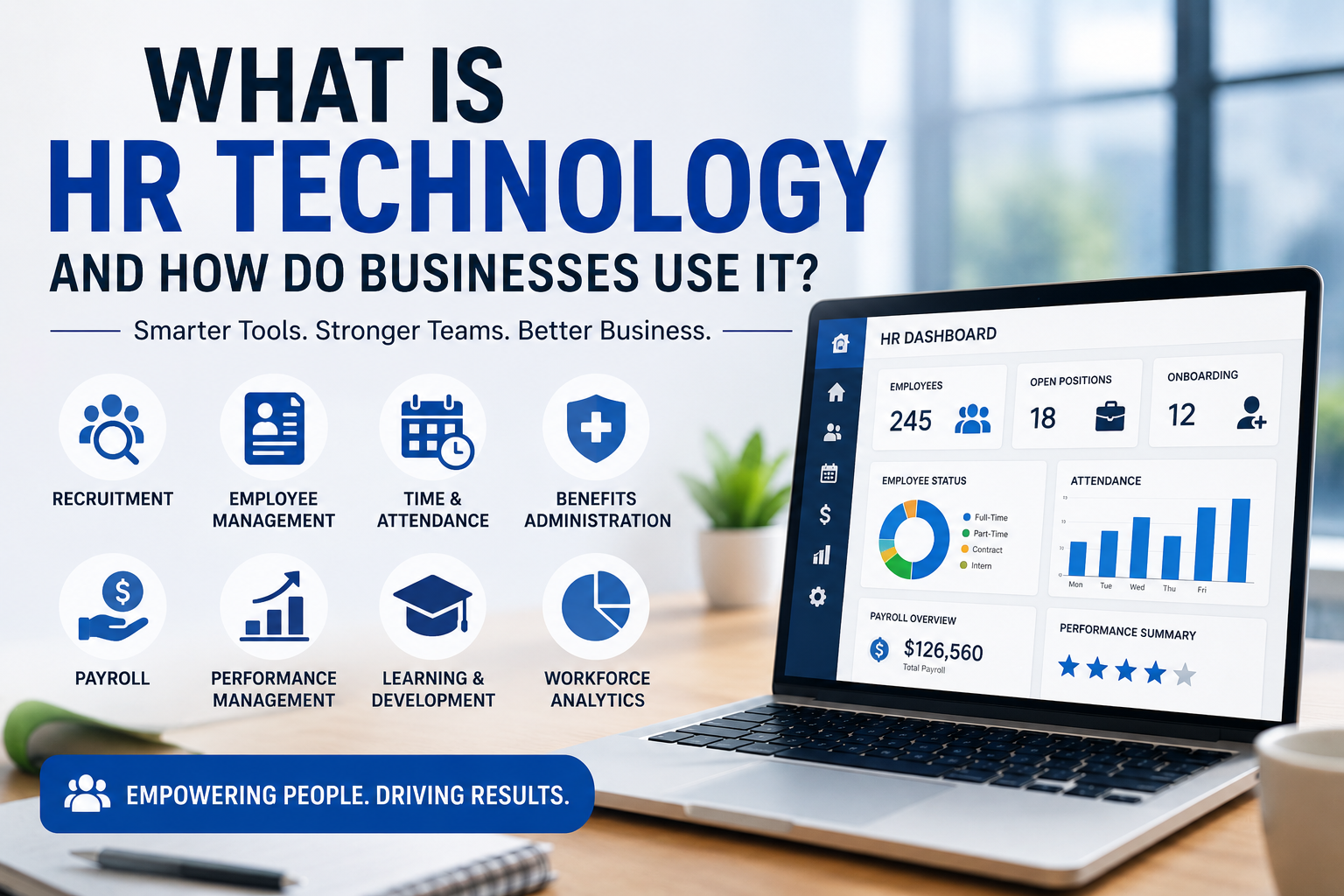
HR technology includes software and platforms that help businesses manage employees, recruit new talent, process payroll, administer benefits, track performance, support learning and analyze workforce information. Some systems focus on one specific task, while others combine multiple HR functions into a single platform.
For businesses of all sizes, the purpose is not simply to digitize paperwork. Well-designed HR technology can make routine processes more efficient, improve access to information and give managers better visibility into the workforce.
HR technology is also one part of the broader business software ecosystem. Organizations often connect HR systems with collaboration, communication, project management, accounting and other business applications. Understanding how these technologies fit together is therefore an important part of building an effective business technology environment. For a broader overview, see our Complete Guide to Business Software.
What Is HR Technology?
HR technology refers to software, digital platforms and related tools used to support human resources and workforce management.
The category is broad. It can include:
- Human resources management systems
- Payroll software
- Recruitment platforms
- Employee onboarding tools
- Time and attendance systems
- Benefits administration platforms
- Performance management software
- Learning management systems
- Workforce analytics tools
- Employee communication platforms
- Employee self-service portals
- Artificial intelligence-powered HR tools
Some businesses use a single integrated platform, while others connect several specialized applications.
The right combination depends on the company’s size, industry, workforce structure and administrative requirements.
The HR Technology Market Has Expanded
Businesses increasingly rely on digital systems to manage large amounts of employee information.
A growing organization may need to keep track of employee records, compensation, working hours, leave, benefits, training, performance reviews and organizational structures.
Managing all of this manually can become difficult as the workforce expands.
HR technology allows many of these processes to be centralized and automated.
Instead of maintaining separate spreadsheets for different departments, an organization can store relevant information within connected systems and give authorized employees access to the information they need.
This illustrates why HR technology should be viewed as part of an organization’s wider business software strategy, rather than as an isolated collection of HR applications.
Human Resources Management Systems
A human resources management system, commonly called an HRMS or HRIS depending on its capabilities and terminology, is often the central technology platform for an organization’s HR function.
An HR system may store information such as:
- Employee names and contact details
- Job titles
- Departments
- Employment status
- Compensation information
- Leave records
- Organizational reporting relationships
- Training records
- Important employment documents
More advanced systems can connect these records to payroll, benefits, recruitment and performance management.
Centralizing information can reduce repetitive data entry and make it easier for HR teams to maintain consistent records.
Payroll Technology
Payroll is one of the most important areas where businesses use HR technology.
Payroll systems can help calculate employee wages or salaries, deductions, taxes and other compensation-related information according to the rules applicable in a particular jurisdiction.
Depending on the platform, payroll software may also support:
- Direct deposits
- Payslip generation
- Tax reporting
- Benefits deductions
- Overtime calculations
- Leave-related adjustments
- Payroll records
Automation can reduce the amount of repetitive work involved in processing payroll.
However, payroll software does not eliminate responsibility. Businesses still need accurate employee information, appropriate configurations and processes for checking payroll results.
Recruitment and Applicant Tracking Systems
Hiring can generate significant administrative work.
Recruiters may receive hundreds or thousands of applications for some positions, making it difficult to organize candidates manually.
An applicant tracking system, or ATS, helps businesses manage recruitment workflows.
It can allow companies to:
- Publish job advertisements
- Collect applications
- Organize candidate profiles
- Track interview stages
- Schedule interviews
- Communicate with applicants
- Maintain recruitment records
Some systems also offer automated screening or matching features.
These tools can save time, but businesses should carefully evaluate how automated screening systems make decisions. Poorly designed systems can potentially introduce unfairness or exclude qualified candidates.
Digital Employee Onboarding
The onboarding process introduces new employees to an organization.
Traditionally, this might involve completing paper forms, attending meetings and receiving information from several different departments.
HR technology can centralize much of the process.
New employees may be able to complete forms electronically, review company policies, provide required information, complete training and receive instructions before their first day.
Managers and HR teams can track whether important onboarding steps have been completed.
A smoother onboarding process can help new employees become productive more quickly while reducing administrative work.
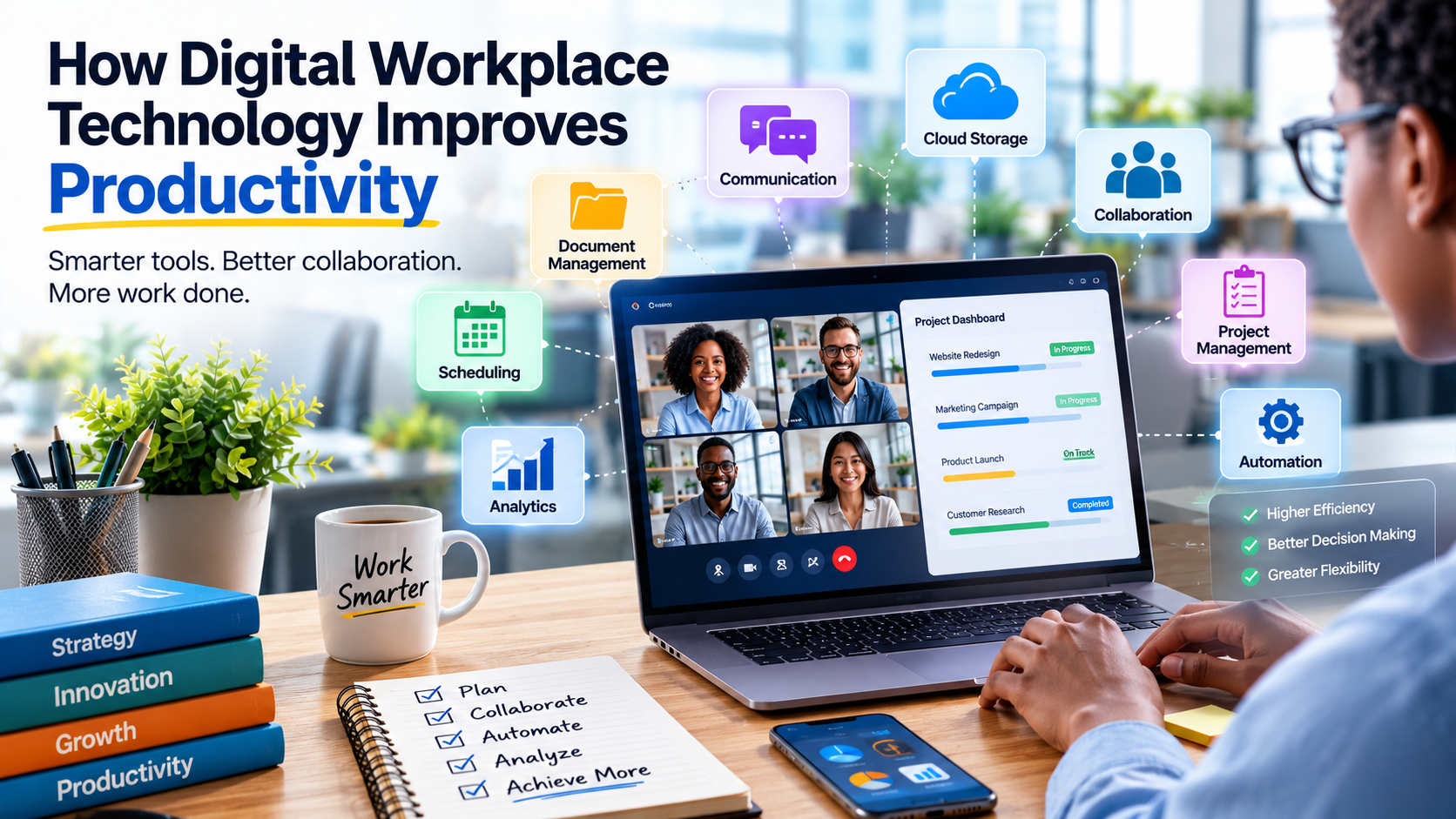
It can also connect with other workplace systems. For example, onboarding may involve creating accounts for communication, collaboration and project-management platforms. This is one reason HR technology increasingly overlaps with the broader digital workplace technology ecosystem.
Employee Self-Service
Employee self-service portals allow workers to access and update certain information without requiring HR staff to handle every request.
Depending on the system, employees might be able to:
- View payslips
- Request time off
- Update contact information
- Review benefits
- Access company documents
- Complete HR forms
- View schedules
- Submit expense information
This can reduce routine requests to HR departments.
It also gives employees greater control over information and everyday administrative tasks.
Time and Attendance Systems
Businesses with hourly employees or shift-based operations often need accurate records of working time.
Digital time and attendance systems can record when employees start and finish work, track breaks, manage schedules and calculate hours worked.
Some systems use mobile applications, badges, biometric devices or other methods to record attendance.
These systems can help organizations manage staffing and payroll while providing employees with clearer records of their working hours.
Because attendance information can be sensitive, businesses need to consider privacy, security and applicable employment laws when deploying these technologies.
Performance Management Software
Performance management platforms help businesses structure conversations about employee performance.
Instead of relying entirely on annual reviews, organizations can use technology to support more frequent feedback, goal setting and progress tracking.
A platform might allow managers and employees to establish objectives, record achievements, conduct reviews and document development plans.
The software itself does not create effective management.
A poorly designed performance process can remain ineffective even when supported by sophisticated technology.
The value comes from combining useful technology with clear expectations, good communication and thoughtful management practices.
Learning and Development Platforms
Employee development has become another major area of HR technology.
Learning management systems, or LMS platforms, allow businesses to deliver and track training programs.
Employees may use these systems to complete courses covering areas such as:
- Workplace safety
- Compliance
- Technical skills
- Leadership
- Product knowledge
- Professional development
- Cybersecurity awareness
Managers can track completion and identify training requirements.
More advanced platforms can recommend learning content based on employees’ roles, skills or career goals.
Benefits Administration
Employee benefits can involve substantial administrative complexity.
Depending on the organization and country, benefits may include health coverage, retirement plans, paid leave, insurance and other programs.
Benefits technology can help employees understand their options and allow them to complete enrollment electronically.
HR teams can use the same systems to manage eligibility, records and communications.
Automating parts of benefits administration can reduce paperwork while making information easier for employees to access.
Workforce Analytics
HR technology can transform employee information into data that managers use to make decisions.
Workforce analytics may examine measures such as:
- Employee turnover
- Absence rates
- Hiring time
- Workforce growth
- Training participation
- Compensation patterns
- Employee demographics
- Recruitment sources
For example, a company might discover that employees in a particular department are leaving at a significantly higher rate than employees elsewhere.
That information can prompt management to investigate possible causes rather than relying on assumptions.
Workforce analytics can also connect with the broader discipline of data analytics for business, particularly when organizations combine workforce information with operational and financial data.
The goal is to use workforce data to support better decisions.
Artificial Intelligence Is Entering HR Technology
Artificial intelligence is increasingly being incorporated into HR software.
AI tools can assist with tasks such as drafting job descriptions, summarizing candidate information, answering employee questions, recommending training content and analyzing workforce data.
Generative AI can also help HR professionals produce documents and communications more quickly.
However, AI introduces important considerations.
Employment decisions can have significant consequences for people’s careers and livelihoods. Businesses therefore need to understand how automated systems reach conclusions and ensure that appropriate human oversight remains in place.
AI can assist HR professionals, but using it without proper controls can create risks involving bias, privacy, accuracy and accountability.
Chatbots Can Handle Routine HR Questions
Some organizations use HR chatbots or virtual assistants to answer common employee questions.
An employee might ask:
“How many vacation days do I have?”
or:
“Where can I find the company’s parental leave policy?”
A chatbot connected to authorized HR information can provide answers without requiring an HR employee to respond manually.
This can be particularly useful for large organizations with employees working across different locations and time zones.
The system still needs accurate information and appropriate access controls.
An incorrect answer about payroll, benefits or employment policies could create significant problems.
HR Technology Can Improve Data Accuracy
Manual processes often create opportunities for errors.
An employee’s address might be updated in one spreadsheet but not another. A manager could use an outdated version of a document. A payroll record might contain information that differs from the company’s central employee record.
Integrated HR systems can reduce these inconsistencies by creating a central source of information.
Automation can also reduce repetitive data entry.
But digital systems are not automatically accurate. Incorrect information entered into a system can still produce incorrect results.
Businesses need procedures for data validation, auditing and correction.
This is part of the wider challenge of business data management, where organizations establish processes for keeping business information accurate, accessible and appropriately controlled.
HR Technology Can Save Time
One of the clearest benefits of HR technology is automation.
Consider a company with hundreds of employees submitting leave requests.
Without software, HR staff might have to receive requests by email, check balances, update records and notify managers manually.
With an integrated platform, an employee can submit a request electronically. The system can check relevant information, route the request to the appropriate manager and update the employee’s records after approval.
The technology handles repetitive steps while HR professionals focus on tasks that require judgment and human interaction.
For businesses looking at automation more broadly, HR is just one area where repetitive workflows can be streamlined. Our Business Automation Guide explores how automation can be applied across different business processes.
Technology Can Support Remote and Hybrid Work
Remote and hybrid working arrangements have increased the importance of digital workforce management.
Employees may be spread across cities, countries or time zones.
HR technology can provide centralized access to documents, policies, onboarding materials, time records and employee services regardless of where workers are located.
Some platforms also help businesses manage distributed teams by integrating with communication, scheduling and collaboration tools.
For organizations with geographically dispersed employees, digital HR systems can help create more consistent processes.
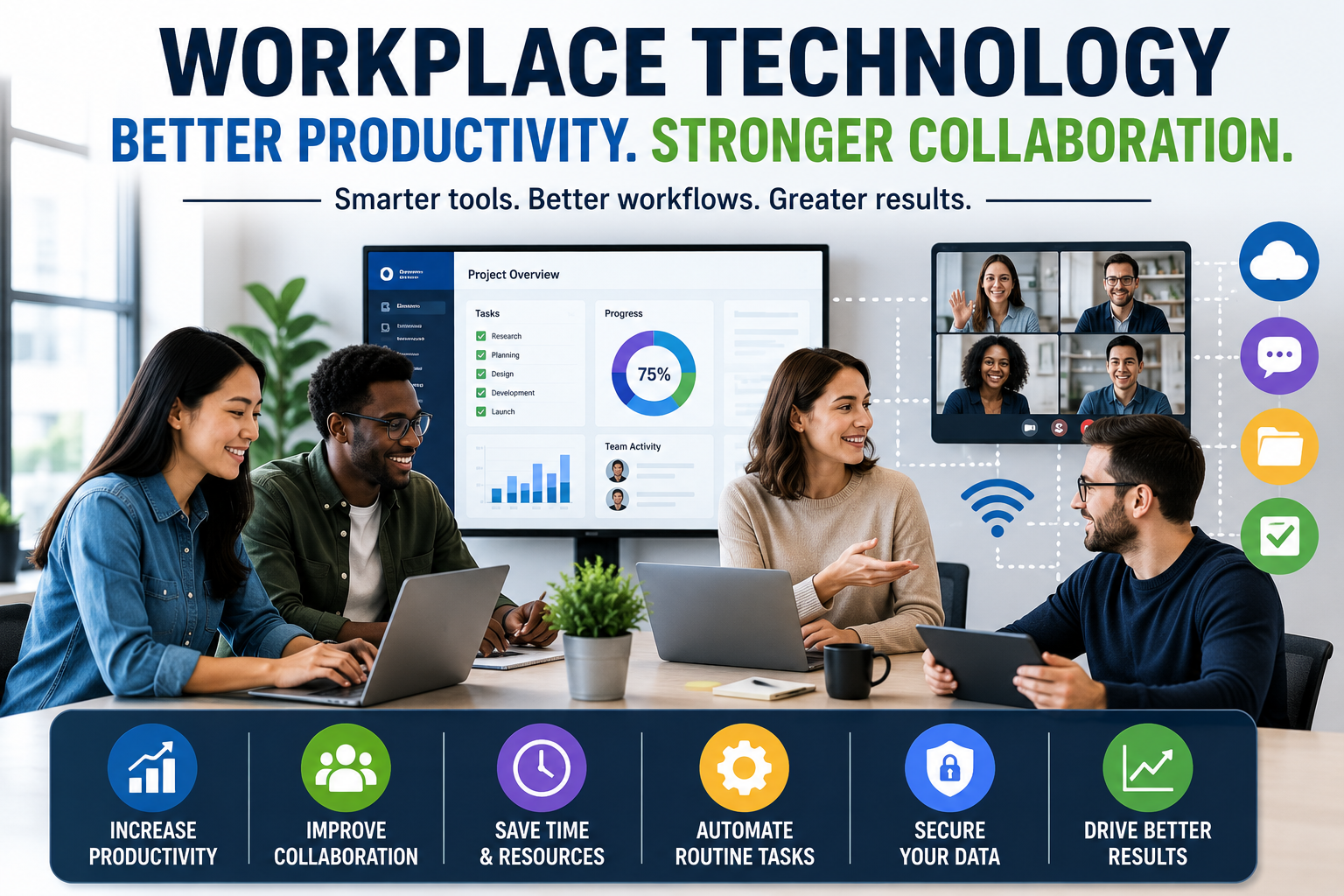
These systems also form part of the wider workplace technology environment. Businesses often combine HR platforms with collaboration software and communication systems to support employees across locations.
Data Security Is a Major Consideration
HR departments handle some of the most sensitive information inside an organization.
Employee records can contain personal information, compensation data, identification documents, banking details and other confidential information.
A security breach can therefore have serious consequences.
Businesses should consider safeguards such as:
- Strong authentication
- Role-based access controls
- Encryption
- Security monitoring
- Regular software updates
- Backup procedures
- Employee security training
- Vendor security assessments
Access should generally be limited to people who need particular information to perform their roles.
HR security should also be considered alongside the organization’s broader IT infrastructure and security architecture.
Privacy Rules Affect HR Technology
Employee information is not simply another business dataset.
Privacy and employment laws can impose requirements on how organizations collect, store, process and share employee information.
The rules differ between countries and jurisdictions.
Companies operating internationally may face multiple regulatory frameworks and must understand which requirements apply to their workforce and technology systems.
Before deploying new HR technology, organizations should consider what information the system collects, why it is needed, where it is stored and who can access it.
Integration Is Becoming More Important
Businesses rarely use HR software in isolation.
An HR platform may need to communicate with accounting systems, payroll providers, identity-management systems, collaboration tools and other business applications.
Integration allows information to move between systems without requiring employees to repeatedly enter the same data.
For example, information entered into an HR system when an employee joins the company could potentially be used to initiate payroll and other administrative processes.
Good integration can make the technology ecosystem more efficient.
Poor integration can create duplicated records, errors and unnecessary complexity.
This is where business networking and system connectivity can become important components of the broader technology environment.
Cloud-Based HR Technology
Many modern HR platforms are delivered through the cloud.
Instead of installing software on company servers, businesses access the system through the internet.
Cloud-based systems can provide several advantages, including easier updates, remote accessibility and reduced requirements for maintaining on-premises infrastructure.
They also introduce questions about vendor dependency, data location, service availability and security.
Businesses should evaluate cloud providers carefully, particularly when sensitive employee information is involved.
Cloud HR systems are therefore one example of how modern organizations increasingly depend on broader cloud computing technologies to deliver business applications.
HR Technology Is Not a Replacement for HR Professionals
Automation can handle many administrative tasks, but human resources involves much more than administration.
HR professionals may need to manage conflicts, support employees, interpret policies, advise managers, conduct sensitive conversations and make judgments involving complex human circumstances.
These responsibilities require empathy, communication and context.
Technology can provide information and automate processes, but it cannot replace the human relationships at the center of effective people management.
Choosing the Right HR Technology
Businesses considering an HR technology platform should start with their actual problems rather than the features offered by vendors.
Important questions include:
- What HR processes currently consume the most time?
- Which tasks are most prone to errors?
- How many employees will use the system?
- Does the platform integrate with existing software?
- How will employee data be protected?
- What support does the vendor provide?
- How easily can the system scale?
- Can data be exported if the company changes providers?
- What are the full costs beyond the initial subscription?
A system with hundreds of features may not be the best choice if employees find it difficult to use.
Usability matters because the value of HR technology depends partly on whether people actually adopt it.
The decision should also fit into the organization’s broader approach to evaluating and purchasing technology solutions.
HR Technology and Broader Business Software
HR technology is one component of a much larger business software environment.
An organization may simultaneously depend on:
- HR systems
- CRM software
- Project management software
- Accounting systems
- ERP platforms
- Collaboration tools
- Business intelligence
- Data management platforms
- Communication systems
- IT infrastructure
These systems should not be evaluated entirely in isolation.
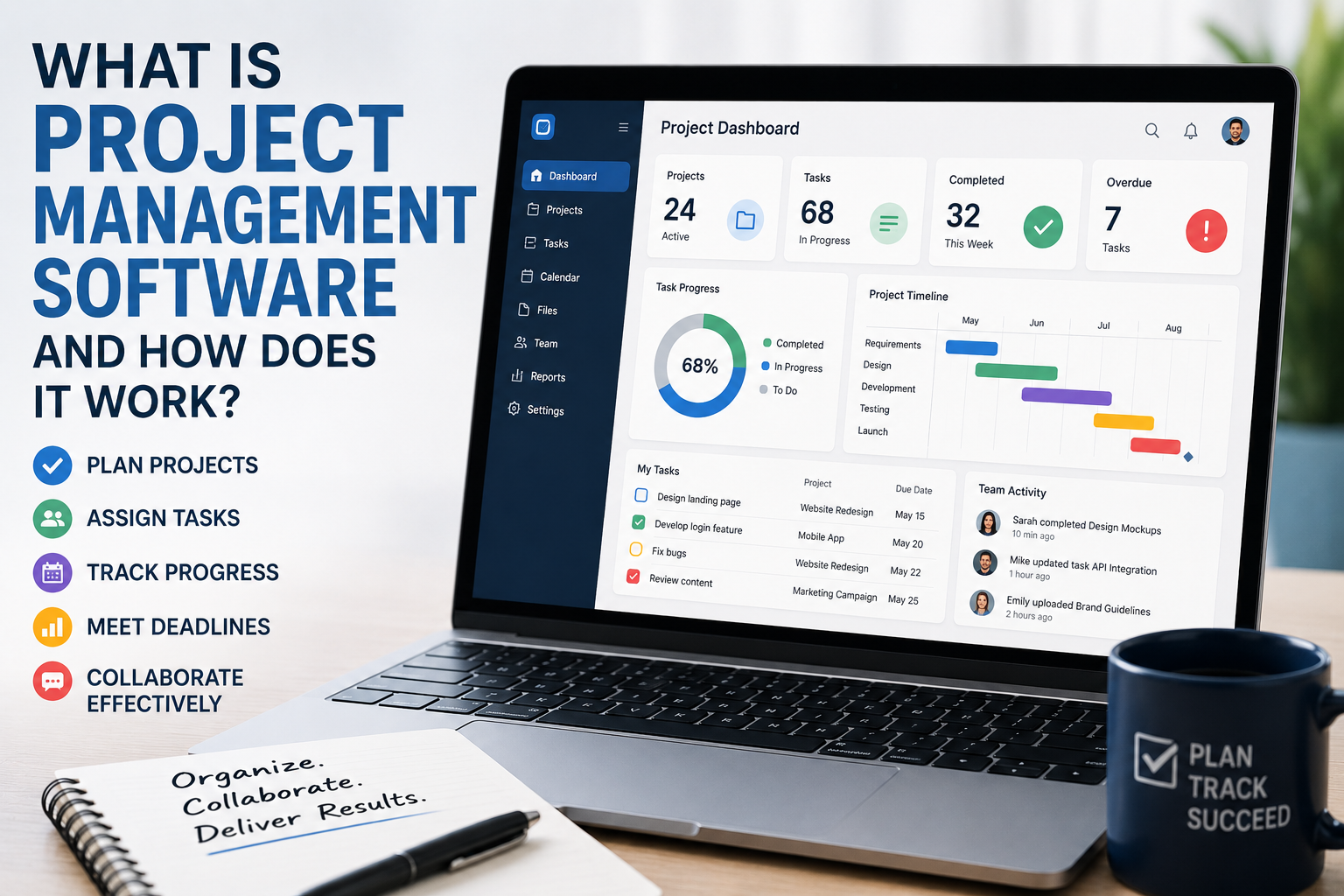
For example, an employee may be added to an HR platform, receive access through an identity system, communicate through collaboration software, work on projects through project-management software and generate operational data that eventually appears in business analytics.
The broader goal is to create a technology environment in which systems work together rather than creating disconnected information silos.
Organizations looking at this wider picture can explore ERP technology and how businesses integrate operations to understand how different operational systems can be connected.
HR Technology and IT Governance
HR systems also create technology-management responsibilities.
Organizations need to determine:
- Who owns the system?
- Who approves access?
- Who manages integrations?
- How are vendors evaluated?
- How is sensitive information protected?
- How are technology risks assessed?
- What happens when an employee leaves?
- How are systems reviewed over time?
These questions extend beyond the HR department.
They form part of the organization’s wider approach to technology governance, accountability and risk management.
Businesses can explore IT governance and how organizations manage technology decisions, accountability and risk for a broader perspective.
The Future of HR Technology
HR technology is moving toward increasingly connected and intelligent systems.
Artificial intelligence, automation, workforce analytics and employee self-service are likely to remain important areas of development.
Future HR platforms may increasingly act as centralized workforce operating systems, connecting recruitment, payroll, learning, performance, benefits and employee communication.
But technological sophistication will not eliminate the need for responsible management.
Companies will need to balance automation with human oversight, convenience with privacy and data-driven decision-making with fairness.
The most successful organizations are likely to treat HR technology not as a collection of gadgets, but as part of a broader strategy for managing people effectively.
Technology That Makes the Human Side of Business Easier
HR technology has evolved from basic electronic record-keeping into a broad digital ecosystem that can influence nearly every stage of the employee lifecycle.
Businesses use it to recruit workers, process payroll, onboard employees, administer benefits, manage performance, deliver training and analyze workforce trends. Automation can reduce repetitive administrative work, while analytics can give managers a clearer picture of what is happening across the organization.
At the same time, HR technology creates responsibilities around privacy, security, fairness and data accuracy.
The real value of these systems is therefore not simply that they make HR departments more digital. It is that they can remove administrative friction and give HR professionals and employees more time to focus on the human decisions that technology cannot make on its own.
Ultimately, HR technology works best when it is connected to the organization’s broader technology strategy. Businesses should select systems based on genuine operational needs, integrate them thoughtfully with other applications, protect the information they contain and establish clear governance around their use.
For a broader look at the technologies that support modern organizations, return to the Complete Guide to Business Software.