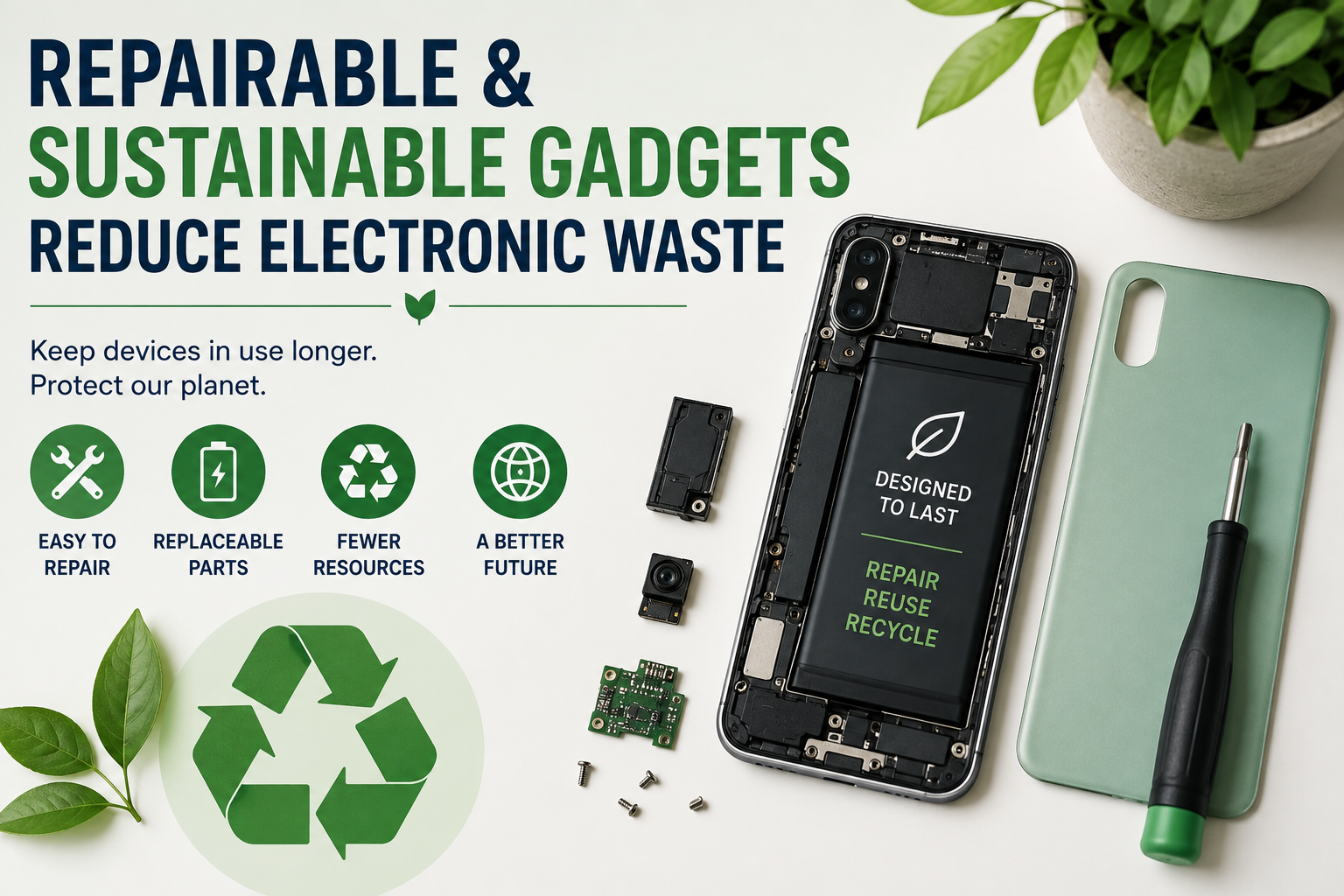
How Repairable and Sustainable Gadgets Reduce Electronic Waste
Electronic devices have become an essential part of everyday life. Smartphones, laptops, tablets, headphones, smartwatches and household electronics make communication, work and entertainment more convenient than ever.
But the rapid growth of consumer technology has created another problem: electronic waste.
When devices are discarded because they are damaged, outdated or too expensive to repair, valuable materials can be lost and environmental pressures can increase. Repairable and more sustainable gadgets offer one way to address this problem by keeping products in use for longer and reducing the need to manufacture replacements.
The idea is simple: the longer a device remains useful, the less frequently another device needs to be produced to replace it.
What Is Electronic Waste?
Electronic waste, often called e-waste, refers to discarded electrical and electronic equipment and the components associated with it.
It includes products such as:
- Smartphones
- Computers and laptops
- Tablets
- Televisions
- Printers
- Cameras
- Game consoles
- Smartwatches
- Chargers and cables
- Small household appliances
- Batteries and electronic components
Some discarded electronics are still functional but are replaced because newer models are available. Others may have relatively minor faults that make them difficult or uneconomical to repair.
The result is a growing stream of products that contain valuable materials as well as components that require careful handling.
Why Electronic Waste Is a Problem
Electronic devices contain a mixture of materials.
Metals such as aluminum, copper and gold can be valuable and reusable. Other components contain plastics, glass and specialized materials.
When electronics are discarded improperly, materials that could potentially be recovered may be lost. Some electronic components can also contain substances that require appropriate treatment during disposal.
E-waste therefore presents both an environmental and resource-management challenge.
Instead of viewing an old device simply as rubbish, a more sustainable approach considers whether it can be repaired, reused, refurbished or recycled.
Repairability Starts With the Design
Repairability is largely determined before a gadget reaches the consumer.
Manufacturers decide how components are assembled, how easily batteries can be replaced and whether common parts can be accessed without damaging the device.
A repairable product may be designed so that important components can be removed and replaced using commonly available tools.
A less repairable device might use adhesives, proprietary components or tightly integrated parts that make repairs more difficult.
Design therefore has a major influence on how long a gadget can remain useful.
Replaceable Batteries Can Extend Device Lifespans
Batteries are among the components most likely to deteriorate over time.
Rechargeable batteries gradually lose capacity after repeated charging cycles. Eventually, a device that once lasted throughout the day may require frequent charging.
If the battery can be replaced relatively easily, the rest of the device may continue working for years.
When a battery is difficult or expensive to replace, however, consumers may decide that replacing the entire gadget is more practical.
This is one reason battery accessibility is an important part of discussions about repairable electronics.
Modular Design Can Make Repairs Easier
Some manufacturers use modular design, in which individual components can be replaced without replacing the entire device.
A modular laptop, for example, may allow users or technicians to replace the storage drive, memory, battery or other components separately.
This approach can offer several advantages.
If one component fails, only that part needs to be replaced. If technology requirements change, certain components may be upgraded rather than forcing the user to purchase a completely new machine.
Modularity can therefore connect repairability with longer product lifespans.
Software Support Matters Too
A gadget can remain physically functional while becoming less useful because its software is no longer supported.
Security updates, operating-system compatibility and application support can influence whether people continue using a device.
This means sustainability is not only about physical construction.
A manufacturer that produces a durable smartphone but stops providing security updates after a short period may limit the practical lifespan of the device.
Long-term software support can therefore complement repairable hardware.
Durable Products Reduce Replacement Cycles
Repairability is most useful when combined with physical durability.
A device that can be repaired but breaks frequently may still have a relatively short useful life.
Durable construction can reduce the number of repairs required and make it more likely that a product remains functional for several years.
For consumers, durability can also reduce the long-term cost of ownership.
A product that costs more initially but remains functional for a much longer period may be more economical than repeatedly replacing cheaper alternatives.
Refurbishment Gives Devices a Second Life
Not every used device needs to be recycled immediately.
A gadget that is no longer needed by its original owner may still have plenty of useful life remaining.
Refurbishment can involve inspecting, repairing, cleaning and testing a used device before it is sold or given to another user.
A refurbished laptop, for example, might receive a replacement battery and storage drive before being returned to the market.
This extends the product’s useful life and delays the point at which it becomes waste.
Reuse Can Be Better Than Recycling
Recycling is an important part of responsible electronics management, but reuse can sometimes preserve more of a product’s original value.
If a functioning smartphone is passed to another user, the entire device continues serving its original purpose.
Recycling, by contrast, breaks the device down so that some of its materials can be recovered.
Both approaches have a role, but keeping a functional product in use generally avoids the need to manufacture an immediate replacement.
This is why sustainable technology strategies often emphasize a hierarchy of reduce, reuse, repair, refurbish and recycle.
Recycling Recovers Valuable Materials
Eventually, every electronic product reaches the end of its useful life.
At that point, responsible recycling can help recover materials from the device.
Metals and other components can potentially be separated and processed for use in new products.
This reduces the need to obtain every material from newly extracted resources.
However, electronics recycling requires appropriate facilities and processes. Simply throwing an electronic device into ordinary household waste does not guarantee that its materials will be recovered safely.
Consumers should therefore use appropriate electronic-waste collection or recycling programs where available.
Sustainable Gadgets Can Reduce Resource Demand
Manufacturing electronics requires raw materials, energy and industrial processes.
Every new device therefore represents a demand for resources.
If consumers replace devices less frequently because products last longer and can be repaired, fewer replacement units may be required over time.
This does not mean that repairability eliminates the environmental impact of electronics.
Manufacturing, transportation, energy consumption and eventual disposal still matter.
But extending product lifespans can reduce the frequency with which those impacts are repeated.
Repairability Can Change Consumer Behavior
The availability of repair options can influence how people think about broken electronics.
If repairing a device is straightforward and affordable, consumers may be more willing to keep it.
If repair requires specialized equipment, expensive proprietary parts or lengthy service procedures, replacing the product may appear easier.
This creates an important relationship between product design and consumer behavior.
Manufacturers can encourage longer product lifespans by making repairs practical rather than merely technically possible.
Access to Spare Parts Matters
A product cannot be meaningfully repairable if replacement parts are unavailable.
Manufacturers, retailers and independent repair businesses all play a role in maintaining access to components.
Useful parts might include:
- Batteries
- Screens
- Charging ports
- Buttons
- Cameras
- Speakers
- Fans
- Storage components
- Power supplies
Availability matters because a repair that cannot obtain the necessary component is effectively impossible.
Long-term parts support can therefore be just as important as the physical design of the product.
Repair Manuals and Technical Information Help
Repairability also depends on information.
Technicians need to know how a device is assembled, which components can be replaced and what procedures are required.
Clear repair documentation can make it easier for qualified professionals to service equipment.
Some products are designed with accessible documentation, while others provide very limited information outside authorized service networks.
Greater access to repair information can support independent repair businesses and give consumers more options when their devices develop problems.
The Role of Independent Repair Shops
Local repair businesses can play an important role in reducing electronic waste.
A technician may be able to replace a damaged screen, repair a charging problem or install a new battery without replacing the entire device.
These businesses also provide consumers with an alternative to buying new products.
A strong repair ecosystem can create local economic activity while keeping more electronics in circulation.
However, repair technicians need access to suitable tools, parts and technical information to perform their work effectively.
Sustainable Materials Can Help
Repairability is only one part of sustainable gadget design.
Manufacturers can also consider the materials used to make their products.
Recycled aluminum, recycled plastics and other recovered materials can potentially reduce reliance on newly extracted resources.
Packaging can also be redesigned to reduce unnecessary materials.
Using fewer materials in the first place can be another sustainability strategy, provided that doing so does not compromise durability or safety.
Energy Efficiency Matters During Use
The environmental impact of a gadget does not end once it leaves the factory.
Devices consume energy throughout their operating lives.
More efficient processors, displays, batteries and power-management systems can reduce energy consumption.
For devices that remain plugged in for long periods, efficient standby modes can also make a difference.
Sustainability therefore involves considering the entire product lifecycle—from manufacturing and transportation to years of everyday use and eventual disposal.
Consumers Can Look Beyond the Newest Model
Technology companies frequently introduce new models with faster processors, improved cameras, brighter displays or additional features.
Upgrading can be attractive, but consumers do not necessarily need the newest model every year.
Keeping an existing device longer can reduce the environmental impact associated with manufacturing a replacement.
Before replacing a gadget, consumers can ask:
- Does the device still perform the tasks I need?
- Can the problem be repaired?
- Can the battery be replaced?
- Is a software update available?
- Could a refurbished device meet my needs instead?
- Can the old device be passed to someone else?
These questions can encourage more deliberate purchasing decisions.
Refurbished Gadgets Can Offer Another Option
Buying refurbished technology can reduce the demand for entirely new products.
A refurbished device may have been returned, traded in or previously used and then inspected and repaired before being sold again.
For consumers, refurbished products can provide access to capable hardware at lower prices.
The environmental benefit comes from extending the useful life of equipment that already exists.
However, buyers should check the condition of refurbished products, warranty coverage, battery health where relevant and the reputation of the seller.
Repairability Can Save Money
Sustainability and personal finances can sometimes align.
If a consumer replaces a device every few years because of a relatively minor component failure, the cost can accumulate.
A repairable product may allow the owner to spend money only on the failed component.
For example, replacing a worn battery is usually less resource-intensive than replacing an otherwise functional laptop or smartphone.
The financial advantage depends on repair costs, parts availability and the original price of the product, but repairability can improve the economics of keeping technology longer.
Businesses Have a Major Role to Play
Consumers are only one part of the electronic-waste equation.
Businesses purchase large quantities of computers, phones, networking equipment and other electronics.
Organizations can reduce waste by extending equipment lifespans, repairing devices, redeploying hardware between employees and responsibly recycling equipment that can no longer be used.
Instead of automatically replacing an entire fleet, businesses can determine whether upgrades or component replacements can keep existing equipment productive.
Proper asset management can therefore have both environmental and financial benefits.
Product Design Can Support a Circular Economy
Traditional manufacturing often follows a relatively linear model:
Extract resources → manufacture products → use products → discard products.
A circular economy seeks to keep materials and products in use for as long as practical.
For electronics, that can mean designing products for durability, repairing them when they fail, refurbishing them for new users and recovering materials at the end of their useful lives.
The goal is not necessarily to eliminate new-product manufacturing.
Instead, it is to reduce unnecessary waste and make better use of resources already in circulation.
Regulations Are Increasing Attention on Repair
Governments and policymakers in various parts of the world have increasingly examined issues such as product durability, repair access, spare-parts availability and electronic waste.
These discussions are often associated with the broader right-to-repair movement.
The underlying principle is that consumers and independent technicians should have reasonable opportunities to repair products they own, subject to appropriate safety and intellectual-property considerations.
Rules and standards differ between jurisdictions, but the broader debate has encouraged greater attention to how products are designed and supported after purchase.
Sustainable Design Requires the Entire Lifecycle
A genuinely sustainable gadget cannot be judged only by its appearance or the materials listed on its packaging.
A broader assessment considers:
- Raw materials — Where do the materials come from?
- Manufacturing — How much energy and material are required?
- Transportation — How is the product distributed?
- Use — How much energy does it consume?
- Repair — Can damaged components be replaced?
- Reuse — Can another person use the device after the first owner?
- Refurbishment — Can it be restored to useful condition?
- Recycling — Can valuable materials be recovered at the end?
Considering the entire lifecycle provides a much clearer picture of sustainability.
The Technology Industry Still Faces Challenges
Making gadgets more repairable and sustainable is not always straightforward.
Manufacturers may prioritize thinner designs, water resistance, performance, manufacturing efficiency or product aesthetics. Some design choices that improve one characteristic can make repairs more complicated.
Companies also need to maintain supply chains for spare parts and provide support for products over many years.
Consumers, meanwhile, may prioritize low prices or new features over long-term repairability.
Creating more sustainable electronics therefore requires changes across the entire industry rather than relying on a single company or consumer decision.
A Longer Life for Every Gadget
Repairable and sustainable gadgets offer an important opportunity to reduce the amount of electronic waste entering the waste stream.
The biggest environmental benefit may not come from a particular recycled material or energy-saving feature. It can come from simply keeping a product useful for longer.
A smartphone that receives a new battery instead of being discarded, a laptop that gets an upgraded storage drive, or a refurbished tablet that finds a second owner all represent ways of extracting more value from technology that has already been manufactured.
As consumers, manufacturers and policymakers pay greater attention to the lifecycle of electronics, the definition of a good gadget may gradually change. Instead of focusing only on how powerful, thin or feature-rich a device is when it launches, durability, repairability, software support and end-of-life options can become equally important measures of quality.
The most sustainable gadget is often the one that does its job well, remains useful for years and does not need to be replaced simply because one small component has failed.