How to Read Product Reviews Like an Expert
Online reviews have become one of the most influential factors in purchasing decisions. Whether you’re buying a smartphone, laptop, kitchen appliance, fitness tracker, or household item, reviews can provide valuable insights into a product’s real-world performance.
However, not every review is equally reliable. Some are detailed and balanced, while others may be overly emotional, misleading, or even fake. Learning how to evaluate reviews critically can help you avoid disappointing purchases and make more informed decisions.
This guide explains how to read product reviews like an expert, identify trustworthy opinions, compare products effectively, and shop with greater confidence. It also forms part of the broader Complete Guide to Choosing the Right Products, which covers the wider process of evaluating products before buying.
Why Product Reviews Matter
Product reviews offer perspectives from people who have actually used a product.
They can help you understand:
- Real-world performance
- Build quality
- Reliability
- Ease of use
- Customer satisfaction
- Common problems
- Long-term durability
- Value for money
Reviews often reveal strengths and weaknesses that aren’t obvious from product descriptions or advertisements.
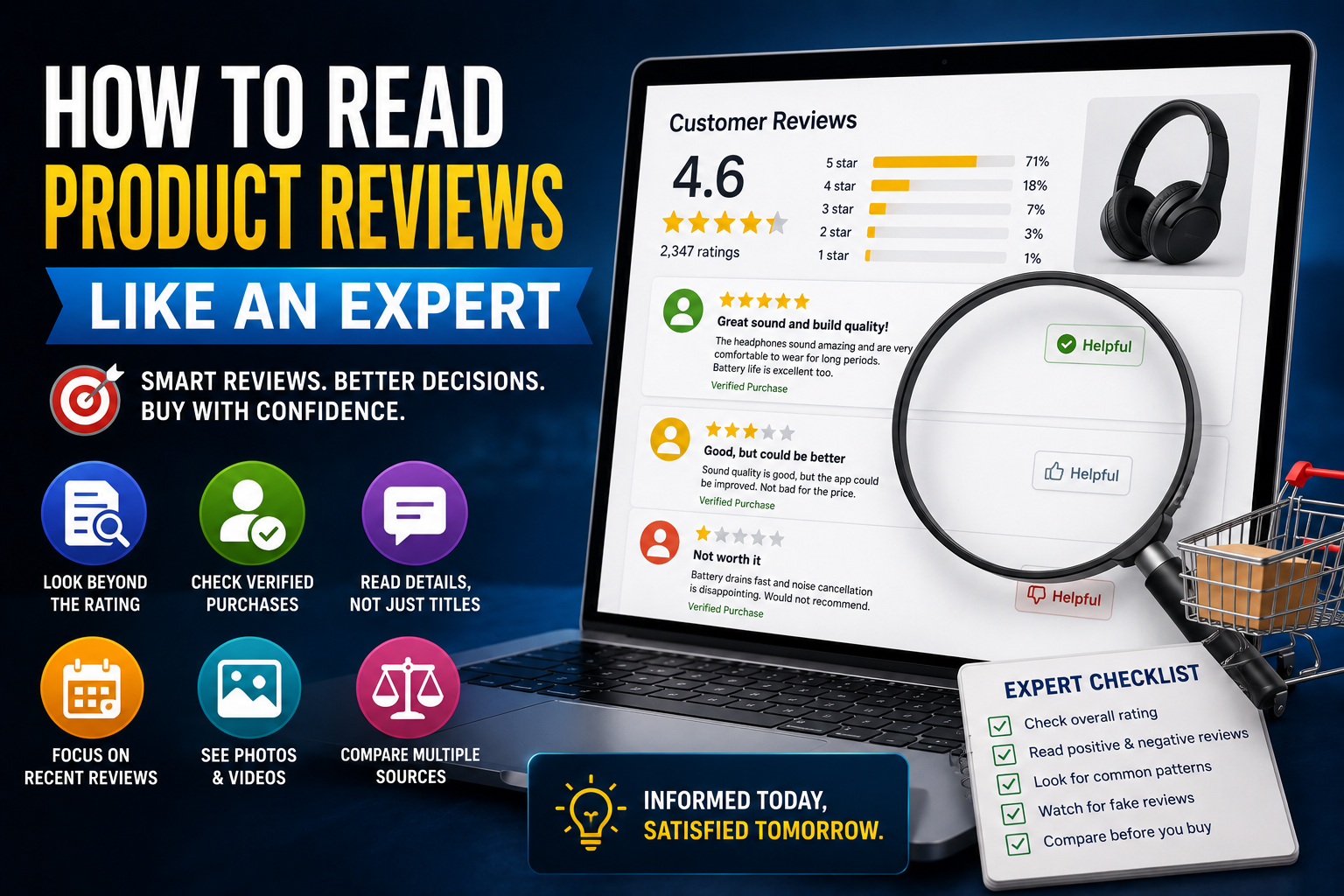
Start With the Overall Rating
Most online retailers display an average star rating.
While useful, the average rating should be viewed as a starting point—not the final decision.
For example:
- ⭐⭐⭐⭐⭐ — Excellent overall satisfaction
- ⭐⭐⭐⭐☆ — Generally positive
- ⭐⭐⭐☆☆ — Mixed experiences
- ⭐⭐☆☆☆ — Frequent complaints
- ⭐☆☆☆☆ — Significant issues
Always look beyond the overall score to understand why customers rated the product as they did.
Read Both Positive and Negative Reviews
Avoid focusing only on five-star or one-star reviews.
Balanced research includes:
- Highly positive reviews
- Average reviews
- Critical reviews
This provides a more complete picture of the product’s strengths and weaknesses.
Look for Detailed Reviews
The most helpful reviews usually explain:
- How the product was used
- What the reviewer liked
- What could be improved
- Whether expectations were met
- How long the product has been used
Detailed experiences tend to provide more useful information than short comments such as “Great product!” or “Terrible.”
Consider the Reviewer’s Needs
Different buyers have different priorities.
For example:
A photographer reviewing a smartphone camera may evaluate:
- Image quality
- Manual controls
- Low-light performance
Meanwhile, another buyer may care more about:
- Battery life
- Price
- Ease of use
Consider whether the reviewer’s needs match your own.
This is one reason product comparisons should focus on personal requirements rather than simply identifying the product with the highest overall rating.
Watch for Common Patterns
One isolated complaint doesn’t necessarily indicate a defective product.
However, repeated comments about the same issue deserve attention.
Examples include:
- Poor battery life
- Weak customer support
- Software bugs
- Fragile construction
- Loud operating noise
- Difficult setup
When dozens of reviewers mention the same problem, it’s more likely to reflect a genuine issue.
Learn to Spot Fake Reviews
Not every online review is authentic.
Potential warning signs include:
- Extremely vague language
- Excessive enthusiasm without details
- Repeated phrases
- Large numbers of reviews posted within a short period
- Reviews unrelated to the product
- Overly promotional wording
Likewise, overly negative reviews with little explanation may also be unreliable.
For a more detailed examination of these warning signs, see How to Identify Biased Product Reviews.
Check Verified Purchases
Many online marketplaces identify reviews from verified buyers.
Verified purchase labels suggest the reviewer actually purchased the product through that platform.
While not a guarantee of accuracy, verified reviews often provide greater confidence than anonymous feedback.
Pay Attention to Recent Reviews
Products change over time.
Manufacturers may:
- Improve quality
- Release software updates
- Fix manufacturing problems
- Introduce new versions
Recent reviews often provide the most relevant information about the current product.
Evaluate Review Photos and Videos
User-uploaded media can reveal details unavailable in marketing images.
Look for:
- Real-world appearance
- Size comparisons
- Build quality
- Packaging
- Wear after extended use
- Camera performance (where applicable)
Authentic photos often provide valuable context.
Compare Multiple Sources
Avoid relying on a single website.
Consult several sources, such as:
- Retail websites
- Independent review publications
- Technology websites
- Consumer organizations
- Video reviews
- Community forums
Comparing different viewpoints helps reduce bias.
Understand the Difference Between Professional and User Reviews
Both review types provide value.
Professional Reviews
Often evaluate:
- Performance testing
- Benchmarks
- Technical specifications
- Feature comparisons
- Long-term testing
User Reviews
Typically focus on:
- Daily use
- Reliability
- Customer support
- Ease of setup
- Practical experiences
Combining both perspectives creates a more complete understanding.
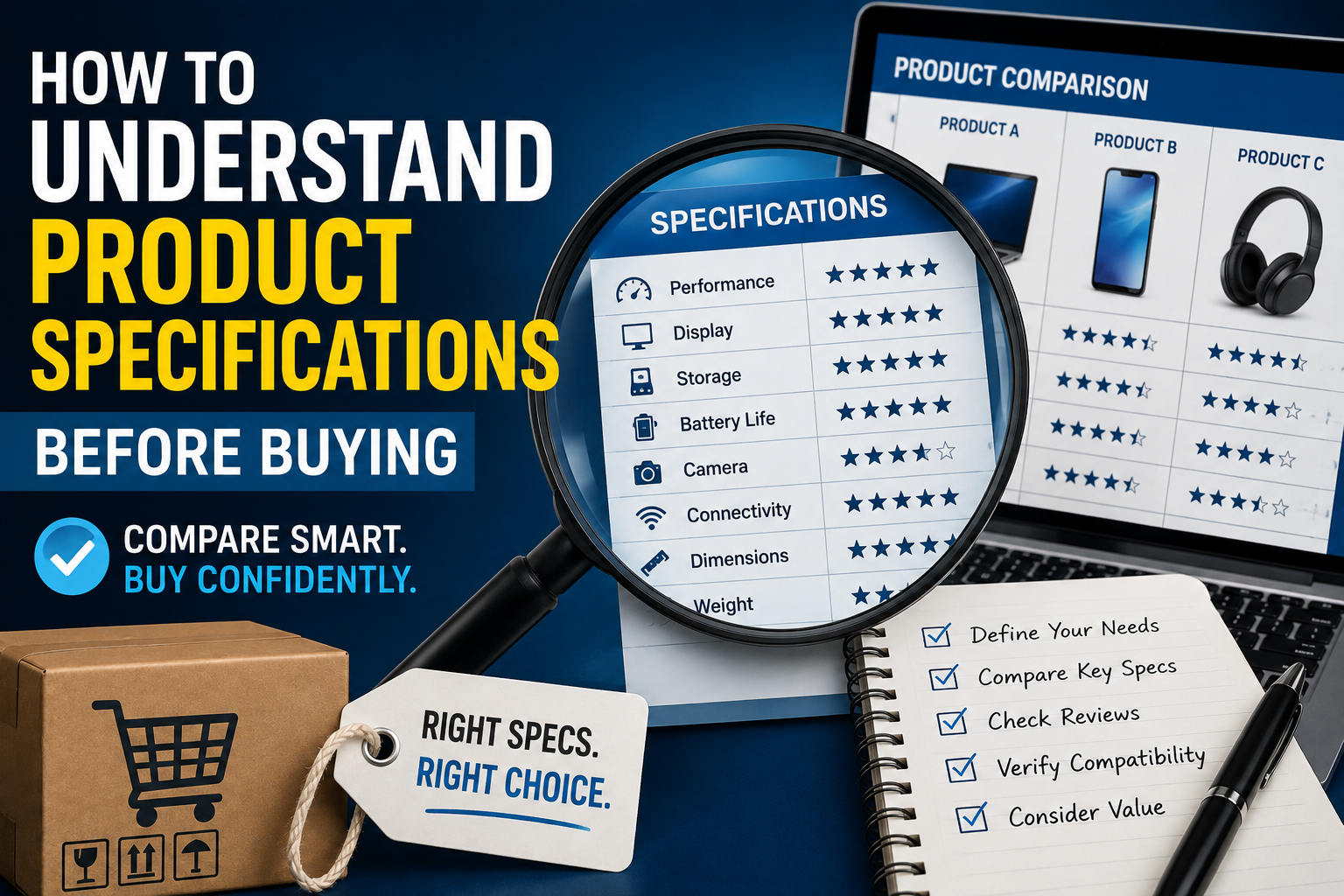
For a broader understanding of how technical specifications should be interpreted alongside real-world experience, see How to Understand Product Specifications Before Buying.
Don’t Ignore Customer Support Feedback
Product quality includes more than hardware.
Look for comments about:
- Warranty service
- Return policies
- Replacement parts
- Technical support
- Software updates
Strong customer service can significantly improve ownership experience.
Warranty and support are also important parts of evaluating a product’s overall reliability and suitability before purchase.
Compare Products Side by Side
Before making a purchase, compare products based on:
- Features
- Price
- Build quality
- Performance
- Warranty
- Customer reviews
- Long-term reliability
Creating a comparison list can simplify decision-making.
For a broader framework on weighing these factors consistently, see How to Make Better Buying Decisions When Choosing Products.
Avoid Emotional Purchases
Marketing campaigns, influencer endorsements, and limited-time offers can create pressure to buy quickly.
Before purchasing:
- Read multiple reviews
- Compare alternatives
- Confirm specifications
- Consider long-term value
- Review return policies
Taking time to research often leads to better purchasing decisions.
Consider Value, Not Just Price
The cheapest product isn’t always the best value.
Ask questions such as:
- Will it last?
- Is customer support reliable?
- Does it include useful features?
- Are software updates available?
- Is it easy to repair?
A slightly more expensive product may offer greater long-term value.
Understanding the difference between price and actual value is explored in greater detail in the Product Value Guide.
Common Review Mistakes Buyers Make
Avoid these common errors:
- Reading only five-star reviews
- Ignoring negative feedback
- Trusting a single review
- Overlooking review dates
- Buying based solely on ratings
- Ignoring warranty information
- Not comparing competing products
Balanced research improves purchasing confidence.
Future Trends in Product Reviews
Artificial intelligence is beginning to change how consumers evaluate products.
Emerging developments include:
- AI-generated review summaries
- Personalized buying recommendations
- Review authenticity detection
- Sentiment analysis
- Automated comparison tools
- Visual product analysis
These tools may help shoppers process large numbers of reviews more efficiently while identifying trustworthy information.
Final Thoughts
Reading product reviews effectively is an essential skill for today’s consumers. Rather than focusing only on star ratings, experienced shoppers examine detailed reviews, identify recurring themes, compare multiple sources, and consider whether reviewers share similar needs.
By combining professional reviews with genuine user experiences, evaluating recent feedback, and recognizing potential warning signs, you can make more informed purchasing decisions and reduce the likelihood of buyer’s remorse. Smart shopping isn’t about finding perfect products—it’s about finding the product that best meets your needs, budget, and expectations.
Frequently Asked Questions
Should I trust five-star reviews?
Five-star reviews can be useful, but they should be read alongside average and negative reviews to gain a balanced understanding of a product.
How can I identify fake reviews?
Look for vague language, repetitive wording, unrealistic praise, unrelated comments, and large numbers of reviews posted within a short time period.
Are professional reviews better than customer reviews?
Both are valuable. Professional reviews often provide technical analysis, while customer reviews describe real-world ownership experiences.
Why are recent reviews important?
Recent reviews reflect current product quality, software updates, and manufacturing improvements that older reviews may not cover.
Should I compare multiple review websites?
Yes. Comparing reviews from several trusted sources provides a more balanced and accurate understanding of a product.
Key Takeaways
- Product reviews provide valuable insights beyond marketing materials.
- Read both positive and negative reviews to gain a balanced perspective.
- Look for detailed, experience-based feedback rather than short opinions.
- Watch for recurring patterns that indicate genuine strengths or weaknesses.
- Compare information from multiple trusted sources before making a purchase.
- Smart review reading helps consumers make informed, confident buying decisions.