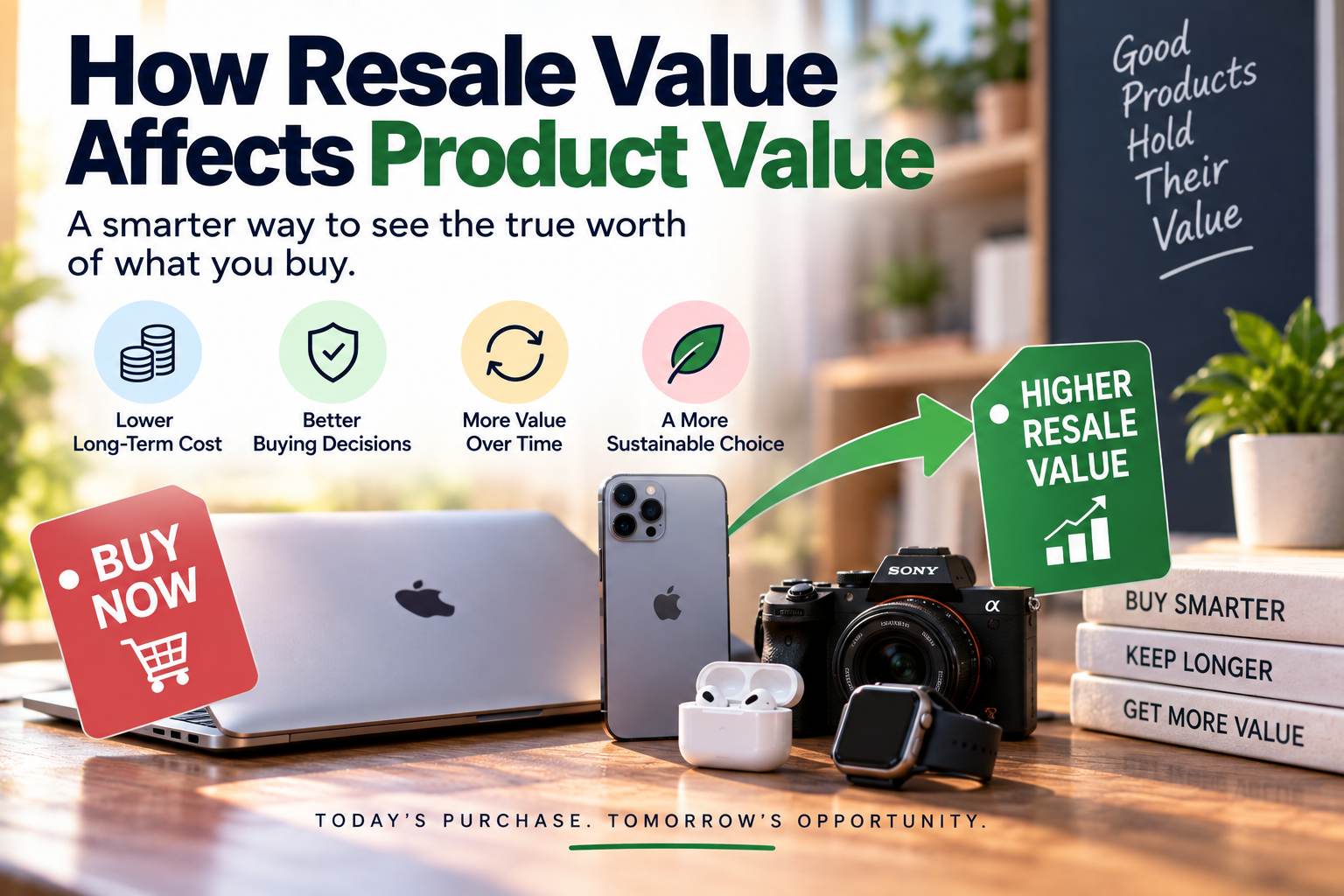
How Resale Value Affects Product Value
The price you pay for a product is only one part of what that product actually costs you.
When people compare products, they often focus on the initial purchase price, features, quality, and expected lifespan. But another factor can have a significant effect on the overall financial picture: resale value.
A product that retains a large portion of its original price may ultimately cost less to own than a cheaper product that becomes difficult to sell. Conversely, an expensive product with poor resale demand can lose much of its value shortly after purchase.
This is particularly important for products such as smartphones, laptops, cameras, vehicles, appliances, furniture, tools, and other durable goods that can be sold or traded when their owners no longer need them.
Understanding resale value gives consumers another way to think about the true value of a purchase.
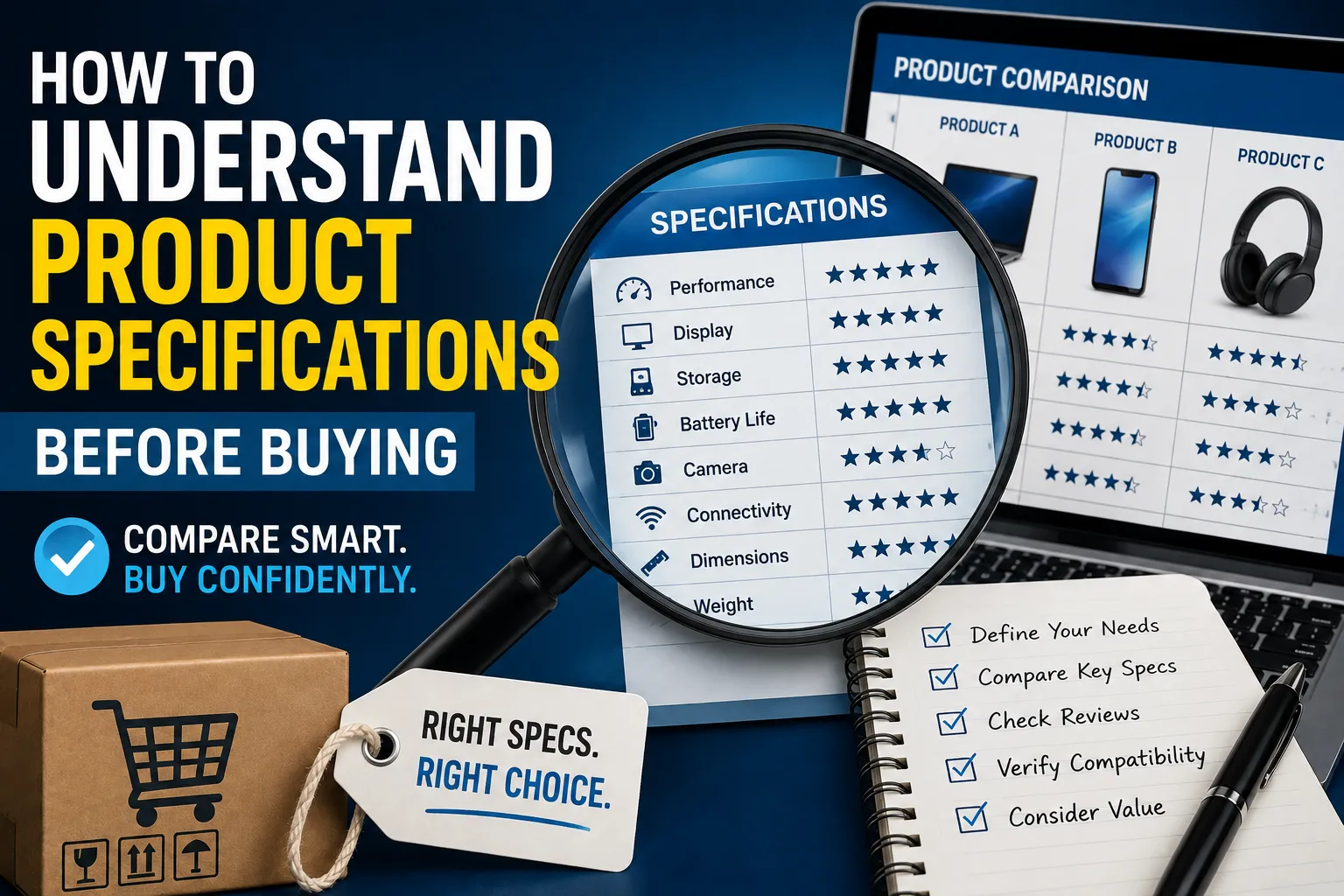
For a broader framework for making purchasing decisions, The Complete Guide to Choosing the Right Products explores the factors consumers should consider before committing to a product.
What Is Resale Value?
Resale value is the amount a product can reasonably be sold for after it has been purchased and used.
For example, imagine someone buys a product for $1,000 and later sells it for $600.
The product has retained 60% of its original purchase price.
The $400 difference represents depreciation, although the owner’s actual financial cost may also include maintenance, repairs, accessories, financing, insurance, and other expenses.
Resale value can be influenced by:
- Brand reputation
- Product condition
- Age
- Demand
- Product availability
- Features
- Reliability
- Remaining useful life
- Warranty coverage
- Repairability
- Market trends
- Replacement models
- Original purchase price
Because these factors vary considerably between products, two items with similar original prices can have very different resale values.
Why Resale Value Matters
Resale value matters because a product is not necessarily a permanent expense.
If you eventually sell an item, the money you recover reduces the effective cost of owning it.
Consider two products:
Product A
- Purchase price: $1,000
- Resale price: $600
- Effective depreciation: $400
Product B
- Purchase price: $800
- Resale price: $250
- Effective depreciation: $550
Although Product B initially costs $200 less, it ultimately loses more money in this simplified example.
This is why looking only at the sticker price can sometimes produce misleading comparisons.
Resale Value and the True Cost of Ownership
Resale value is closely connected to the total cost of ownership.
A product’s true cost can include:
- Purchase price
- Financing costs
- Maintenance
- Repairs
- Replacement parts
- Accessories
- Energy consumption
- Insurance
- Subscription fees
- Depreciation
- Resale value
The Product Ownership Costs: Complete Guide to True Cost provides a broader framework for understanding these expenses.
Resale value effectively becomes a form of cost recovery.
The higher the amount recovered when a product is sold, the lower the net cost of ownership may be.
A Simple Way to Calculate Effective Cost
Consumers can use a basic calculation to estimate the financial cost of owning a product.
Effective ownership cost = Purchase price − Resale value
For example:
A laptop costs $1,500 and is later sold for $700.
$1,500 − $700 = $800
The owner’s depreciation cost is therefore $800, before considering other ownership expenses.
For a more realistic calculation, maintenance and other costs can also be included:
Total ownership cost = Purchase price + ownership expenses − resale value
This provides a more useful comparison between products that have different prices and ownership requirements.
Depreciation Is the Other Side of Resale Value
Resale value and depreciation are closely connected.
Depreciation describes the decline in a product’s value over time.
A product that retains its value well experiences relatively slow depreciation.
A product that quickly becomes worth much less experiences rapid depreciation.
Depreciation can occur immediately after purchase because a new product becomes a used product as soon as it enters the secondhand market.
However, the rate of depreciation can vary significantly.
Some products lose a large portion of their value during the first few years. Others maintain a relatively high percentage of their original price for much longer.
Brand Reputation Can Influence Resale Value
Brand reputation is one factor that can influence secondhand demand.
Consumers may be more willing to purchase a used product from a manufacturer they associate with:
- Reliability
- Quality
- Strong customer support
- Long software support
- Easy access to parts
- Consistent product performance
- Strong market demand
A recognizable brand does not automatically guarantee high resale value, but strong consumer confidence can make a used product easier to sell.
This can create an interesting purchasing dynamic.
A buyer may pay more initially for a product from a well-established brand but recover more money when selling it later.
Product Condition Matters
Two identical products can have dramatically different resale prices because of their condition.
A well-maintained item with minimal wear may command considerably more than one with:
- Scratches
- Dents
- Cracks
- Missing components
- Damaged packaging
- Mechanical problems
- Battery degradation
- Stains
- Signs of improper use
This means resale value is partly influenced by how the owner treats the product.
Keeping an item clean, protected, maintained, and complete can help preserve its secondhand appeal.
Original Packaging Can Sometimes Help
Packaging does not determine a product’s value, but original boxes, manuals, accessories, chargers, cases, and other components can make an item more attractive to buyers.
This is particularly relevant for electronics and collectibles.
A buyer comparing two otherwise similar used products may prefer the one that comes with:
- Original charger
- Documentation
- Accessories
- Original packaging
- Purchase records
- Warranty information
These details can increase buyer confidence and potentially make the product easier to sell.
Technology Products Can Depreciate Quickly
Consumer electronics can be particularly sensitive to depreciation.
Smartphones, laptops, tablets, cameras, and other technology products can lose value when newer generations appear.
A device that was considered cutting-edge two years ago may no longer have the same specifications or software capabilities as newer alternatives.
Factors affecting technology resale value include:
- Processor performance
- Memory
- Storage
- Battery health
- Camera capabilities
- Software support
- Physical condition
- Repair history
- Network compatibility
- Remaining warranty
A product with strong hardware and long software support may remain useful for longer, which can help support its secondhand demand.
Product Lifespan and Resale Value Are Connected
A product that remains functional for a long time has the potential to retain value longer than one with a short useful life.
This does not mean every long-lasting product automatically has a high resale price.
Demand still matters.
However, durability can improve the economics of ownership because the product may remain useful enough to sell after several years.
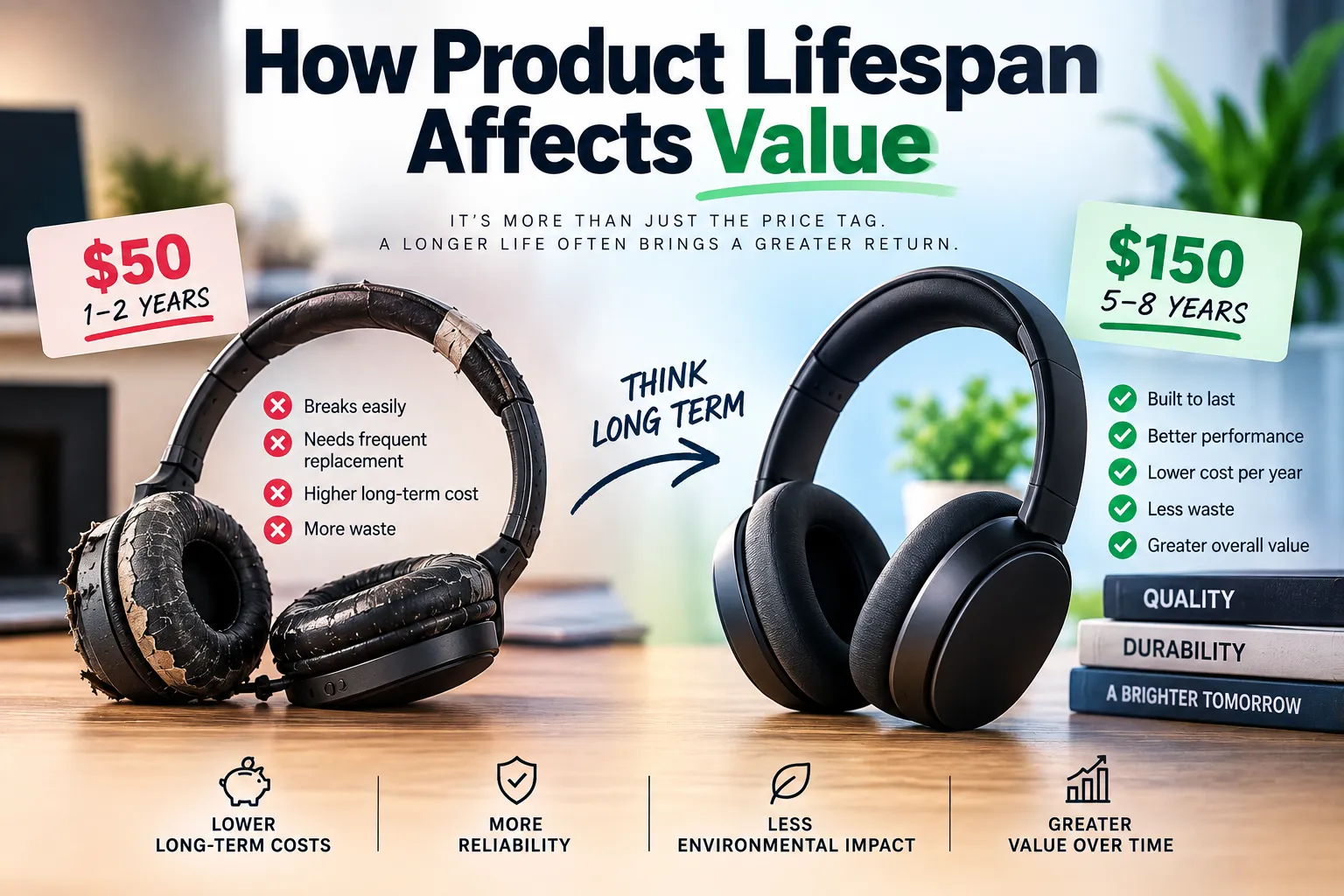
The relationship between durability and financial value is explored further in How Product Lifespan Affects Value.
Repairability Can Support Long-Term Value
Repairability can also affect resale value.
A product that can be repaired relatively easily may remain useful after a component fails.
For example, replaceable batteries, accessible parts, repair documentation, and established repair services can make a product more attractive to secondhand buyers.
Products that are difficult or expensive to repair may become less desirable as they age.
This creates an important distinction between technical age and useful age.
A five-year-old product that can be maintained and repaired may remain more useful than a newer product that has developed an expensive, difficult-to-fix problem.
Software Support Matters for Resale
For connected technology products, software support can have a major impact on long-term usefulness.
A smartphone, tablet, computer, or smart device may still function physically but become less attractive if it no longer receives important software or security updates.
Longer software support can therefore help extend a product’s practical lifespan.
That can potentially support resale demand because buyers know they may be able to use the product for longer.
Scarcity Can Increase Resale Value
Resale value is influenced by supply and demand.
If a product is difficult to find but many people want it, secondhand prices can remain relatively high.
Scarcity can occur because:
- Production ended
- Supply was limited
- The product became popular unexpectedly
- A particular version was discontinued
- Demand increased after release
- The item has collectible appeal
However, scarcity does not automatically create value.
A discontinued product that nobody wants can still have a very low resale price.
Popular Products Often Have Larger Secondhand Markets
Products with large user bases tend to have more potential buyers in the secondhand market.
A popular product may be easier to sell because more people are familiar with it and understand what they are getting.
A large secondhand market can also make price discovery easier.
Consumers can compare multiple listings and determine what similar products are currently selling for.
This is one reason established product categories can sometimes have more predictable resale values than obscure products.
Resale Value Can Affect Which Product Is the Better Deal
Suppose two products offer broadly similar capabilities.
Product A
- Costs $900
- Expected resale value after three years: $450
Product B
- Costs $700
- Expected resale value after three years: $200
The initial price favors Product B.
But depreciation tells a different story:
Product A: $900 − $450 = $450
Product B: $700 − $200 = $500
Product A would have the lower depreciation cost in this example despite its higher purchase price.
This does not automatically make Product A the better choice. Other factors such as reliability, maintenance, performance, and personal preferences still matter.
The example simply demonstrates why resale value belongs in a broader product-value calculation.
Resale Value Is Not the Same as Product Quality
A high resale price does not necessarily mean a product is objectively better.
Market value reflects what buyers are willing to pay, not a universal measurement of quality.
A product can be excellent but have poor resale demand because:
- It is difficult to find buyers
- A newer alternative is available
- The brand is unfamiliar
- Repair costs are high
- The product category has weak secondhand demand
Likewise, a product can retain value because of brand popularity even if competing products offer similar or better technical specifications.
Consumers should therefore treat resale value as one factor among many.
How Product Age Affects Resale Value
Age is one of the most obvious factors affecting secondhand value.
As a product gets older:
- Technology may become outdated
- Warranty coverage may expire
- Components may wear out
- Software support may decline
- Newer alternatives may become available
However, age does not always reduce value at the same rate.
Some products experience rapid depreciation early in their lives and then decline more gradually.
Others may lose value quickly because a new generation introduces a major technological change.
Timing Can Affect How Much You Recover
When you sell a product can influence how much money you receive.
Selling immediately after a new generation is announced can expose the older model to increased depreciation.
For example, when a major technology company launches a new generation of smartphones or laptops, buyers may suddenly have more alternatives.
That can reduce demand for older models.
Consumers who anticipate selling a product later may therefore want to consider the typical product-release cycle.
Resale Value and Upgrading
People who frequently upgrade their devices can benefit particularly from products with strong resale markets.
Consider someone who replaces a smartphone every two or three years.
If the old phone can be sold for a meaningful amount, that money can help offset the cost of the replacement.
The same principle can apply to:
- Laptops
- Cameras
- Game consoles
- Bicycles
- Power tools
- Vehicles
- Furniture
- Musical instruments
For frequent upgraders, resale value can become an important part of the purchasing strategy.
Trade-In Programs vs. Private Sales
Consumers generally have several ways to dispose of an unwanted product.
One option is a manufacturer or retailer trade-in program.
Another is selling directly to another consumer.
Trade-in programs can be convenient because they reduce the effort involved in finding a buyer, arranging payment, and handling the transaction.
Private sales may potentially produce more money but require more work and can introduce additional risks.
The best option depends on the difference between the available offers and how much time and effort the owner is willing to spend.
How to Protect a Product’s Resale Value
Owners can take several practical steps to preserve secondhand value.
Protect the Physical Condition
Use appropriate cases, covers, storage methods, or protective equipment where relevant.
Keep Accessories
Save chargers, cables, manuals, original components, and other useful accessories.
Maintain the Product
Follow recommended maintenance procedures and address problems before they become severe.
Keep Records
Receipts, service records, warranty documentation, and repair information can help establish the product’s history.
Avoid Unnecessary Modifications
Permanent modifications may reduce the number of potential buyers.
Keep Software Updated
For connected devices, maintaining supported software can help preserve usefulness.
How to Estimate Resale Value Before Buying
Consumers do not have to wait until they own a product to investigate resale value.
Before purchasing, research what older versions of the same product currently sell for.
Look for comparable items with similar:
- Age
- Condition
- Specifications
- Accessories
- Warranty status
If a previous generation has retained a relatively high percentage of its original price, that may provide useful evidence about potential depreciation.
However, historical resale performance is not a guarantee of future value.
Beware of Unrealistic Resale Expectations
One common mistake is assuming that a product will retain its value simply because it is expensive or highly rated.
The secondhand market does not necessarily reward high purchase prices.
Some premium products depreciate heavily because their audience prefers buying new.
Others may retain value exceptionally well.
The safest approach is to treat expected resale value as an estimate rather than guaranteed income.
Resale Value and Product Value Are Related but Different
Product value is broader than resale value.
A product can provide value through:
- Performance
- Convenience
- Reliability
- Durability
- Safety
- Comfort
- Productivity
- Entertainment
- Energy efficiency
- Longevity
- Resale value
Resale value is simply one component of the larger picture.
A product that retains 70% of its purchase price but fails to meet the owner’s needs may still be a poor purchase.
Likewise, a product that loses much of its resale value may still have been worthwhile if it provided years of useful service.
A Better Way to Compare Products
When comparing products, consumers can consider five broad questions:
1. What Does It Cost?
Look beyond the advertised purchase price and consider financing, accessories, subscriptions, and other expenses.
2. How Long Will It Remain Useful?
Consider durability, reliability, repairability, and software support.
3. What Will It Cost to Maintain?
A low purchase price may not remain attractive if maintenance and repairs are expensive.
4. How Much Could It Be Worth Later?
Research comparable products in the secondhand market.
5. What Value Will It Provide While You Own It?
A product’s usefulness during ownership may ultimately matter more than its resale price.
This broader approach can help consumers avoid choosing products based solely on one attractive specification or a low initial price.
When Resale Value Should Matter Most
Resale value deserves particular attention when:
- You upgrade products frequently
- The product is expensive
- The product has an active secondhand market
- You expect to sell it later
- You are comparing similar products
- Depreciation represents a significant portion of ownership cost
- You are purchasing a durable item
For inexpensive everyday products that are likely to be used until they wear out, resale value may be much less important.
When Resale Value Matters Less
Some purchases are primarily about immediate use.
For example, a low-cost household item may not have enough secondhand value to justify considering resale.
Similarly, products that are heavily customized or consumed over time may have little meaningful resale market.
In these situations, durability, performance, safety, convenience, and purchase price may matter considerably more.
The Bigger Picture of Product Value
A product’s financial value does not exist in isolation.
Its value changes throughout its life.
At the beginning, the product has a purchase price. During ownership, it provides benefits while generating certain costs. As it ages, its market value typically changes. Eventually, the owner may sell, trade, donate, recycle, or dispose of it.
Thinking about the entire lifecycle provides a more realistic picture of what the purchase represents financially.
Looking Beyond the Price Tag
Resale value changes the way consumers should think about product purchases.
The most expensive product is not necessarily the most costly to own, and the cheapest product is not necessarily the best bargain.
A product that costs more initially but retains substantial value may have a lower effective cost over time. Meanwhile, a cheaper product that depreciates rapidly can end up costing more when all ownership factors are considered.
The smartest purchasing decisions therefore look beyond the checkout price.
Purchase price, quality, lifespan, maintenance, usefulness, and resale value all contribute to the real value of a product.
When consumers consider what an item will be worth not only when they buy it but also when they eventually move on from it, they gain a clearer picture of the financial trade-offs behind the products they choose.