The Complete Guide to Choosing the Right Products
Choosing the right product can be surprisingly difficult. Whether you’re buying a smartphone, kitchen appliance, laptop, home equipment, fitness gear, or everyday household item, there are often dozens of options competing for your attention.
Manufacturers highlight features, retailers promote discounts, and reviews can sometimes point in completely different directions. A product that works exceptionally well for one person may be a poor choice for someone with different needs, priorities, or budget constraints.
The key is to stop looking for the most impressive product and start looking for the most suitable product.
This guide explains how to evaluate products, compare alternatives, understand specifications, assess reviews, avoid common purchasing mistakes, and ultimately make more confident buying decisions.
Start With Your Actual Needs
The first step in choosing any product is understanding what you actually need it to do.
A common mistake is beginning the shopping process by browsing products before defining the problem you’re trying to solve. This can lead to feature overload and unnecessary spending.
Instead, ask yourself:
- What problem should this product solve?
- How frequently will I use it?
- Where will I use it?
- Who else will use it?
- Which features are essential?
- Which features would simply be nice to have?
- How long do I expect to keep it?
- Are there compatibility requirements?
- What is my realistic budget?
For example, someone buying a laptop primarily for web browsing and document editing has very different requirements from someone using the same type of device for professional video production.
Defining the use case first makes the rest of the buying process much easier.
Separate Essential Features From Extras
Modern products often come with long lists of specifications and features. More features, however, do not automatically mean a better product.
Create two lists before comparing your options:
Must-have features
These are requirements the product cannot compromise on.
Nice-to-have features
These are useful additions but should not determine the purchase by themselves.
This distinction helps prevent a common buying mistake: paying considerably more for capabilities you are unlikely to use.
A feature becomes valuable when it solves a real problem for you. Otherwise, it may simply increase the price and complexity of the product.
Set a Realistic Budget
Price is one of the most obvious factors when choosing a product, but the cheapest option is not necessarily the best value.
For a deeper understanding of how price relates to quality and usefulness, see this Product Value Guide.
Instead of asking only, “How much does it cost?” consider the product’s overall value.
Think about:
- Purchase price
- Expected lifespan
- Maintenance costs
- Accessories
- Replacement parts
- Energy consumption
- Subscription fees
- Warranty coverage
- Repair costs
- Resale value
A product that costs more initially may offer better long-term value if it lasts substantially longer or requires fewer replacements.
At the same time, paying more does not guarantee higher quality. Premium products can include features that provide little practical benefit to a particular buyer.
The goal is to find the point where price, quality, performance, and usefulness make sense together.
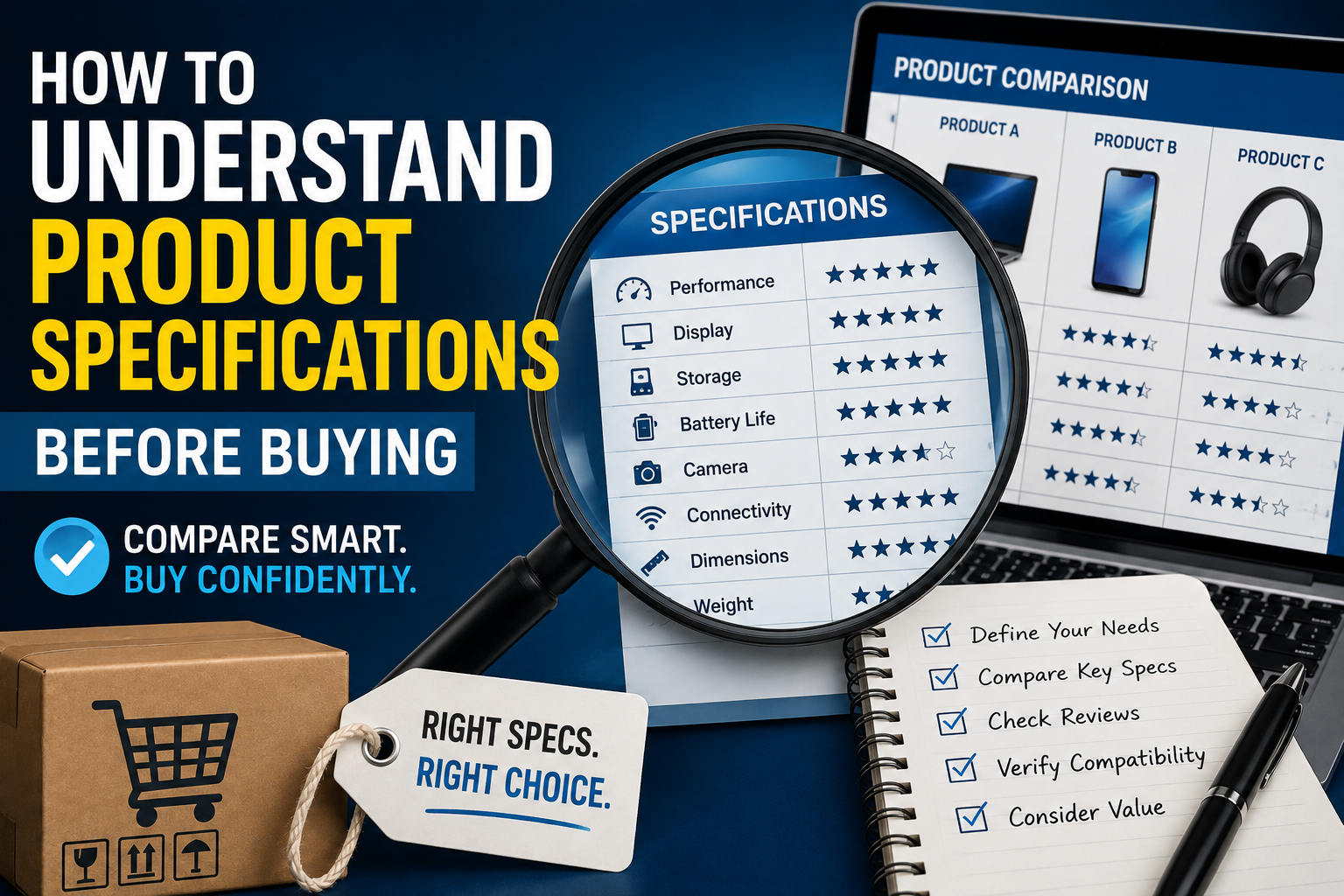
Understand Product Specifications
Specifications can be useful, but they can also be confusing.
Different product categories use different measurements, terminology, and standards. A higher number isn’t always better, and two products with similar specifications can perform differently in everyday use.
For a more detailed explanation of how to interpret technical details, see How to Understand Product Features and Specifications.
Before comparing specifications, understand what each measurement actually represents.
For example, when evaluating a technology product, specifications might include:
- Processor performance
- Memory
- Storage
- Display characteristics
- Battery capacity
- Connectivity
- Weight
- Dimensions
For household products, specifications might instead focus on:
- Capacity
- Power consumption
- Materials
- Operating modes
- Noise levels
- Dimensions
- Safety features
The important question is not simply which product has the biggest number, but whether that specification makes a meaningful difference to your intended use.
Compare Products on the Features That Matter
Once you’ve identified your priorities, create a simple comparison.
| Factor | Product A | Product B | Product C |
|---|---|---|---|
| Price | |||
| Essential Feature 1 | |||
| Essential Feature 2 | |||
| Build Quality | |||
| Ease of Use | |||
| Warranty | |||
| Running Costs | |||
| Overall Value |
A comparison table helps prevent one particularly attractive feature from dominating your decision.
It also makes trade-offs easier to see.
Perhaps Product A is the cheapest, Product B offers the strongest performance, and Product C provides the best warranty. There may not be one objectively superior option. Instead, the right choice depends on which factors matter most to you.
Look Beyond Marketing Claims
Product descriptions are designed to sell.
That does not mean marketing information is useless, but it should be evaluated carefully.
Watch for phrases such as:
- “Professional quality”
- “Advanced performance”
- “Revolutionary technology”
- “Best-in-class”
- “Ultimate experience”
- “Premium design”
These statements may sound impressive without providing enough information to evaluate the product objectively.
Whenever possible, translate marketing language into measurable questions.
Instead of asking whether a product offers “exceptional battery life,” find out how long it actually operates under realistic conditions.
Instead of accepting a claim about durability, investigate the materials, warranty, construction, and independent user experiences.
Specific information is generally more useful than promotional language.
Read Reviews Strategically
Reviews can provide valuable information that specifications and product descriptions cannot.
However, reading hundreds of reviews without a strategy can become overwhelming.
For a deeper approach to assessing review quality, see How to Read Product Reviews Like an Expert.
Look for patterns rather than isolated complaints.
Pay particular attention to comments about:
- Long-term reliability
- Ease of use
- Performance in everyday conditions
- Build quality
- Common problems
- Customer support
- Setup difficulty
- Maintenance requirements
- Compatibility
- Value for money
A single negative review does not necessarily indicate a serious problem. If the same issue repeatedly appears across many independent reviews, however, it deserves more attention.
The same principle applies to positive reviews. A product receiving enthusiastic praise from one user does not automatically mean it is suitable for everyone.
Consider Who Is Reviewing the Product
Not every review has the same purpose.
A professional reviewer may focus on performance, technical specifications, and detailed testing. An everyday customer may provide better insight into convenience, durability, or long-term use.
Ideally, consider multiple perspectives.
Look for reviewers who:
- Explain how they tested the product
- Identify both strengths and weaknesses
- Provide specific examples
- Explain who the product is best suited for
- Disclose relevant affiliations
- Distinguish facts from personal opinions
A useful review should help you understand whether the product fits your situation, rather than simply telling you whether the reviewer likes it.
Evaluate Build Quality and Durability
A product can look excellent when it is new and still prove disappointing over time.
Build quality deserves particular attention when purchasing something you expect to use for several years.
Consider:
- Materials
- Construction
- Moving parts
- Buttons and controls
- Seams and connections
- Protection against common forms of wear
- Availability of replacement parts
- Repairability
For a more focused framework, How to Determine Whether a Product Is Durable and Reliable provides additional guidance on assessing products for long-term use.
Durability is especially important for products that are expensive, frequently used, or difficult to replace.
A slightly higher upfront price can make sense if it substantially reduces the likelihood of premature replacement.
Think About Ease of Use
A product can have excellent specifications and still be frustrating to own.
Ease of use includes much more than whether the controls look simple.
Consider:
- Setup
- Learning curve
- User interface
- Maintenance
- Cleaning
- Storage
- Accessibility
- Connectivity
- Instructions
- Troubleshooting
If a product requires complicated procedures every time you use it, impressive specifications may not compensate for the inconvenience.
The best product is often the one that performs its intended job reliably without creating unnecessary work.
Check Compatibility Before Buying
Compatibility problems can turn an otherwise excellent purchase into an expensive mistake.
Before buying, check whether the product works with your existing equipment, software, accessories, infrastructure, or environment.
Depending on the product category, this might include:
- Operating systems
- Ports and connectors
- Network standards
- Accessories
- Replacement components
- Smart-home ecosystems
- Furniture dimensions
- Power requirements
- Available space
Do not assume that two products will work together simply because they appear to belong to the same category.
Confirm compatibility before making the purchase.
Consider the Total Cost of Ownership
The purchase price is only one part of the cost.
Some products require ongoing expenses that are easy to overlook.
For a more detailed framework for calculating these expenses, see Product Ownership Costs: Complete Guide to True Cost.
These might include:
- Consumables
- Replacement filters
- Batteries
- Software subscriptions
- Accessories
- Repairs
- Maintenance
- Energy
- Insurance
For example, two products may have similar purchase prices but dramatically different operating costs.
Looking at the total cost of ownership gives you a more realistic picture of long-term value.
Don’t Ignore the Warranty
Warranty coverage can provide important protection, particularly for expensive products.
Before buying, check:
- Warranty duration
- What components are covered
- What exclusions apply
- Who handles repairs
- Whether shipping is included
- Whether replacement is available
- What documentation is required
A longer warranty is not automatically better if the terms are restrictive.
Read the actual warranty conditions rather than relying only on a retailer’s headline description.
Pay Attention to Return Policies
A return policy can be just as important as a warranty, particularly when you’re purchasing a product you have never used before.
Check:
- How long you have to return the product
- Whether the item must be unopened
- Whether return shipping costs money
- Whether restocking fees apply
- Whether refunds or exchanges are offered
- Whether certain product categories have special restrictions
Understanding these conditions before purchasing can prevent unpleasant surprises later.
Avoid Choosing Based Only on Brand Name
Brand reputation can be useful, but it should not replace product-level research.
Well-known brands can make excellent products, while lesser-known manufacturers can sometimes offer strong alternatives.
Instead of asking only, “Is this a good brand?” consider:
- Is this specific product well reviewed?
- Does it meet recognized quality or safety standards where relevant?
- Is customer support accessible?
- Is warranty coverage reasonable?
- Are replacement parts available?
- Does the company have a history of supporting products after purchase?
The product itself should remain the primary focus.
Know When a Premium Product Is Worth It
Premium products can make sense when their additional benefits align with your needs.
Paying more may be justified by:
- Better materials
- Higher performance
- Greater durability
- Longer support
- Better ergonomics
- More reliable components
- Lower operating costs
For a closer comparison of premium products and alternatives, see Best Value vs Premium Products Explained.
But premium pricing becomes difficult to justify when the additional features have little practical impact on your use.
Before upgrading, ask:
What am I getting for the extra money?
If you cannot identify meaningful benefits, the cheaper option may provide better value.
Avoid Buying More Than You Need
One of the easiest ways to overspend is purchasing for an imaginary future rather than your actual circumstances.
People often buy products with capabilities they may never use because they want to “future-proof” their purchase.
Some future-proofing can be sensible, particularly when products are expensive or difficult to replace. But excessive spending on unused capabilities can reduce overall value.
A better approach is to purchase enough capacity and functionality to accommodate your realistic needs over the expected lifespan of the product.
Watch for Common Buying Mistakes
Several mistakes appear across almost every product category.
Choosing the cheapest option automatically
Low price can be attractive, but poor durability or high operating costs can make an inexpensive product expensive over time.
Choosing the most expensive option automatically
Premium pricing does not guarantee that every buyer will receive proportional benefits.
Focusing on specifications alone
Numbers provide useful information, but real-world usability and reliability also matter.
Ignoring long-term costs
Accessories, subscriptions, maintenance, and repairs can significantly affect the overall cost.
Trusting a single review
One person’s experience rarely tells the complete story.
Buying because of a discount
A discount only represents a saving if the product was worth purchasing in the first place.
Ignoring dimensions and compatibility
A product that does not fit your space or existing setup is rarely a good deal.
Buying before researching alternatives
Comparing a few credible alternatives can reveal better value and prevent impulse purchases.
Build a Simple Decision Framework
If you’re struggling to choose between several products, score each option according to your priorities.
For example:
| Buying Factor | Weight | Product A | Product B | Product C |
|---|---|---|---|---|
| Performance | 30% | |||
| Reliability | 25% | |||
| Price | 20% | |||
| Ease of Use | 15% | |||
| Warranty | 10% |
The weighting is important because not every factor should receive equal importance.
If reliability is critical, give it a larger weight. If budget is your biggest concern, increase the importance of price.
This turns a vague purchasing decision into a structured evaluation.
Give Yourself Time Before Expensive Purchases
Impulse buying is particularly risky when the product is expensive.
Before making a major purchase, take some time to review your decision.
Ask yourself:
- Do I actually need this product?
- Does it solve the problem I identified?
- Have I compared credible alternatives?
- Do I understand the important specifications?
- Have I checked reviews from multiple sources?
- Have I considered long-term costs?
- Does it fit my budget?
- Does it work with what I already own?
- Is the warranty acceptable?
- Would I still buy it without the discount or promotion?
If the answers are consistently positive, you’re much more likely to be making a deliberate decision rather than an emotional one.
The Right Product Is the One That Fits Your Priorities
There is rarely a single product that is perfect for everyone.
The best buying decision comes from matching a product’s capabilities with your actual needs, budget, expectations, and circumstances.
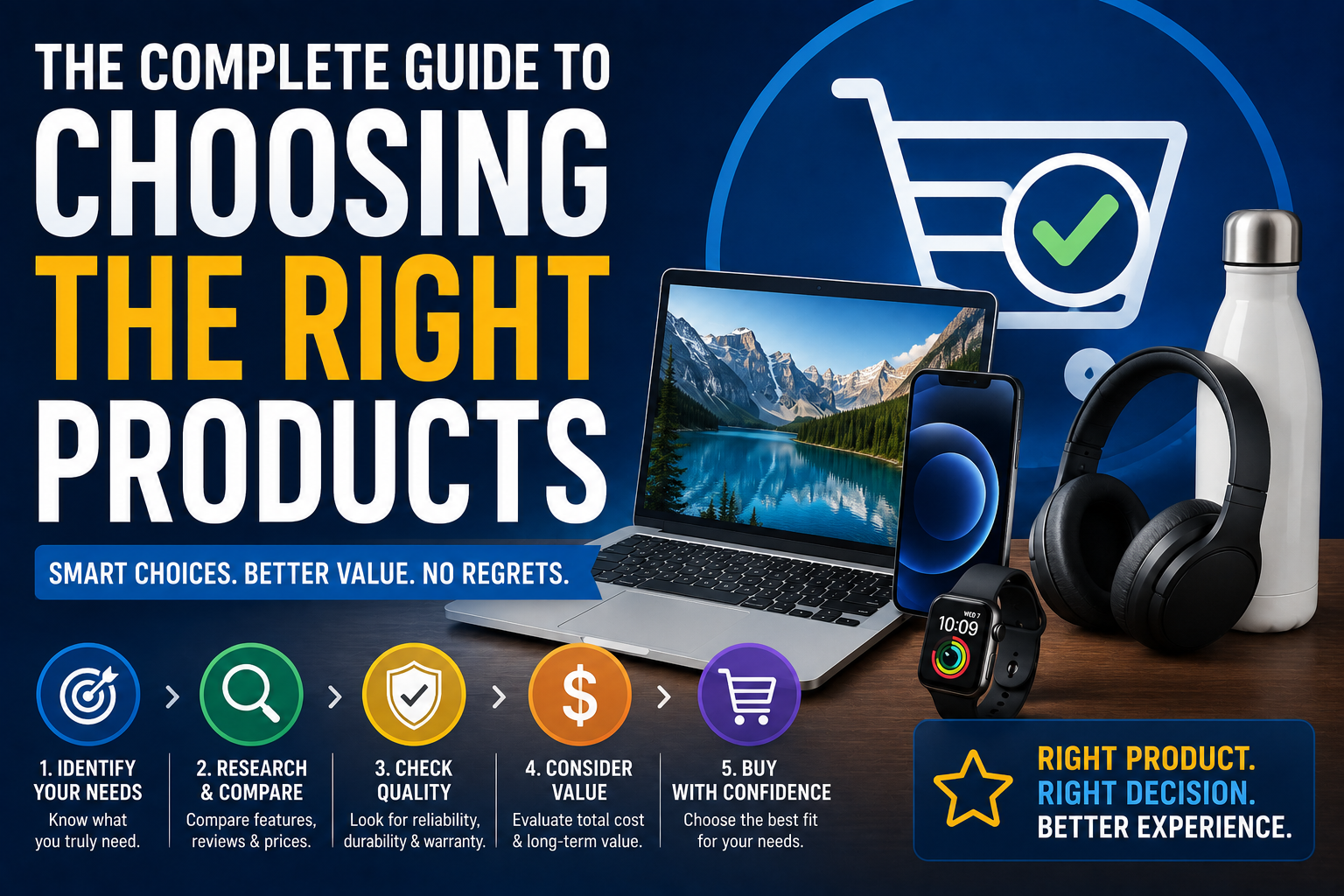
Start by defining what you need. Establish your budget. Identify essential features. Compare credible alternatives. Read reviews critically. Check compatibility, durability, warranty coverage, and long-term costs.
Most importantly, judge products based on value for your situation, rather than popularity, marketing claims, or the highest specification sheet.
A thoughtful buying process may take a little longer, but it can help you avoid costly mistakes and choose products that remain useful long after the excitement of the purchase has disappeared.