Virtual Reality Explained
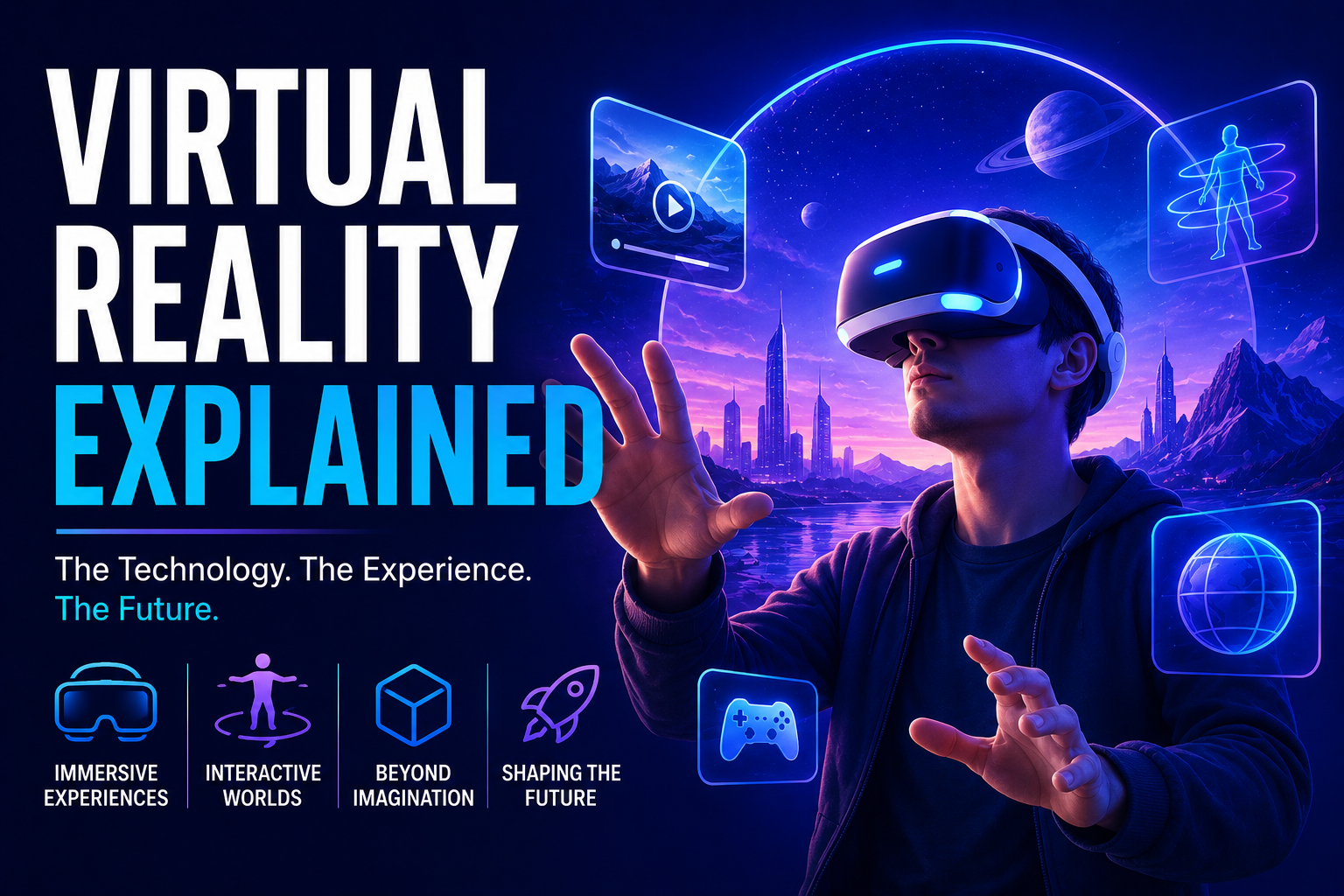
Virtual Reality (VR) is transforming the way people interact with digital content by creating immersive, computer-generated environments that simulate real-world or imaginary experiences. Once primarily associated with gaming, VR has rapidly expanded into education, healthcare, business, engineering, tourism, entertainment, and workplace training. As hardware becomes more affordable and software more sophisticated, virtual reality is moving closer to mainstream adoption. For a broader explanation of the technologies behind immersive environments, see this guide to how augmented and virtual reality technology works using displays, sensors, tracking and spatial computing.
Advances in graphics processing, artificial intelligence, motion tracking, and wireless technology continue to improve the realism and accessibility of VR experiences. From virtual classrooms and surgical simulations to collaborative workspaces and interactive entertainment, virtual reality is reshaping how people learn, work, and play.
This guide explains what virtual reality is, how it works, its different types, real-world applications, benefits, challenges, and the technologies driving the future of immersive computing.
What Is Virtual Reality?
Virtual Reality (VR) is a technology that uses specialized hardware and software to immerse users in a simulated three-dimensional digital environment.
Unlike traditional screens, VR surrounds users with a virtual world that responds to their movements and interactions.
Virtual reality systems typically include:
- VR headsets
- Motion controllers
- Tracking sensors
- High-resolution displays
- Spatial audio
- Interactive software
- Hand tracking
- Haptic feedback devices
The goal is to create the sensation of being physically present inside a digital environment.
VR is one part of the broader evolution of immersive computing. The wider emerging technology and innovation landscape includes related developments in spatial computing, artificial intelligence, robotics, connected devices, and advanced hardware.
Why Virtual Reality Matters
Virtual reality enables experiences that would be difficult, expensive, or impossible to recreate in the real world.
VR helps:
- Improve learning experiences
- Enhance professional training
- Increase workplace collaboration
- Support medical education
- Advance product design
- Create immersive entertainment
- Improve remote communication
- Enable realistic simulations
As VR technology evolves, its practical applications continue expanding across numerous industries.
How Virtual Reality Works
A VR system combines hardware and software to create an interactive virtual environment.
The process typically involves:
- Displaying stereoscopic images
- Tracking head movement
- Detecting hand movements
- Rendering graphics in real time
- Producing spatial audio
- Updating perspectives instantly
- Processing user interactions
- Maintaining low latency
These technologies work together to create a convincing sense of immersion.
Modern VR also depends heavily on sensors and real-time data processing. This creates connections with technologies such as wearable technology, where compact sensors and processors continuously track movement and user activity.
Types of Virtual Reality
Virtual reality experiences vary depending on the level of immersion.
Common categories include:
- Fully immersive VR
- Semi-immersive VR
- Non-immersive VR
- Collaborative virtual environments
- Educational VR
- Enterprise VR
- Medical VR
- Simulation-based VR
Each type serves different industries and user needs.
Essential VR Hardware
Modern virtual reality systems consist of several important components.
These include:
- Head-mounted displays
- Motion controllers
- Position tracking cameras
- Built-in speakers
- Microphones
- Hand tracking sensors
- High-performance processors
- Rechargeable batteries
Hardware improvements continue making VR systems lighter, faster, and more comfortable. Many of these components overlap with the technologies used in wearable technology, particularly sensors, processors, wireless connectivity, and compact power systems.
VR hardware also depends on advances in consumer devices, processors, displays, batteries, and wireless communication. These developments are part of the wider consumer gadgets and modern devices ecosystem.
VR Software
Software brings virtual worlds to life.
VR applications may include:
- Games
- Educational programs
- Training simulations
- Design tools
- Collaboration platforms
- Medical simulations
- Fitness experiences
- Virtual tourism
Developers use specialized engines to build highly interactive virtual environments.
VR software also relies on operating systems, graphics frameworks, application software, and cloud technologies to deliver increasingly sophisticated experiences.
Virtual Reality in Gaming
Gaming remains one of VR’s most popular applications.
VR gaming offers:
- Immersive worlds
- Motion-based gameplay
- Interactive storytelling
- Multiplayer experiences
- Realistic simulations
- Sports games
- Adventure titles
- Puzzle experiences
Improved graphics and tracking continue enhancing gameplay realism.
Education and Training
Virtual reality provides safe, engaging learning environments.
Educational uses include:
- Science laboratories
- Medical training
- Flight simulation
- Engineering practice
- Language learning
- History exploration
- Classroom collaboration
- Technical skills development
Students can gain practical experience through realistic simulations.
Healthcare Applications
Healthcare organizations increasingly use VR for both education and patient care.
Applications include:
- Surgical training
- Rehabilitation therapy
- Pain management
- Mental health treatment
- Physical therapy
- Medical visualization
- Patient education
- Clinical simulations
VR enables healthcare professionals to practice complex procedures without risking patient safety.
Business and Industry
Businesses are adopting VR to improve productivity and collaboration.
Enterprise applications include:
- Employee training
- Product design
- Virtual meetings
- Remote collaboration
- Manufacturing simulations
- Architecture visualization
- Customer demonstrations
- Safety training
Immersive environments can reduce travel costs while improving communication.
VR is also increasingly connected to collaborative digital environments and intelligent machines. Advances in robotics and consumer robots could influence how people interact with simulated environments, robotic systems, and remote machines.
Virtual Reality vs. Augmented Reality
Although often discussed together, VR and AR are different technologies.
Virtual Reality:
- Replaces the real environment
- Requires immersive headsets
- Creates fully digital experiences
Augmented Reality:
- Adds digital content to the real world
- Often uses smartphones or smart glasses
- Enhances existing surroundings
Both technologies are part of the broader field of extended reality (XR).
For a deeper look at the technologies connecting VR and AR, see how augmented and virtual reality technology works using displays, sensors, tracking and spatial computing.
Benefits of Virtual Reality
Virtual reality offers numerous advantages across industries.
Key benefits include:
- Immersive learning
- Improved engagement
- Safe simulation environments
- Better collaboration
- Enhanced visualization
- Faster skill development
- Increased accessibility
- Innovative customer experiences
These advantages continue driving investment in VR technologies.
Challenges Facing Virtual Reality
Despite rapid progress, VR still faces several challenges.
Common issues include:
- Hardware costs
- Motion sickness
- Battery limitations
- Content availability
- Processing requirements
- User comfort
- Accessibility
- Privacy concerns
Manufacturers continue addressing these limitations through ongoing innovation.
Artificial Intelligence and VR
Artificial intelligence is expanding VR capabilities.
AI supports:
- Intelligent virtual characters
- Voice interaction
- Personalized experiences
- Real-time language translation
- Adaptive learning
- Gesture recognition
- Automated environment generation
- Improved simulations
The combination of AI and VR is creating increasingly realistic digital experiences. Similar developments in intelligent machines are also shaping how physical and digital environments interact, as explored in The Future of Robotics.
Common Myths About Virtual Reality
Several misconceptions surround VR technology.
Myth: VR Is Only for Gaming
Gaming is important, but VR is widely used in healthcare, education, engineering, and business.
Myth: VR Completely Replaces Reality
Virtual reality supplements many real-world activities rather than replacing them.
Myth: VR Requires Expensive Equipment
While premium systems exist, many affordable standalone VR devices are now available.
Myth: VR Is a Passing Trend
Continued investment from technology companies and expanding business applications suggest long-term growth.
Tips for Getting Started with VR
If you’re new to virtual reality:
- Choose a comfortable headset.
- Begin with shorter sessions.
- Ensure adequate play space.
- Keep software updated.
- Adjust headset fit properly.
- Explore educational experiences.
- Take breaks regularly.
- Follow safety guidelines.
A gradual introduction helps create a more enjoyable experience.
The Future of Virtual Reality
Virtual reality continues evolving alongside advances in computing and connectivity.
Emerging trends include:
- Higher-resolution displays
- AI-powered virtual environments
- Lighter wireless headsets
- Improved hand tracking
- More realistic haptic feedback
- Cloud-based VR streaming
- Enterprise collaboration platforms
- Integration with mixed reality technologies
Future VR systems are expected to become more immersive, accessible, and seamlessly integrated into everyday life. As immersive technology increasingly overlaps with intelligent machines, robotics, and autonomous systems, developments in robotics and consumer robots could also influence future virtual and spatial computing experiences.
VR may also intersect with other emerging technologies such as connected devices, advanced transportation, artificial intelligence, and next-generation computing. These developments collectively form part of the broader emerging technology and innovation landscape.
Final Thoughts
Virtual reality has evolved from a niche entertainment technology into a powerful platform for education, healthcare, business, engineering, and communication. By creating immersive digital environments, VR enables people to learn new skills, collaborate remotely, experience interactive entertainment, and solve complex challenges in innovative ways.
As hardware becomes more capable and software continues advancing, virtual reality is likely to play an increasingly important role in both professional and personal life. Understanding the fundamentals of VR helps individuals and organizations prepare for a future where immersive technology becomes an everyday part of how we work, learn, and connect.